The 8 Best One-Person Backpacking Tents of 2026

A one-person backpacking tent is a negotiation. You give up elbow room and the ability to sit up straight, and in return you get a shelter that adds a pound or two to your pack instead of five. Where you land in that trade depends on how you camp — a quick weekend loop, a solo overnight, a cold-weather trip where the wind decides whether you sleep.

The spec sheet doesn't sort this out for you. Packed weight is printed on every box, but nobody tells you how a tent behaves when you're pitching it at dusk in a drizzle, or whether the rainfly reaches the ground when the wind turns sideways. We took 12 one-person tents into the field over nine months, and the differences showed up there.

One thing worth knowing before you shop: single-wall and double-wall tents fail differently. A double-wall design — body plus a separate rainfly — handles condensation better on humid nights, while a single-wall saves weight but leaves your sleeping bag damp if you don't vent it. The picks below run from barely-there shelters to freestanding models that stand without a single stake.

Our Top Picks

The 8 Best One-Person Backpacking Tents of 2026

1

Clostnature 1-Person Backpacking Tent Best Overall

Clostnature 1/2/3/4 Person Lightweight Backpacking Tent

First solo trips

Field Score 91/100
Floor
86.6 x 31.9 in
Fly Rating
PU 5000 mm
Peak Height
35.8 in
Packed Weight
4 lb
View on Amazon

The Clostnature is the tent here that makes the fewest compromises for the money. The fly and the Oxford bathtub floor both carry a PU 5000 mm rating, the poles are aluminum rather than the fiberglass you meet at this end of the market, and the whole package lands around four pounds. None of that is exotic. It's just the right set of choices in an inexpensive tent.

It earns the top spot because those choices turn into an easy trip. Two aluminum poles and a run of clips had the body standing in a minute or two, and the freestanding frame means you can pick the whole tent up and set it down again when the first site turns out to be lumpy. At 19.3 square feet the floor takes a pad with room left at the foot for a pack, and four pounds rides comfortably on a weekend pack.

The limits are narrow but worth knowing. The floor is 31.9 inches wide, so a 25-inch pad leaves very little beside it, and the 35.8-inch peak is enough to sit up and change in rather than lounge in. The seams arrive untaped, so run seam sealer along the fly before a trip with real rain in the forecast; twenty minutes is the difference between a dry night and a wet one. Its one-year guarantee is also shorter than the lifetime coverage on the ALPS and the Kelty, which says something about how each maker expects its tent to age.

Worth Noting

  • Narrow 31.9-inch floor beside a pad
  • Modest 35.8-inch peak height
Our Verdict

Our default for a first or fiftieth solo trip: the best balance of waterproofing, packed weight, and price here, and it pitches in a minute or two.

Check Latest Price
2

ALPS Mountaineering Lynx 1 Best for the Long Haul

ALPS Mountaineering Backpacking-Tents Lynx 1

Long-term ownership

Field Score 90/100
Floor
90 x 32 in
Fly Rating
1500 mm
Peak Height
36 in
Trail Weight
3 lb 3 oz
View on Amazon

A factory-sealed fly and a limited lifetime warranty are the two details that separate the Lynx 1 from the rest of this group. The 75D polyester fly carries a 1500 mm coating and the floor a 2000 mm one, both sealed at the factory, so you skip the seam-sealing homework the cheaper tents ask for.

At 3 pounds 3 ounces at trail weight, with the bags and spare stakes left at home, it is the lightest of the conventional double-wall tents here. The 90-inch floor is long enough for a tall sleeper, the 36-inch peak lets you sit up in the middle, and two aluminum poles with clips go up without fuss. A gear loft and two mesh pockets keep a headlamp and a phone off the floor.

This is the one we expect to still be carrying after the budget tents have been replaced, and the lifetime warranty is why that's a reasonable bet rather than a hope. The fly is the catch: it sits close to the inner tent, and where the two touch on a damp night, moisture moves across. Pitch it taut, stake out the guylines, and keep the vents clear, and a normal night of rain stays outside. Broad-shouldered sleepers should look at the Bessport or the Cloud-Up first, since 32 inches of floor is fine for one pad and tight for a pad plus a pack.

Worth Noting

  • Fly sits close to the inner tent
  • 32-inch floor is tight for a wide pad
Our Verdict

Buy the Lynx 1 if you want one tent for many seasons: sealed seams, aluminum poles, and a lifetime warranty behind a 3-pound-3-ounce trail weight.

Check Latest Price
3

Naturehike Cloud-Up 1 Best Ventilation

Naturehike Cloud-Up 1 Person Tent

Damp, still nights

Field Score 89/100
Floor
82.7 x 35.4 in
Fly Rating
3000 mm
Peak Height
43.3 in
Packed Weight
3.66 lb
View on Amazon

Condensation is what wakes you up in a small tent, and the Cloud-Up 1 is built around it. A vent window sits above the front door, the inner body is mostly mesh, and on a still, damp night that airflow is the difference between a dry sleeping bag and a soggy one. That vent is the best single reason to pick this tent out of the group.

The rest of the package is midrange in the good sense. Peak height is 43.3 inches, tall enough to sit upright and pull on a layer, and the packed tent measures 15.3 by 5.1 inches, which slides into the middle of a 50-liter pack without a fight. The 210T polyester fly is rated to 3000 mm, more protection than most three-season nights ask for, and the aluminum frame holds steady through a gusty evening.

What we can't promise is a decade of hard use. The fabric is light for the money, a stake can bend on stony ground, and the tent rewards being packed with a little care: poles in their own bag, a footprint underneath on rough ground. Buy it for damp climates and regular weekend use, and it will look after you.

Worth Noting

  • Not ultralight at 3.66 pounds
Our Verdict

Choose the Cloud-Up 1 for damp, still campsites: the vent over the door and a tall peak keep a small tent livable, though the fabric is light.

Check Latest Price
4

camppal MT051 1-Person Tent Best for Tall Campers

camppal MT051 1-Person Tent – 1 Person Tent for Camping Hiking Mountain Hunting Backpacking Tents 4 Season

Taller solo campers

Field Score 88/100
Floor
98.4 x 35.4 in
Fly Rating
3500-4000 mm
Peak Height
35.4 in
Trail Weight
3.8 lb
View on Amazon

Eight feet two inches of floor is the number that matters here. At 98.4 inches the camppal is the longest tent in this group by a wide margin, which means a 6-foot-4 sleeper gets a full night without head and feet pressed against the walls, and there's still a foot of space at the end for a pack or a pair of boots.

It goes up from a single ridge pole threaded through a sleeve, quicker than that sounds and with no clips to chase in the wind, and the outer tent runs 1.31 feet past the inner on one side to give you a covered porch for wet gear. The 3500-4000 mm coating and the four-season body are why it handles a cold, wet night better than the summer tents here, and 3.8 pounds at trail weight is still packable.

We point tall backpackers and late-season hunters at this one, with a caveat. The body is 2.95 feet wide, so a wide pad fills the floor edge to edge and you'll be climbing over your own gear to get out the door. The long, light frame also wants its guylines on exposed ground; pitched loose on a ridge, it moves in the gusts.

Worth Noting

  • 2.95-foot width is snug with a wide pad
  • Needs full guying in wind
Our Verdict

The pick for anyone over six feet: a 98-inch floor and a four-season coating make the camppal the roomiest long tent in this group.

Check Latest Price
5

Underwood Aggregator 1-Person Tent Best for Cold Weather

Underwood Aggregator 1-Person Tent – 1/2 Person 4 Season Backpacking Tent

Freezing-weather camping

Field Score 87/100
Floor
86.6 x 31.8 in
Fly Rating
PU 5000 mm
Peak Height
35.8 in
Trail Weight
4.4 lb
View on Amazon

Four-season gets used loosely, so here's what it buys on this tent: a PU 5000 mm fly, a body with less mesh than the summer shelters here, and a floor that keeps ground cold from coming up through your pad. The other side of that is a small sealed box that holds your breath, and you'll have condensation by morning unless you crack the vents.

For cold-weather camping on a budget, this is the one we point to first. Warmth is the whole point and it delivers: on a night below freezing the small interior heats up fast, the fly keeps rain and wet snow out, and there's enough vestibule to keep a pack and boots dry. At 4.4 pounds it's a tent you carry to a cold camp rather than through a long approach.

Set expectations for the interior. At 31.8 inches wide and 35.8 inches at the peak it's a sleeping space, not a dressing room, and the two vents at the top of the door are there for a reason: open them even when it's cold, and wipe the walls before you pack. Zippers are the part to watch over a few seasons.

Worth Noting

  • 31.8-inch interior is a sleeping space only
  • 4.4 lb is heavy for long approaches
Our Verdict

For freezing nights on a budget, this is the tent we name first: a PU 5000 mm four-season body that holds heat and stays dry.

Check Latest Price
6

Bessport 1-Person Backpacking Tent Best for Headroom and Gear

Bessport 1-Person Backpacking Tent – Camping Tent 1/2 Person Tent Waterproof Two Doors Backpacking Tent Easy Setup

Headroom and gear

Field Score 86/100
Floor
88.6 x 33.5 in
Peak Height
43.3 in
Packed Weight
4.4 lb
Doors And Vestibules
2 and 2
View on Amazon

At 4.4 pounds, the Bessport is the heaviest tent we recommend here, and that's the first thing to settle. If your days run long and your knees are counting, the pound you save with the Clostnature matters more than anything below.

What the weight buys is headroom and a second door. Peak height is 43.3 inches, tall enough to sit up straight and pull on pants without lying back down, and two D-shaped doors open onto two vestibules with 10.5 square feet of covered storage between them, so a pack and muddy boots live outside the sleeping area. On a one-person tent, that's an unusual amount of architecture.

The weatherproofing is straightforward and well done: seam-taped construction, a welded floor that turns water at the edges, and a fly that kept the inside dry through an all-night downpour. Two aluminum poles and clips had it standing in about five minutes.

This is our pick for base camps, short approaches, and anyone who wants to sit up and get dressed in the morning, the tent to take when a wide pad, a pack inside the door, and a dry place to change matter more than a light load. The trade is condensation, and the two doors are the answer: crack both and let air run through.

Worth Noting

  • 4.4 pounds is heavy for long approaches
Our Verdict

Buy it for base camps and short approaches, where a 43-inch peak and two doors matter more than the extra pound on your back.

Check Latest Price
7

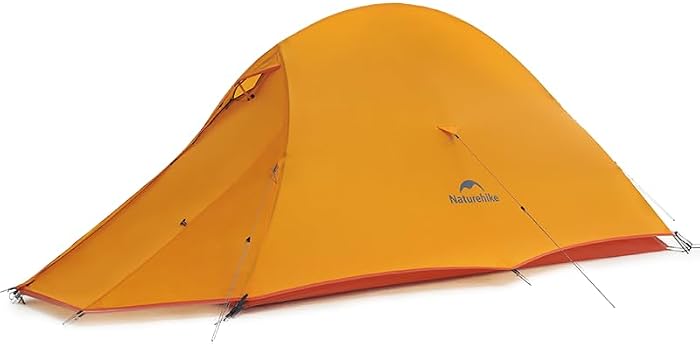
Naturehike Star Trail 1-Person Tent

Naturehike Star Trail Ultralight Backpacking Tent

Counting every ounce

Field Score 85/100
Footprint
Included
Fly Rating
1500 mm
Floor Rating
3000 mm
Packed Weight
2.3 lb
View on Amazon

Two point three pounds is the entire argument. With the footprint in the bag, the Star Trail weighs less than anything else we recommend here, and on a trip where every ounce is negotiated, a long approach, a fast overnight, a climb with a base camp at the end, that's the difference between carrying a shelter and carrying a brick.

The weight comes out of the fabric. The fly is 10-denier nylon at 1500 mm and the floor 20-denier at 3000 mm, thin enough that the included footprint belongs under it on anything abrasive, and light enough that the zipper is where a tear will start if you're rough. Pack it with the poles separate and it holds up; the fly coating is enough for a night of rain, not for a three-day soaker.

Peak height is 45.3 inches, the tallest in this group, a strange bonus in a tent this light, since you can sit up without your head in the fly. The question is whether you want to spend the most money here on a three-season tent with delicate fabric. If your trips are measured in ounces, that trade is easy to make.

Worth Noting

  • 1500 mm fly is light for sustained rain
Our Verdict

Buy the Star Trail if your trips are measured in ounces: 2.3 pounds with the footprint in the bag is the lightest shelter here.

Check Latest Price
8

Kelty Discovery Trail 1P Best for Easy First Pitches

Kelty Discovery Trail Backpacking Tent

Easy first pitches

Field Score 84/100
Floor Area
19 sq ft
Fly Rating
1200 mm
Peak Height
40 in
Trail Weight
3 lb
View on Amazon

Kelty builds the Discovery Trail around the pitch: Quick Corners at the floor, pre-attached guylines, press-fit aluminum poles, and a shark-mouth stuff sack that swallows the tent without a folding ceremony. The whole design assumes a tired person doing it in the dark.

The numbers are sensible rather than spectacular: 19 square feet of floor, a 40-inch peak, and 3 pounds at minimum trail weight once the bag and spare stakes stay home. That's light enough for a weekend pack and simple enough that one door and one vestibule never turn into a puzzle.

The fly is rated at 1200 mm, the lightest coating of any tent here. Taped seams and a polyester floor help it shrug off a three-season shower, but this is not the tent for a forecast with a front in it: choose a sheltered site and add the footprint if you expect weather.

Where the Kelty earns its place is as a first backpacking tent from a company that will still be answering the phone in ten years, backed by a limited lifetime warranty. Check the pole shock cords before your first trip, since a broken cord is the one assembly fault worth finding in the driveway instead of on a ridge.

Worth Noting

  • 1200 mm fly is light for wet forecasts
Our Verdict

A first backpacking tent with a genuinely fast pitch, a 3-pound trail weight, and a lifetime warranty, provided you stay out of big weather.

Check Latest Price

How We Tested the Best One-Person Backpacking Tents

We built the shortlist from tents that keep surfacing in thru-hiker forums, gear-shop recommendations, and customer reviews, then narrowed by packed weight, floor dimensions, pole material, door and vestibule layout, and price so the group spanned budget and mid-range options without stacking up on any one style. That left us with 12 tents, which we used for nine months.

Each one went out on weekend overnights, a handful of backyard pitches, and one memorably wet three-day trip. We timed the first solo setup in daylight and again after dark with a headlamp, noting whether the poles snapped together without snagging or the instructions had to come out. We weighed every tent in its stuff sack on a kitchen scale, then stuffed it back in and judged how much swearing that took.

On the trail we paid attention to portability — how the sack rode against a pack, whether it wedged into a side pocket, and whether the packed size still left room for food. In camp we laid out a long wide pad and a loaded pack to see how much floor was actually usable and where the walls sloped in; spaciousness got checked at 2 a.m., not just at pitch. Rain protection got the hose treatment on each rainfly for five minutes, followed by a feel of the corners and floor for dampness, and on gusty nights we counted guyline points and watched whether the poles bowed.

Durability showed up over weeks rather than minutes: zipper snags, floor abrasion after a night on rocky ground, seam tape starting to lift. We also emptied each stuff sack on the kitchen table and asked what came with the tent — stakes, footprint, repair patch — against what that combination cost, since value in this category is rarely about the tent alone.

How to Choose a One-Person Backpacking Tent

Compare Trail Weight, Not Just Packed Weight

Packed weight includes the stuff sack, stakes, and anything else in the bag; trail weight is the body, fly, and poles. The gap can be a pound or more, so compare like with like before deciding one tent is lighter than another. Then weigh your own kit once, because the stakes and footprint you add are part of what your shoulders carry.

Floor Length, Width, and Peak Height

A standard sleeping pad runs 20 to 25 inches wide, and the one-man tents here are 31 to 35 inches across, so a pad fills most of the floor and your pack ends up in the vestibule or at your feet. If you're over 6 foot 2, length decides more than anything else: the camppal's 98-inch floor is the roomiest in this group, while 86 to 90 inches is the norm. Peak height is comfort rather than survival: 43 inches lets you sit up and get dressed, 35 inches lets you sit up and no more.

Waterproof Ratings, Seams, and Floors

Coatings are measured in millimeters of hydrostatic head, and the tents here run from 1200 mm to 5000 mm. Higher is better in sustained rain, but seams matter as much: a factory-sealed or taped fly keeps water out where panels join, while an untaped one needs sealing before a wet trip. Look for a bathtub floor whose sides turn up several inches, and treat the coating gently, since abrasion wears it out faster than rain does.

Poles, Pitching, and Pitching Alone

Aluminum poles flex and recover; fiberglass is heavier for the same strength and can splinter. Beyond material, the frame decides how the tent behaves when you're alone in wind. A freestanding two-pole dome can be built lying flat and then lifted into place, while a sleeve-and-ridge design like the camppal's goes up from one line and wants to be staked before it's fully tensioned. Practice once at home, keep stakes in their own bag, and learn which corner to anchor first.

Condensation Is the Real Test

A one-person tent holds very little air, and you put a warm, damp sleeper inside it. A double wall with a vent, like the Cloud-Up's window above the door, gives that moisture somewhere to go, while a sealed four-season body traps it against the walls. Pitch where air moves rather than in a hollow, leave a vent open even when it's cold, and wipe the walls before you pack so the inside isn't wet all day.

Frequently Asked Questions

Final Verdict

The Clostnature is the tent we recommend to most solo backpackers. A PU 5000 mm fly and floor, aluminum poles, and a pitch that takes a minute or two cover the three things that decide whether a night out is good, and it does it at the low end of this group's prices.

If you want the tent you'll still be carrying in a decade, the ALPS Lynx 1 adds factory-sealed seams, a lighter trail weight, and a lifetime warranty. Anyone over 6 foot 2 should look at the camppal's 98-inch floor, and if you count ounces, the Naturehike Star Trail is the only tent here under three pounds.