The 8 Best Backpacking Stoves of 2026

A backpacking stove has two jobs: light when you ask it to, and hold your pot steady while it boils. Everything else is commentary. I've eaten a cold, half-hydrated dinner on a windy ridge because an igniter quit, and I've hauled a heavy burner uphill for the sake of a pot that wouldn't tip, and both mistakes teach the same lesson. We spent eight months testing 14 stoves, from featherweight titanium burners to integrated pot-and-burner systems, and the divide is clear: the ones worth carrying disappear into your pack and then behave at 6 a.m.

Weight and packed size get compared first, and with good reason, since a stove you resent carrying stays home. But the details that decide a trip are quieter: how far apart the pot supports sit, whether the igniter still sparks after a week of grit, and whether the valve will hold a low simmer instead of scorching your oatmeal. Value isn't the lowest price on the shelf; it's whether the thing survives a season jammed into a stuff sack beside a fuel canister. Below are the ones we'd carry again, grouped by the trips they suit best.

Our Top Picks

The 8 Best Backpacking Stoves of 2026

1

MSR PocketRocket 2 Best Overall
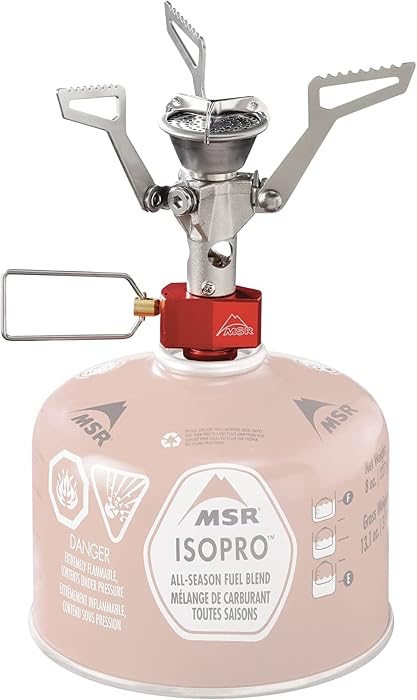
MSR PocketRocket 2 Ultralight Camping and Backpacking Stove

Ultralight three-season trips

Field Score 97/100
Case
Hard-shell carry case
Fuel
Isobutane-propane canister
Weight
2.56 oz
Boil Time
3.5 min per 1 L
View on Amazon

The PocketRocket 2 earns the default spot because it gets the basics right: 2.56 ounces, a 3.5-minute liter, and a folding canister mount that disappears into a 750 ml pot. We like that MSR kept the design bare: no integrated pot, no extra bulk. The stove is small, simple, and easy to trust when you're tired and hungry.

The serrated pot supports are a practical detail. We found the stove settles a 750 ml titanium pot and a wider 1-liter pot without feeling fussy, though it's still a canister-top stove: keep the canister level and choose a sheltered spot.

What we appreciate most is the lack of ceremony. The valve moves from a simmer to a rolling boil without drama, and there's no priming or preheating. It's the stove we reach for when the trip is about covering miles, not cooking a project.

The hard-shell case is a small thing that matters. It keeps soot off the rest of the kit, and the stove nests with a small canister so the whole kitchen stays in one place. If you want a regulated burner for cold mornings, the Deluxe is the upgrade; otherwise this is the one we pack first.

Worth Noting

  • Manual ignition requires a match or lighter
Our Verdict

For three-season backpacking, the PocketRocket 2 is the light, simple default: it boils fast, packs tiny, and asks nothing of you at camp.

Check Latest Price
2

SOTO WindMaster Best for Windy Conditions

SOTO WindMaster Backpacking Stove with 4Flex

Windy exposed campsites

Field Score 96/100
Fuel
Butane/isobutane/propane mix
Output
3260 W
Weight
3.07 oz
Pot Support
4Flex included
View on Amazon

Wind is the tax every canister stove pays, and the WindMaster is built to reduce it. The concave burner head sits close to the pot, and the included 4Flex support widens the platform for larger cookware.

We noticed the difference most when the stove was exposed rather than tucked behind a pack; the flame held its shape instead of licking around the pot. The regulator also keeps output steadier as the canister cools, which is why this is the pick for exposed ridges and shoulder-season mornings.

At 87 grams it's heavier than a bare titanium burner, but the 4Flex support and regulated output are what you're carrying; for a fast solo boil, that's a fair swap. The burner itself is compact, and the 4Flex support is the part that earns the extra space.

Worth Noting

  • Not compatible with 100% propane
Our Verdict

For windy, exposed campsites, the WindMaster is the stove we trust to keep a steady flame and a wide pot planted.

Check Latest Price
3

MSR PocketRocket Deluxe Best for Cold Weather

MSR PocketRocket Deluxe Ultralight Camping and Backpacking Stove

Cold-weather boiling

Field Score 95/100
Fuel
Isobutane-propane canister
Weight
2.9 oz
Ignition
Piezo push-start
Boil Time
3.5 min per 1 L
View on Amazon

The Deluxe is the PocketRocket for the mornings when the canister feels cold and the forecast is wrong. Its pressure regulator is the reason: it holds output as fuel level and temperature drop, and the broad burner gives you a simmer instead of an on-off blast. This is the one we choose when the trip runs into shoulder-season weather.

The piezo igniter is protected inside the burner, so it's less exposed to the knocks that kill a spark. We liked not digging for a lighter in the dark, and the push-start worked when we wanted a quick cup before breaking camp.

The broad burner is also the difference for real cooking. It spreads the flame enough to soften onions or reduce a sauce without scorching the center of the pot. It's still an open burner, so you need a sheltered spot and a pot that fits the supports.

The 2.9-ounce body folds into its stuff sack, and the 3-year warranty is longer than most here. It doesn't turn a canister stove into a windproof system; for that, the SOTO or a Jetboil is the better tool.

Worth Noting

  • Costs more than the standard PocketRocket
Our Verdict

For cold mornings and low fuel, the Deluxe is the regulated upgrade that still packs like a PocketRocket, with push-button lighting and a useful simmer.

Check Latest Price
4

Jetboil Flash 1.0L Best Fast-Boil System

Jetboil Flash 1.0L Fast Boil Stove for Camping & Backpacking

Fast dehydrated meals

Field Score 94/100
Weight
13.1 oz
Capacity
1.0 L
Ignition
One-step auto ignition
Boil Time
2 min per 16 oz
View on Amazon

The Flash is not a bare stove; it's a cooking system built around a 1-liter cookpot, and that changes how you pack. The burner, pot, cozy, lid, and stabilizer nest together, so your kitchen becomes one cylinder in the pack.

We like it for the trips where hot water is the meal. The 2-minute boil for 16 ounces is the headline, but the real win is the insulated cozy and locking pot: you can light it, wait, and eat without juggling a separate pot and lid.

The Safe-Touch zones and three-point locking system make it feel more like an appliance than a camp stove, and the bottom cup doubles as a bowl when you're sharing. It's a fast-boil tool, not a simmering station; the knob works, but the system is happiest at full tilt.

Worth Noting

  • Cookpot is integral to the system
  • Heavier than bare-burner stoves
Our Verdict

For freeze-dried meals and coffee, the Flash is a two-minute route to a hot cup, provided you want an all-in-one pot system.

Check Latest Price
5

Jetboil MightyMo Best for Real Cooking

Jetboil MightyMo Ultralight and Compact Camping and Backpacking Stove

Frying and simmering

Field Score 93/100
Output
2900 W
Weight
3.36 oz
Ignition
Pushbutton igniter
Boil Time
About 3 min
View on Amazon

The MightyMo is the Jetboil for people who want to actually cook, not just rehydrate. Its open burner takes a Jetboil skillet or FluxRing pot without a separate pot support, and the four-turn regulator gives you a real simmer.

At 3.36 ounces, it's light enough to toss in a daypack, and the open platform is the draw: a skillet sits without an extra support, and the flame turns down far enough to sauté without scorching.

What we missed was a windbreak. The burner is exposed, and a breeze can push the flame around enough that you end up building a shelter from packs and rocks. So while we appreciate the cooking flexibility, this is a stove for calm mornings or a carefully chosen spot, not an exposed ridge.

Worth Noting

  • Igniter can be inconsistent
Our Verdict

For simmering, sautéing, and a real frying pan, the MightyMo is the open Jetboil that cooks like a stove, not a kettle.

Check Latest Price
6

BRS 3000T Best Ultralight Budget

BRS Outdoor BRS-3000T Ultra-Light Titanium Alloy Miniature Portable Picnic

Gram-counting backups

Field Score 92/100
Fuel
Liquefied petroleum gas
Output
2700 W
Weight
0.88 oz
Boil Time
2 min 58 sec per 1 L
View on Amazon

Twenty-five grams is the whole argument for the BRS 3000T. It's a titanium canister stove that disappears in a 750 ml pot, and it still puts out 2700 watts.

The 2-minute-58-second liter rating is honest for a stove this size, and the valve adjusts smoothly from a simmer to a boil. We used it as a solo stove and as a backup, and it earned its place because it takes up almost no room in a pack.

For a solo hiker counting grams, the BRS is the value pick: it boils a liter in about three minutes and disappears into a 750 ml pot. It's not the stove we choose for a basecamp kitchen, but that's not the trip it's for.

Worth Noting

  • Small pot supports favor narrow cookware
Our Verdict

For solo trips where every gram counts, the BRS 3000T is the cheap, tiny stove that still boils a liter fast.

Check Latest Price
7

AOTU Portable Camping Stove Best for Budget Starter Kits

AOTU Portable Camping Stoves Backpacking Stove with Piezo Ignition Stable

Budget starter kits

Field Score 91/100
Fuel
Liquefied petroleum gas
Output
3000 W
Weight
3.84 oz
Packed Size
4 x 5 x 8 cm
View on Amazon

The AOTU folds into a package about the size of a medium bar of soap and weighs 3.84 ounces, so it's the stove you can leave in a daypack and forget about.

The piezo ignition and 3000-watt burner make it easy to get a quick boil, and the flame adjusts down to a simmer. The honeycomb windproof net is a nice touch on a breezy lunch stop, and the plastic case keeps the soot contained.

The fire board is sized for a 20 cm pot and one to three people, which is optimistic for a stove this small; we treat it as a solo or duo stove. The integrated aluminum body feels more substantial than the price suggests, and the folding legs snap out without fuss.

We think it's a fine cheap backup, not the stove we reach for on a committed trip. The low price is the point: it gives you a working canister stove for a fraction of the cost, and the case makes it easy to stash in a glove box or pack lid.

Worth Noting

  • Pot supports feel tippy with wider pots
  • Durability is inconsistent
Our Verdict

For a cheap backup or a first stove, the AOTU is tiny, light, and easy to light.

Check Latest Price
8

CAMPINGMOON XD-2F Best for Regulated Budget Backpacking

CAMPINGMOON Canister Stove Pressure Regulator Piezo Igniter Silver XD-2F

Regulated budget backpacking

Field Score 89/100
Fuel
Isobutane
Output
3.3 kW
Weight
3.53 oz
Pot Support
Detachable 4-prong
View on Amazon

The CAMPINGMOON XD-2F looks like a bare canister stove until you flip out the detachable four-prong support. That wider platform is the reason it can handle a 750 ml pot or a small fry pan without the pot wobble you get from tiny arms.

The regulator is the other half of the story. It holds a steadier flame as the canister cools, and the 3.3 kW output is enough for a fast boil without sounding like a jet.

At 100 grams, the stainless steel body feels more substantial than the price suggests. The piezo igniter is integrated, and the support detaches so the stove packs into a 750 ml Toaks pot.

We think it's the smart midrange choice for someone who wants regulated performance without the premium price of the SOTO or MSR Deluxe. The detachable support is the detail we keep coming back to; it makes a cheap stove feel less compromised.

Worth Noting

  • Heavier than titanium ultralight stoves
Our Verdict

For backpackers who want a regulated flame and a stable pot platform without a premium price, the XD-2F is the quiet overachiever.

Check Latest Price

How We Tested Backpacking Stoves

We started with a running list of about 40 stoves and cut it down by reading specs and owner complaints: packed weight with the stuff sack included, folded footprint, price, and whether the burner head would clear a standard canister valve. From there we bought 14, a mix of bare titanium burners, four-prong pot supports, pressure-regulated models, and integrated pot-and-burner setups, and rotated them through eight months of trips between roughly 4,000 and 10,000 feet, plus a lot of backyard mornings.

The real testing happened at 6 a.m., when everyone is cold and impatient. I timed two cups of water to a rolling boil on a still morning, then repeated it behind a windbreak with a steady breeze pushing at the flame, and weighed each canister before and after to see what a boil actually costs in fuel. Then came oatmeal and boxed mac and cheese, the simmer test, where a valve that jumps straight from off to jet engine shows itself fast.

Stability got tested by clumsiness: I set a full 1.5-liter pot on each stove and nudged it from four sides to find the tipping point, noting how wide the support arms spread and whether they flexed under a heavy pot. For ignition, I clicked each built-in igniter three times with dry hands, then again after a night below freezing and after a deliberate dunk in grit; some fired on the first click every time, others wanted a match by day three. Durability meant a full season of being crammed into a pack beside a canister, and portability meant whether each stove nested into its own pot without rattling.

How to Choose a Backpacking Stove

Decide between a system and an open burner

An integrated system and an open camp stove solve different problems. A system like the Jetboil Flash locks a pot to the burner and nests everything into one package. It's the easiest way to boil water for a dehydrated meal, and the cozy keeps that water hot while you eat. An open burner like the PocketRocket 2 or WindMaster lets you choose your own pot and pack a tiny kettle or frying pan. We reach for a system when speed and simplicity matter, and an open burner when we want cooking flexibility or the smallest possible pack.

Weigh the grams against the features

Every feature costs weight. The BRS 3000T is 25 grams and asks you to accept tiny pot supports; the SOTO WindMaster is 87 grams and brings a wider support and a regulator. The Jetboil Flash system is 13.12 ounces because it includes a 1.0-liter pot and cozy. If you hike long days and only boil water, save the weight. If you cook in wind, simmer sauces, or share a pot, the extra grams buy stability and control. We put a hard limit on what we carry: if a stove can't fit inside our cook pot, it has to earn its place with a feature we use every day.

Match the burner to wind and cold

Canister stoves lose pressure as fuel and temperature drop, which is why a regulator matters. The MSR PocketRocket Deluxe and CAMPINGMOON XD-2F use a regulator to hold a steadier flame; the SOTO WindMaster adds a concave burner and a close-fitting pot for wind. A bare burner like the PocketRocket 2 works fine in calm, mild weather, but it's more sensitive to gusts. If your trips run into exposed ridges or shoulder-season mornings, pay for regulation and wind resistance. If you only camp in summer, a simple burner saves weight and money.

Check ignition, pot support, and control

A piezo igniter is convenient, not a guarantee; it can be fussy in cold or wet conditions, so pack a lighter as backup. Pot support matters more than the flame rating. The AOTU and BRS have short arms that suit narrow pots, while the SOTO 4Flex and CAMPINGMOON's four-prong support hold wider cookware. Look for a valve that turns down to a simmer if you cook more than water. The Jetboil MightyMo's four-turn regulator is the most cooking-friendly valve here, and its open platform takes a skillet.

Fuel, cost, and compatibility

Most canister stoves use a threaded isobutane-propane canister, but not all. The SOTO regulator is not for 100% propane, and the AOTU and BRS list liquefied petroleum gas; check the valve and fuel type before you buy. A system like the Flash uses JetPower canisters and packs a 100 g canister inside the pot. Fuel is sold separately, so budget for it. The cheapest stove here can still be the right one if it matches your pot and your weather; the premium picks earn their price with regulation, wind protection, or an integrated pot.

Frequently Asked Questions

Final Verdict

Start with the MSR PocketRocket 2 if you want the lightest, simplest camp stove that still boils fast and packs into a 750 ml pot. It has fewer parts to fail and a hard-shell case that keeps soot out of your pack. If wind is your usual condition, the SOTO WindMaster is the better buy; if you want a one-pot meal system, the Jetboil Flash is faster. Those two changes in requirement are worth more than any feature list.