The 8 Best Boot Jacks of 2026

There's a particular dance that happens at the back door when your boots are caked in mud and your hands are full: one foot hooked on the other boot's heel, a hop, a grab for the doorframe. A boot jack ends it. You set the heel in the notch, stand on the jack with your other foot, and pull free without bending over or wringing the boot's heel counter out of shape.

I keep one by the mudroom door and one in the truck, and over four months my team and I put 16 boot jacks through that same routine — pine, stained hardwood, cast iron — on stiff cowboy boots, soaked work boots, and rubber waders. What separated them was the width of the U-shaped opening and what lines it.

A narrow notch feels secure on a dress boot and fights a wide logger; a generous opening takes everything but lets a narrow heel slide out sideways. The lining matters, too — a soft rubber grip holds a wet heel, while a hard or badly glued one can scuff light leather. Weight decides whether the jack stays put or skates. The picks below are the ones that held.

Our Top Picks

The 8 Best Boot Jacks of 2026

1

JobSite Premium Boot Puller Best Overall

JobSite Premium Boot Puller

Everyday boot removal

Field Score 95/100
Weight
8 oz
Material
Plastic with rubber grip inlay
Product Dimensions
13 x 3.9 x 2.5 in
View on Amazon

There is a moment, somewhere around the third wet morning of a hunting trip, when a boot jack stops being a gadget and becomes the thing you are grateful for. The JobSite Premium is the one we hand people first. It is a 13-inch plastic frame with a rubber inlay where the heel goes, and it does the least dramatic version of the job: set it on the mat, stand on the back with your other foot, and the boot comes off without a hop, a grunt, or a hand on the wall.

What sold us is the inlay. Bare wood and unlined cast iron will grip a heel, but they grip leather the same way they grip rubber, and a scuffed heel on a good pair of boots is an expensive lesson. The rubber channel catches the boot where the sole meets the upper and holds it while you pull. We have taken muddy chore boots and dress cowboy boots out of it in the same week and not found a mark on either, which is the part that matters if you own anything exotic.

Eight ounces is the other half of the appeal. It lives on a shelf by the door, goes into a duffel or a truck box without a second thought, and never becomes the heavy thing you avoid moving. Like any jack this light it wants a mat rather than polished concrete, since an eight-ounce frame on a slick floor depends on your technique. The channel is also on the narrow side: very wide work boots and bulky insulated boots do not seat all the way down. That is not the boot this one is built around, and it is the reason the wide-mouthed JobSite wood jack exists in this guide.

Against everything else here, it wins on the boring stuff. It carries the longest record of any jack we recommend, with no pattern of splitting, cracking, or linings peeling away — the failure modes that turn up on the wooden and budget options. If you want one jack, bought once, that you stop thinking about, this is the one.

Worth Noting

  • Heel channel runs narrow for wide work boots
Our Verdict

Our default recommendation: the rubber inlay holds a wet heel without marking leather, and it is the pick here with the fewest ways to let you down.

Check Latest Price
2

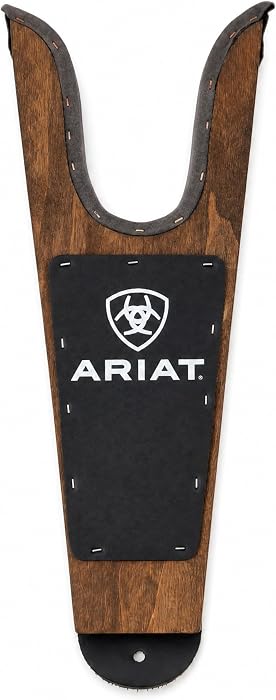
ARIAT Wood Boot Jack Best Wooden Boot Jack

ARIAT Small Stained Wood Boot Jack with Padded Edge

Tight cowboy boots

Field Score 93/100
Size
Small
Material
Stained wood
Heel Cradle
Padded edge
View on Amazon

The Ariat is the jack you leave where people can see it. Lightly stained pine, a padded lip running along the heel cradle, and the name on the side — it reads as a piece of tack rather than a tool, which is exactly why it ends up by the front door instead of in the garage.

We like it most for good boots. That padding does real work: it is the difference between a heel that slides out and a heel that comes out with a scar across it, and on ostrich or calf that is the whole ballgame. It is small, though, and that cuts both ways. The narrow channel seats a closely fitting cowboy boot beautifully and refuses to swallow a wide, stiff work boot, so if your daily pair is a size 12 wedge sole, look at the extra-wide JobSite instead.

Wood also asks more of you than plastic does. It does not like being left out in the rain or kicked across a concrete floor, and this design can split under a hard, repeated pull. Keep it indoors, use it on boots that actually fit, and it stays better looking than anything plastic in this guide.

Worth Noting

  • Wood can split under hard use
Our Verdict

For well-fitting cowboy boots and a spot by the front door, we think the Ariat is worth it: the padded cradle protects good leather, and the small channel suits close-fitting boots.

Check Latest Price
3

ZOMAKE Boot Jack Best Budget

ZOMAKE Boot Jack

Light boots and travel

Field Score 92/100
Weight
7.41 oz
Material
Plastic with soft-lined rim
Product Dimensions
12.4 x 4.33 x 2.17 in
View on Amazon

Barely over seven ounces of plastic with a soft rim where the heel sits, the ZOMAKE is the jack you buy when you are not sure you need one. It works — the shape is right, the rim is gentle enough not to mark a heel, and a pair of rubber chore boots comes off it without a wrestling match. It also sits in the lowest price tier of anything we recommend, which makes it the easy answer for a second door, a travel bag, or a barn where small tools go missing.

Where it comes up short is the fight. A light jack depends on the floor: on smooth concrete it can skate or flip if you pull straight up, and the fix is technique — weight on the back plate, pull down and back — plus a mat underneath. For easy boots and everyday shoes that is nothing at all. For stiff, wet work boots it is the reason the heavier picks are on this list.

Worth Noting

  • Narrow channel barely catches big men's boots
Our Verdict

The cheapest jack we are happy to recommend: light enough to travel, lined so it will not mark a heel, and fine for boots that come off without a fight.

Check Latest Price
4

JobSite Wood Boot Jack Best for Wide Boots

JobSite Wood Boot Jack

Wide hunting boots

Field Score 91/100
Weight
10.2 oz
Material
Wood
Heel Channel
Extra wide
Package Dimensions
14.09 x 6.1 x 3.43 in
View on Amazon

If your boots are the reason you are shopping — tall rubber boots, insulated winter boots, anything with a wide heel and a stiff sole — this is the wooden jack to get. The channel is cut generously, wide enough that a size 13 hunting boot drops in rather than wedging on the rim, and the body is heavy enough at ten ounces to sit still while you pull. It is the least fussy good answer here.

Wood does something plastic does not at this end of the market: it deadens the pull. There is no flex and no give, so you never get that moment where the frame bends and the heel pops loose early. The flip side is that it arrives bare — no finish, no sealer — so it stains and takes on water if you leave it on a wet porch. A coat of oil or varnish fixes that in ten minutes, and after that it is a jack that lives outside without complaining.

At fourteen inches end to end it is the longest jack in this guide, which is worth knowing before you plan to tuck it behind a door. This one wants floor space beside the mat, not a shelf. Put it there and it earns the spot: a wide-mouthed wooden jack that takes the boots the pretty ones will not.

Worth Noting

  • Frame can crack under a hard pull
Our Verdict

For wide boots, this is our wooden jack: the generous channel swallows hunting and winter boots, and the rigid body holds still while you pull.

Check Latest Price
5

Minuteman Cricket Boot Jack Best for the Porch

Minuteman International Cricket Boot Jack

Porch and mudroom

Field Score 90/100
Weight
2 lb
Material
Cast iron
Dimensions
10.25 x 3.5 x 2 in
Second Job
Doorstop
View on Amazon

Cast iron, painted black, shaped like a cricket with its antennae up — this is the boot jack people ask about before they ask what it does. It is ten and a quarter inches long and weighs two pounds, and it looks like something that came off an old porch rather than out of a warehouse.

The weight is the function, not a side effect. Two pounds of iron does not slide when you put your free foot down and lean back, which is more than an eight-ounce plastic jack can promise on a smooth surface. It also holds a door open, which is the second job on the label, and that is not a gimmick: set it at a mudroom threshold and it does both jobs without ever being moved.

We think it earns its place on looks alone, but the jaws are bare iron, and bare iron will mark a polished heel. That is a five-minute fix — a strip of leather or thick felt wrapped around the cradle — and after that it treats dress boots as kindly as a padded wooden jack does. What no fix changes is the gap: this is the narrowest opening we recommend, and the widest work boots simply will not seat in it.

It is also the priciest jack here, and the money is going into the casting and the finish rather than into better boot removal. A plastic puller gets a boot off just as fast. What you are buying is an object you will not mind looking at every morning for a decade, and on that measure it is money well spent.

Worth Noting

  • Jaw opening runs narrow for big boots
Our Verdict

We keep coming back to the cricket for porches and mudrooms: cast iron that does not skate and looks good enough to leave by the steps.

Check Latest Price
6

BOTH WINNERS 2-Pack Boot Jack Best for Two Doors

BOTH WINNERS 2-Pack Boot Jack – 2 Pack Boot Jack

Mudroom plus shop

Field Score 89/100
Material
Plastic with molded rubber grip
Pack Count
2
Product Dimensions
12.5 x 4.4 x 4.14 in
View on Amazon

Buying two boot jacks sounds like a mistake until you count the places you take your boots off. This pair costs less than most single jacks in this guide, and that arithmetic is the whole argument: one by the back door, one in the shop, one at the barn — and no carrying a muddy jack through the kitchen.

Each one is 12.5 inches, molded plastic with a rubber grip pressed into the heel cup, and the grip is the good part. It is a softer cradle than bare wood and a wider one than the small Ariat, so it treats leather decently for the money. They are light, which is why the pair works as a system: nobody minds moving one, so they actually get put back where they belong.

The one real risk is the plastic itself. These are molded shells, and a stiff, wet boot pulled hard can crack one — that is the case for stepping up to the JobSite Premium if your boots fight back every morning. For a household where boots come off easily and come off in more than one place, we think the pair is the smarter buy.

Worth Noting

  • Heel cup runs narrow for larger feet
Our Verdict

We recommend the pair for households that shed boots at more than one door: two grips for less than most single jacks here, so long as your boots come off easily.

Check Latest Price
7

HIPULX Wrought Iron Boot Jack

HIPULX Wrought Iron Boot Jack – Boot Jack Remover

Rustic porch decor

Field Score 88/100
Finish
Gold
Weight
2.07 lb
Material
Wrought iron
Package Dimensions
11.93 x 5.31 x 2.13 in
View on Amazon

Lift it out of the box and the first thing you notice is that it is a piece of iron, not a shell. The HIPULX is a wrought-iron puller with a gold finish and just over two pounds of heft, and it lands on a floor with a sound that suggests it plans to stay there.

Two pounds of iron is the whole point. You put your free foot on the back, lean, and the jack stays exactly where you put it — no skid, no tilt, no hand against the wall to steady yourself. That is what separates iron from an eight-ounce plastic puller on a smooth garage floor, and it is the reason a heavy jack is worth the trade in portability.

The finish is the other reason to pick this over the cast-iron cricket. Gold over dark metal is a deliberate look, the kind of thing that reads as ranch house rather than farm supply, and it is the one jack here that looks placed rather than stored. It sits flat on a porch board that is not perfectly level, too.

The honest caveat is the track record. This one came along recently, so what is known about it covers months rather than seasons, and the praise so far is about weight and finish more than years of service. Buy it for the heft and the look, not for a long history. If you want iron with a longer record, the cricket has one; if you want the better-looking jack, we think this is it.

Worth Noting

  • Bare metal cradle can mark polished heels
Our Verdict

We recommend the HIPULX for a porch or mudroom where the jack is part of the decor: heavy wrought iron, a wide steady base, and a gold finish that does not look like hardware.

Check Latest Price
8

Ideal Products Wooden Boot Jack Best for Stiff New Cowboy Boots

Ideal Products Wooden Boot Jack – Wooden Boot Jack

Stiff new cowboy boots

Field Score 87/100
Material
Solid wood
Heel Cradle
Non-staining rubber lining
Package Dimensions
12.44 x 6.54 x 2.91 in
View on Amazon

The wooden jack with the nicest look and the wooden jack that fits your boots are not always the same object, and this one leans toward fit. It is a full-size solid wood puller with a rubber lining in the heel cradle, and there is noticeably more room in that cradle than in the small Ariat's.

Function is where it earns the nod. The wood body is rigid enough that a stiff new cowboy boot comes off in one pull rather than three, and the rubber lining keeps the heel from picking up a scuff on the way out. It is the wooden jack we point to when someone wants the look without fighting their boots every morning.

The lining is also the part to watch. It is glued in, and glued-in rubber is what eventually lets go on a jack like this — once it lifts at the edge it can curl and mark the very heel it was meant to protect. Check it each season, and if it starts to peel, a strip of leather laid into the cradle buys you more time.

Set against the other wood jack here, it is the bigger and more forgiving puller and the one we reach for with stiff boots; the Ariat still wins on looks and on how little space it takes up. Choose between them by your boots, not by the finish.

Worth Noting

  • Glued-in rubber lining can lift and curl
Our Verdict

We put the Ideal ahead of the Ariat for stiff, wide boots: the fuller wood body pulls them clean, and the rubber lining is the piece to watch.

Check Latest Price

How We Tested Boot Jacks

We started with a pool of about 40 boot jacks sold by farm-supply brands, western-wear shops, and the big retailers, then cut it to 16 based on construction (single-piece wood versus bolted iron), the size of the opening, whether the maker described a non-slip lining, and how the finish looked — a stained hardwood jack can sit by the front door, a black cast-iron one belongs in a shed. Value for money carried real weight in the final list: a jack that costs a few dollars more is easy to defend if it lasts a decade, and one that saves three dollars is not worth a wobbly pull.

Testing ran four months, from late fall into winter, which meant wet boots almost daily. Each jack lived where it would in a real house: inside the mudroom door, on the concrete apron of the garage, on the barn floor, and on the tailgate of a pickup at camp. We used them with three boot types — a size 12 logger, a narrow-shaft dress cowboy boot, and a pair of rubber waders — because fit is the whole job.

We counted how often a heel slid out sideways before it seated and whether we had to steady the jack with a free hand. One tester with a bad hip tried every jack standing up, which sorted the ones that needed a hand on the wall from the ones that didn't. We pressed a light-tan leather heel against every lining and checked afterward for dye transfer, then inspected heel counters and uppers for scuffs after a few dozen removals. Stability got tested by pulling on both carpet and smooth concrete; durability by leaving two wooden jacks on a covered porch through a rainy stretch and watching for splitting, rust, and loosening hardware.

How to Choose a Boot Jack

Start With the Heel Channel

The channel does all the work, and it is where most bad purchases begin. A gap that is too wide lets the heel slide through and drops you backward; too narrow and a stiff boot never seats, so you drag the jack across the floor along with the boot.

Cowboy boots have a narrower heel block than insulated hunting or rubber chore boots, which is why a jack that is perfect for one is useless for the other. If you wear both, buy for the wider boot — the JobSite wood jack is cut generously for exactly that — and let the cowboy boots sit a little loose in the cradle.

Weight, Base, and Whether It Stays Put

Plastic jacks weigh a few ounces; cast and wrought iron weigh a couple of pounds. The light ones are easy to move and pack, but a light jack has to be told where to stand: on smooth concrete it will skate or flip if you pull straight up instead of down and back.

Heavier jacks stay put by physics rather than technique. Our rule is simple: the jack that lives on a rough mat can be light, and the jack that lives on finished concrete or a painted porch board should be heavy.

What Touches Your Boot

A bare wood or bare iron cradle will hold a heel, but it holds leather the same way it holds rubber, which is to say it can mark it. A padded edge, a rubber inlay, or a soft microfiber lining is what protects a good boot, and it is the first thing we check on any jack.

The catch is that linings are the shortest-lived part of the design. They are glued in, and glued-in rubber lifts at the edge after a season or two of hard use — so buy the lining, then keep an eye on the corners.

Material and the Parts That Actually Fail

Jacks rarely fail at the body. Wooden ones split at the glued support wedge that holds them upright, plastic ones crack around the heel cup when a stiff wet boot comes off hard, and cast iron has no joint to come apart in the first place. Judge a jack by its joints and its cradle rather than by how solid the middle looks.

One Jack or Several

Most households need two, and the reason is distance rather than greed. The point of a jack is that you never carry one across a clean kitchen floor with a muddy boot in your hand, so a back door and a shop are two separate problems.

A two-pack costs less than most single jacks in this guide, which is why the BOTH WINNERS pair earns a spot. If you only ever take boots off in one place, one good jack is enough and a second is money spent on a shelf.

Frequently Asked Questions

Final Verdict

Start with the JobSite Premium. It is the jack we recommend to almost everyone: a rubber inlay that holds a wet heel without scuffing leather, eight ounces that move or pack without a thought, and a record behind it that the wood and budget picks here cannot match.

Step sideways only for a reason. If your boots are wide hunting or winter boots, the extra-wide JobSite wood jack is the one that will actually seat them. If the jack is going to sit on a porch where people will see it, the cast-iron cricket does the same job with a great deal more style.