The 8 Best Driveway Alarms of 2026

A driveway alarm fails in two directions: it sleeps through the arrival you actually cared about, or it screams at every raccoon and passing branch. I learned that at the end of a long gravel drive where the mailbox sits out of sight and delivery trucks turn around before I reach the door.

The technology explains some of it. Most sensors watch for heat and motion across a fan-shaped zone; a smaller group uses an electromagnetic probe buried beside the drive that only reacts to a large moving mass of metal, so deer and branches don't count. Neither approach is automatically better, and where you aim the sensor matters as much as what's inside it.

We've spent eight months with 10 systems, tracking what owners complain about most: false triggers, real range against the number on the box, battery life through cold snaps, volume you can hear over a shower, whether the different chimes are actually distinguishable, and how long a solo install takes. Solar panels, plug-in receivers, expandable kits, all of it got weighed. The picks below are the ones we'd trust by the front window.

Our Top Picks

The 8 Best Driveway Alarms of 2026

1

HTZSAFE 1/2 Mile 4-Sensor Alarm Best Overall
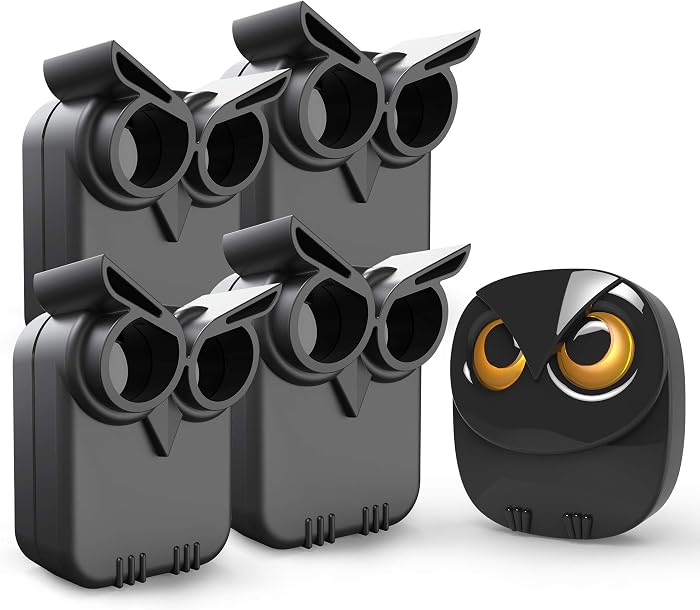
HTZSAFE 1/2 Mile 4-Sensor Alarm – Driveway Alarm

Long, multi-point drives

Field Score 90/100
Sensor Power
3 AA batteries
Wireless Range
1/2 mile
Motion Detection
35–50 ft
Sensors Included
4
View on Amazon

Four sensors in one box is why this kit sits at the top of our list. Most driveway alarms here give you a single detection point, so every chime means something is somewhere on the drive. Put a sensor at the road, one at the gate, one on the garage apron, and you get a sequence instead of a guess — and because the receiver assigns a different tone to each sensor, you learn the whole map in a day.

The half-mile figure is the radio link between sensor and receiver, not how far away a car gets noticed, and the listing says plainly that local terrain changes the real number. We like that the extra sensors take pressure off that figure: with one detector near the house and one at the property line, no single unit has to shout across the whole place. Detection runs 35 to 50 feet in front of the lens, which catches a truck turning in without watching the entire county road.

Aimed straight down the drive, a motion sensor this wide will also catch deer, foxes, and a good stiff breeze. We set ours across the lane at about waist height, so a vehicle breaks the beam for a second and passes through. That one habit handles most of the false-alarm complaints this style of alarm collects.

The receiver wants an outlet where you'll actually hear it — a kitchen counter or a hallway plug, not the one behind the sofa. Pairing is done at the factory, so there's nothing to program: you hang the sensors, plug in the box, and walk the drive to check that each zone plays the tone you expect. The system takes up to 32 sensors and additional receivers, which is more headroom than most properties need.

Worth Noting

  • Three AA batteries not included
  • Priced above the other midrange kits
Our Verdict

We recommend the HTZSAFE first because four sensors turn a single alert into a location — you hear which part of the drive was crossed.

Check Latest Price
2

eMACROS Solar 1/2 Mile Alarm Best Value Long-Range Kit

eMACROS Solar 1/2 Mile Alarm – 1/2 Mile Solar Wireless Driveway Alarm

One gate or culvert

Field Score 89/100
In The Box
1 receiver, 1 sensor
Battery Life
Up to 2 years
Power Source
Solar with internal battery
Wireless Range
1/2 mile
View on Amazon

Both this and our top pick are rated to half a mile, and both use a plug-in receiver you set once and forget. The difference is coverage: the eMACROS kit arrives with one sensor, and that sensor carries its own solar panel. If the drive has a single place every vehicle has to pass — a gate, a culvert, a low bridge over the creek — one is all you need.

The panel tops up an internal battery the listing rates for up to two years on a full charge, and not thinking about batteries is most of the pleasure here. It only holds if the panel sees real sun. Bolted to the shaded north side of a tree it will need topping up by cable; give it a few hours of daylight and it looks after itself.

The instructions are unusually specific about placement — two to three feet up for vehicles, three to four feet for people, kept level and square to the ground — and that saves an afternoon of guessing. Sensitivity adjusts between high and low, and low is where we start on a road with dogs or deer on it.

This is also the pick when the install has to be a five-minute job: no trench, no wiring, no hub, just a post and an outlet. What you give up is the second and third zone, and on a long winding drive that matters more than the range rating ever will.

Worth Noting

  • Just one sensor in the box
  • Panel needs direct sun to keep up
Our Verdict

We point people to the eMACROS when the drive has one choke point: half-mile range, a solar sensor, and nothing to wire.

Check Latest Price
3

TECKNET Solar RGB Alarm Best Budget

TECKNET Non-APP Solar RGB Wireless Driveway Alarm

Tight budgets

Field Score 88/100
Melodies
36
Power Source
Solar powered
Weather Rating
IPX5
Wireless Range
2,600 ft
View on Amazon

This is the one we hand to people who want an alert at the top of the drive and can't see spending more than they have to. It's solar, it arrives paired, and it sits at the bottom of the group on price. Nothing about it reads like a compromise until you go looking for one.

The listed range is 2,600 feet, further than most properties can use and further than most buyers need. What matters is that it comfortably covers a mailbox-to-kitchen run with room left for walls and weather, and that mounting it is a ten-minute job with a bracket that swivels so you can aim across the lane rather than down it.

Inside, the receiver gives you 36 melodies across four alert zones and five volume steps from loud down to nearly silent. We care more about the volume range than the tune list: on a quiet country night you want a chime that reaches the bedroom without waking the whole house, and five steps is enough to find that. The sensor housing is rated IPX5, which is the sort of number that matters on a fence post through a wet winter.

Worth Noting

  • One sensor covers one spot
Our Verdict

We send budget shoppers to the TECKNET: solar charging, five volume levels, and enough listed range for most properties at a low price.

Check Latest Price
4

Dakota Alert DCPA-4K Plus Best for Vehicles Only

Dakota Alert DCPA-4K Plus 1-Mile Wireless Driveway Alarm Vehicle Probe Kit

Vehicle-only alerts

Field Score 87/100
Battery
3 CR-123, about a year
Detection
Buried electromagnetic probe
Wireless Range
1 mile
Sensors Per Receiver
Up to 16
View on Amazon

A buried probe doesn't watch for motion. It senses metal moving over it, which is why a deer can walk the length of your drive without a sound and a motorcycle still sets it off from the road.

Installation is what separates it from everything else here: the probe goes into a shallow trench beside the drive and a cable runs to a transmitter above grade. That's a shovel and an afternoon, and it's the reason this kit isn't for everyone. Once it's in, the transmitter is rated to reach a mile, pairs with up to 16 sensors, and runs about a year on three CR-123 batteries. The receiver plays one of 16 tunes at whatever volume you set.

What you're buying is silence you can trust. Every other pick on this page will eventually announce a raccoon; this one won't, and on a road with livestock or heavy wildlife that single difference is worth more than the range. If you also want to know when someone walks up the drive, this is the wrong tool — a motion sensor belongs beside it, not instead of it.

Worth Noting

  • Premium price
  • Requires a trench and buried probe
Our Verdict

We choose the DCPA-4K Plus when vehicles are the only thing worth hearing about; nothing else here filters out animals and weather so completely.

Check Latest Price
5

Dakota Alert DCMA-4K Plus Best for Distant Sensors

Dakota Alert Wireless Driveway Alarm DCMA-4K Plus 1-Mile Motion Sensor Kit

Distant sensors

Field Score 86/100
Battery
One 9V, about a year
Detection
PIR motion
Volume Levels
4
Wireless Range
1 mile
View on Amazon

The receiver is the least friendly part of this kit: a small screen and a cluster of buttons that reward a read of the manual before you start pressing things. Everything upstream of it is serious hardware.

A mile of radio is the reason to buy it. When the mailbox sits at the end of a quarter-mile of gravel and the house hides behind a stand of pines, the half-mile kits are working at their limit and this one isn't. We also like that the volume steps down as well as up — a mile-range alarm that only shouts is an alarm that gets unplugged.

The sensor itself is a PIR eye, so it sees people, deer, and dogs as readily as a truck. Aim it across the drive, keep it away from anything that bakes in the afternoon sun, and it behaves. Up to 16 sensors can share the receiver, and a single 9V battery is rated for a year or more.

Worth Noting

  • Small display and fiddly buttons
  • Costs more than the motion kits here
Our Verdict

We recommend the DCMA-4K Plus when the sensor must sit far from the house; the one-mile radio is what you're paying for.

Check Latest Price
6

Mighty Mule FM231 Best for Short Drives

Mighty Mule FM231 Wireless Driveway Alarm

Short drives

Field Score 85/100
Detection
Electromagnetic probe
Expandable
Extra receivers sold separately
Sensor Power
2 AA batteries
Wireless Range
400 ft
View on Amazon

Digging is the price of admission for a probe, and with the Mighty Mule the digging is the whole installation: a short trench beside the drive, the sensor in the ground, a post for the transmitter. No aiming, no false trips from a branch in the wind, nothing to adjust after a storm.

The rest of the kit is deliberately plain. Two AA batteries run the transmitter, a low-battery indicator saves you from silent failure, and the indoor receiver chimes and does nothing else. Extra receivers are sold separately, which is the upgrade most people actually want — one in the kitchen, one in the shop.

Two things run mixed. The chime is on the quiet side for a big house, and the sensor can be tripped by a rig passing close to the road or by a thunderstorm overhead. Neither is unusual for electromagnetic sensing near traffic, and neither is fatal on a rural lane where the house is a good distance back.

Set against the Dakota probe, the Mighty Mule is the cheap way into vehicle-only detection. It suits a drive of a few hundred feet with the house in sight of the road; where the lane runs long and the house sits deep, the extra money for a mile of range and a louder receiver is the better spend.

Worth Noting

  • 400-foot wireless range
  • Chime volume runs soft
Our Verdict

We suggest the Mighty Mule for a shorter drive when you want vehicle-only alerts without the Dakota price.

Check Latest Price
7

FREETIM Wireless Driveway Alarm Best for Mailbox and Gate

FREETIM Wireless Driveway Alarm – Driveway Alarms Wireless Outside

Mailbox and gate

Field Score 84/100
Melodies
60
Sensor Power
3 AAA batteries
Wireless Range
500 ft
Detection Range
19–65 ft
View on Amazon

Not every driveway needs a half-mile radio. If the mailbox sits within sight of the porch and the drive is a single lane, this small kit does the entire job: sensor on a post, receiver in an outlet, a chime when someone turns in. It's also the least expensive way to find out whether a driveway alarm suits your household at all.

The detection window adjusts from 19 to 65 feet, which is the spec that earns its keep here — narrow it and a car passing on the road stops registering while anything turning into the drive still does. The radio link is rated at 500 feet, the housing is IP44, and the receiver offers 60 ringtones across four volume levels.

Three AAA batteries run the sensor, and that's the part to think through. Alkaline AAAs fade fast in freezing weather, so a northern buyer is looking at a swap each winter, and a sensor mounted high on a post turns that into a ladder job. Hang it at arm's reach and the maintenance becomes nothing.

Worth Noting

  • Modest IP44 water resistance
Our Verdict

We like the FREETIM for a short run to a mailbox or gate, where a small detection window and a low price both fit.

Check Latest Price
8

FULNIX Solar Driveway Alarm Best for Farms and Outbuildings

FULNIX Solar Driveway Alarm – Solar Driveway Alarm

Farms and outbuildings

Field Score 83/100
Wireless Range
3,000 ft
Detection Range
Up to 55 ft
Receiver Battery
5,000 mAh
Sensors Supported
Up to 84
View on Amazon

The receiver comes off the wall, which sounds like a small thing until you've spent a morning in the barn. It carries a 5,000 mAh battery the listing rates for about 30 days at ten alerts a day, so it can sit on the workbench or ride along to the shop and still hear the drive.

Two solar sensors come in the box, rated to reach 3,000 feet and to detect at up to 55 feet with adjustable sensitivity. Setup runs on voice prompts rather than a manual, which is a welcome change from the button combinations elsewhere, and the system expands to more sensors than a home driveway will ever exhaust. The caveat is simple: this is new hardware without much of a record behind it.

For a farm with outbuildings, or a house where the person who wants the alert is rarely in the kitchen, that rechargeable receiver is worth more than another few hundred feet of range. We just want to see more of them in service before we call the durability settled.

Worth Noting

  • Receiver needs periodic recharging
Our Verdict

The FULNIX earns its slot on the receiver alone: it's the one here that leaves the outlet and goes to the barn with you.

Check Latest Price

How We Tested Driveway Alarms Where They Actually Live

We started with every system still selling in real volume, then sorted them by how they detect — heat-and-motion sensors versus buried electromagnetic probes — along with power source, receiver style, sensor count in the box, and whether the kit could be expanded later. That narrowed things to 10 units, which we installed across four properties: a rural gravel drive, two suburban concrete driveways, and a long gated lane where the house sits roughly 300 feet back from the road.

One person did every install, stopwatch running. We noted whether it took a ladder, a shovel, or an outlet near the receiver, and whether the instructions held up without a second read. Then we simply lived with them for eight months — school runs, garbage trucks, mail delivery, the neighbor's cat, deer at dusk, and one memorable 2 a.m. thunderstorm.

Range claims got checked the hard way: we walked and drove away from each receiver until the chime quit, then came back to see how fast it recovered. For the first month we logged every trigger, marking real arrivals against false ones, because a system that fires at every swaying branch is worse than no system at all. Volume was judged from the far end of the house and from behind a running shower, and we counted how many distinct chimes each receiver offered and whether we could honestly tell the front gate from the back door.

Solar units ran through an overcast week in late fall and a hard cold snap, and we recorded how long each held a charge plus how visible the low-battery warning was before it went quiet. After eight months of rain, sprinkler overspray, and one hailstorm, we checked lenses for fogging and housings for cracks. At the end, each system's price got weighed against how often it had to be recharged, re-aimed, or re-paired.

How to Choose a Driveway Alarm

Motion or a Buried Probe?

Every driveway alert we recommend uses one of two sensing methods, and the choice changes what wakes you up. A PIR motion sensor reacts to heat and movement, so it sees cars, people, deer, dogs, and — on a bad afternoon — a fence post that has been baking in the sun. A buried electromagnetic probe reacts only to metal moving over it, which means vehicles and nothing else.

If you want to know when someone walks up the drive, buy motion. If your road carries more wildlife and farm traffic than visitors, the probe buys you a quieter life. Both work with gravel or pavement; the probe goes beside the drive, not under it.

Two Numbers, Not One

The transmission range — the radio link from sensor to receiver — is the figure in big type, and it is measured in open air. Detection range is the smaller number, often 25 to 70 feet, and it describes how far in front of the lens a vehicle gets noticed. Confusing the two is how people end up disappointed.

Terrain, walls, metal siding, and a rise in the ground all cut the radio figure, so treat the headline as a ceiling. Put the receiver high and away from metal. On a run of several hundred feet through trees, buy the mile-rated units rather than hoping the half-mile kit stretches.

Where the Power Comes From

Solar sensors are the least demanding thing to own: a panel tops up an internal battery and you stop thinking about it, provided the panel sees several hours of direct sun. A shaded post means topping up by cable. Replaceable cells — AA, AAA, 9V, CR-123 — work anywhere but mean a ladder and a fresh set, and alkaline batteries fall off badly in a cold snap.

The receiver almost always plugs into an outlet, so decide which room you'll hear it in before you decide where the sensor goes.

Zones, Chimes, and Volume

One sensor tells you something happened. Three tell you a story: at the road, at the gate, at the garage. Kits that assign a separate tone to each sensor are the ones worth paying for, because a chime you can identify without looking is the entire point of the exercise.

Check the volume range rather than the melody count — 36 tunes is a novelty, five volume steps is a feature. And count sensors before you order: adding to a cheap single-sensor kit later often costs more than buying the four-sensor kit on day one.

Aiming It So It Stays Quiet

Most false alarms are an installation problem rather than a product fault. Mount the sensor two to three feet up to catch vehicles, three to four feet for people, and aim it across the drive so a car breaks the beam for a moment instead of travelling along it. Keep the lens clear of swaying branches, tall grass, and anything that heats up in the afternoon sun. Start sensitivity low and raise it only if the drive gets missed.

Frequently Asked Questions

Final Verdict

Four sensors, a half-mile radio, and a chime you can recognize from across the house: the HTZSAFE kit is the one we recommend first, because it answers the question a driveway alarm is really asking — not whether something is there, but which part of the drive it's on.

If every vehicle has to pass one gate, the eMACROS does the job with a single solar sensor and no battery chores. And if the wildlife on your road outnumbers the traffic, the Dakota probe is the only pick here that stays quiet.