The 7 Best Elk Diaphragm Calls of 2026

An elk diaphragm call is a latex reed stretched over a plastic frame that you press against the roof of your mouth and blow across while your tongue and throat shape the sound. Because it lives inside your mouth, the details that actually decide how it plays — reed thickness, how much stretch the frame puts on the latex, whether it sits flat against your palate — never show up in a product photo.

The worry is what happens in the field: a reed that dries out and squeaks, a frame a touch too big that sets off your gag reflex, or a call that goes silent right when you need a locator bugle. My team and I spent six months cycling through 14 calls — singles, doubles, triples, and a few multi-packs — practicing in the yard, in the truck, and through September's archery season.

More latex isn't automatically better, either: single reeds ask more of your tongue but cover more ground, while doubles and triples are easier to learn on and stay consistent when your mouth is dry and you're winded. The picks below include both kinds, narrowed down by months of pocket carry.

Our Top Picks

The 7 Best Elk Diaphragm Calls of 2026

1

Phelps AMP Elk Diaphragm Best Overall

Phelps Game Calls AMP Elk Diaphragm

All-around elk hunting

Field Score 90/100
Frame
Aluminum AMP frame
Sounds
Cow, calf, bull bugle
Skill Level
All skill levels
View on Amazon

An elk diaphragm earns its keep only if it seals, and the AMP's aluminum frame is the most convincing answer to that problem in this guide. The latex is precision-stretched on a frame that holds its shape, so the note stays even instead of wandering between mornings. We've come to think of that consistency as the real feature here — a call that shifts under your tongue is one you second-guess at the worst possible moment.

The range is the other half of it. This one goes from soft cow chirps and calf mews up to an aggressive bull bugle with the chuckle on the end, which is more vocabulary than most single calls carry. And because it stays in your mouth, you can draw, hold, and stop a bull without reaching for anything.

The catch is cost. It's the most expensive pick in this guide, and that's a real commitment for a first call when several good reeds here cost far less. We think it pays off across a couple of seasons of hard hunting, but if you're still finding out whether mouth calls suit you, start cheaper and come back to it.

One habit worth copying either way: keep it cool and dry. Latex that bakes in a truck cab comes back stiff, and a call that lived on the dashboard all August is a call you replace in September.

Worth Noting

  • Most expensive call in this guide
Our Verdict

We recommend the AMP to anyone who hunts elk more than once: the frame seals consistently and one reed covers cow, calf, and bull.

Check Latest Price
2

Phelps Signature Single AMP Best Single-Reed All-Around

Phelps Game Calls AMP Elk Diaphragm

One-reed simplicity

Field Score 89/100
Reed
Single medium reed
Frame
Aluminum AMP frame
Sound Profile
Medium cow and herd bull
View on Amazon

Same frame as our top pick, one reed instead of the AMP's full spread, and a much smaller bill. The Signature Single is Jason Phelps' own stage and field call, built to his specification for medium cow and herd-bull sounds, and for plenty of hunters it's the more sensible place to start.

What we appreciate is how little it asks of you. One medium reed means one stretch to learn, so practice goes into the sounds rather than into remembering which call does what. The aluminum frame gives you the same comfortable seat as the AMP, and that seat is the part that decides whether a call stays in your mouth for an hour or comes out after five minutes.

The trade-off is range. Medium cow and herd bull are what this cut is voiced for; a screaming challenge bugle or a thin calf bawl wants a different reed. If your season is mostly cow talk with an occasional bugle, you won't miss the rest — and at this price, buying two so you always have a dry spare is the easy call.

Worth Noting

  • One voice, with no dedicated bugle cut
Our Verdict

We point hunters who want a single versatile reed at the Signature: same AMP frame, medium cow and herd-bull voice, much lower cost.

Check Latest Price
3

Rocky Mountain GTP 3-Pack Best Value Multi-Pack

Rocky Mountain Hunting Calls 142 GTP Series Black Magic

Trying three tensions

Field Score 88/100
Frame
Golden Tone Plate
Format
3-pack
Calls Included
Black Magic, Reaper, Spellbound
View on Amazon

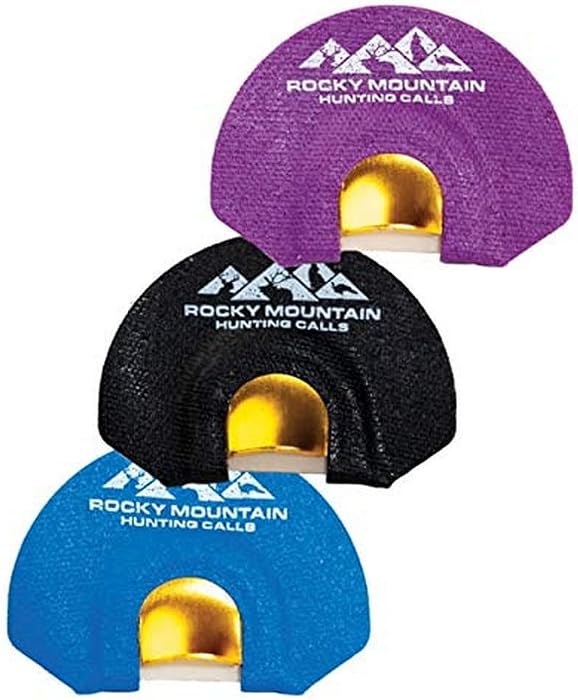
For roughly what the priciest single call here costs, the GTP pack hands you three reeds instead of one. Black Magic, Reaper, and Spellbound each bring a different tension to the same Golden Tone Plate frame, which makes the set a comparison test you can run in your own mouth.

That shared frame is why the three behave alike — Rocky Mountain builds several of its elk calls on the GTP platform, and it seats and runs the same way each time. The calls come out crisp, and they're forgiving enough that practice turns into progress rather than frustration.

Three reeds in three tensions is the fastest way to learn what your mouth likes, and we think that's worth more than a fourth call: once you know whether you blow better on a tight stretch or a loose one, every call you buy afterward is a better bet. If you already know you want a tight, aggressive cut, buy that single instead — this pack's value is the search.

Worth Noting

  • Reed counts for each call aren't stated
Our Verdict

We recommend the GTP pack for anyone still hunting for their reed: three tensions to compare, and the least money for three calls here.

Check Latest Price
4

Bugling Bull Who's YRR Daddy Best for New Callers

Bugling Bull Who's YRR Daddy Cow/Calf Call

Easiest to Blow

Field Score 87/100
Reed
Single lite latex
Plate
Flat palate plate
Placement
Forward, behind upper teeth
View on Amazon

Most diaphragms want to sit back on the roof of your mouth. The Who's YRR Daddy is built to sit forward instead, on a flat palate plate right behind your upper teeth, and that one difference is why we point so many new callers to it.

The payoff is a call that's easier to blow, with a tone the maker tunes for realism rather than volume. The single lite latex covers more ground than one reed has any right to — cow and calf on the soft end, spike and satellite bull on the other — so you aren't swapping calls between setups.

The forward position is the catch as much as the selling point. If you've spent years seating calls on your palate, this one will feel wrong for a session or two while your tongue learns to leave it alone. That plate is also what the maker credits for longer latex life, and at this price the experiment is cheap.

Worth Noting

  • Forward seating takes getting used to
Our Verdict

We suggest the Who's YRR Daddy for callers who fight the standard palate seat — forward placement is easier to blow and easier on the latex.

Check Latest Price
5

Primos Sonic Dome Mini Double Best Budget Pick

Primos Sonic Dome Mini Double

First mouth call

Field Score 86/100
Reeds
Two latex reeds
Design
Mini Sonic Dome
Sounds
Estrus cow and herd bull
View on Amazon

If you're not sure you can run a mouth call at all, start here. The Sonic Dome Mini Double is the least expensive call in this guide, and it still gives you two latex reeds and a voice for estrus cow and herd-bull sounds — enough to hunt with, not just to practice on.

What we like is how much expression the double reed buys at this price. It will murmur a soft cow note and open up when you lean on it, and the dome keeps the whole call compact enough to sit comfortably through a long session. It's a small call that doesn't feel like a toy.

The honest caveat is that two reeds ask more of a beginner than one. You get more back pressure and more volume, but a clean, steady tone takes a few sessions to find, and the call is capable of more than your first week will show. At this price, buy two — one to learn on, one that stays clean for the season.

Worth Noting

  • Double reed takes longer to learn than a single
Our Verdict

We tell first-time callers to start here: two reeds, cow and herd-bull sounds, and the lowest price in this guide.

Check Latest Price
6

Primos Ivory Plate Single Best for Cow and Calf Sounds

Primos Ivory Plate Single

Cow and calf

Field Score 85/100
Reed
One thin latex reed
Plate
30-degree sound plate
Sounds
Cow, calf, satellite bull
View on Amazon

Not every elk conversation wants a deep, mature voice. The Ivory Plate is built for the softer, higher end of the range — one thin latex reed over a 30-degree sound plate, aimed at cow, calf, and satellite-bull sounds — and it's the call we reach for when a herd is talking quietly and a big bugle would shut them up.

Primos gets a lot out of very little here: a single reed and an angled plate instead of a stack of latex. It moves from a soft mew to a carrying cow call without much work, and it runs higher than most of the calls in this guide, which reads to an elk as a younger, less threatening animal.

Our read is that this is a specialist, not a starter call. It isn't voiced for an aggressive challenge bugle, so if most of your rut is bugling, this isn't the reed to buy first — pair it with something that has a harder edge. Where it earns its place is the last ten minutes before a bull commits, when a nervous calf sound does more than volume ever will.

Worth Noting

  • Not voiced for aggressive bugling
Our Verdict

We recommend the Ivory Plate as a second call — soft, high cow and calf sounds for quiet herds, not a bugling reed.

Check Latest Price
7

Carlton's Calls Elk 4-Pack Best for Sampling Four Reeds

Carlton's Calls Elk 4-Pack – Hunters SpecialtiesHunters Specialties Carlton's Calls Long Ranger Elk Call

Sampling four reeds

Field Score 84/100
Frame
Moldable aluminum
Format
4-pack with case
Color Coding
Color-coded by call type
Calls Included
Single, double, triple, cow-calf
View on Amazon

Four calls, four colors, one plastic case. Carlton's Alumni pack gives you a single, a double, a triple, and a dedicated cow-and-calf call, and Wayne Carlton's color code lets you grab the right one without reading anything in the dark.

The frames are the part to think about. They're moldable aluminum, so you can shape each call to your own palate, and you should — this pack runs wide, and a call that's too big for your mouth is one you'll fight all season. Mold it, try it, and if it still sits wrong, that's your answer; no amount of practice fixes a frame that's too wide.

The latex is honest budget stock. It makes the sounds, but thin reeds give out sooner than the premium cuts in this guide, especially when they live in a hot truck between hunts. Treat them as practice stock rather than an heirloom.

Where the pack earns its spot is as an audition. It's the least expensive way here to put four different reed stacks against your palate, and the case means the ones you don't like still come out usable instead of furry.

Worth Noting

  • Reeds wear out faster than premium latex
Our Verdict

We recommend Carlton's four-pack to hunters who haven't found their reed yet: four color-coded calls and a case for less than a premium single.

Check Latest Price

What Six Months and 14 Mouth Calls Taught Us

We built the long list from retailer listings, manufacturer spec sheets, and the cut charts that ship with elk calls, then filtered by reed count, latex gauge, frame size, and whether a maker offered more than one cut. Calls that came in a single configuration or weren't actually in stock got cut. That left 14 diaphragm calls, all bought at retail so none arrived pre-tuned.

Testing ran six months, from late-spring scouting through the September archery season. Practice happened in the driveway at first light, because that's when you actually bugle, and calls lived in a jacket pocket and the truck console between sessions — dusty, warm, sometimes forgotten overnight.

Each call got the same sequence. We seated it cold and noted whether it triggered a gag reflex before we blew a note, then tried for a clean cow mew within the first few minutes to judge how forgiving it was for a beginner. We set each one down for 20 minutes to see whether the reed dried out and squeaked on the second pass, and recorded bugles from 30 yards out to compare tone and volume. A teammate who had never used a mouth call tried every one, so we had a true first-timer read on ease of use.

Durability and reliability got the long view: we checked reeds for tearing at the stretch point, frames for cracking, and whether a call still made the same sound in month five as it did in week one. On value, we compared what a single call got you against the multi-packs, and whether the cheaper ones held their tune or needed replacing. What survived all of it is below.

How to Choose Elk Diaphragm Calls

Fit Comes Before Sound

A diaphragm is three things: a frame, a stretched latex reed, and the seal between the call and your mouth. Get the seal wrong and the best reed in the box turns into a wet raspberry. Moldable aluminum frames can be shaped to your palate with your fingers, which is the first thing to try, and the Phelps AMP and Carlton's packs are both built for that. If a call still sits wide after molding, move to a narrower frame. A frame that's too big is one of the main reasons diaphragms end up in a drawer.

Singles, Doubles, and Triples

Reed count decides how much air and control the call demands. A single thin reed gives you the most direct control of pitch and the most expressive mew, and it also shows every wobble in your air. Doubles and triples add back pressure, volume, and rasp: easier to blow a big bugle, harder to make a small, clean cow note. We start new callers on a single or a double and save the triples for open country where volume earns its keep.

Match the Voice to the Elk You're Answering

Most of an elk season is cow and calf talk, and that wants a softer, higher voice than a challenge bugle. A thin, high-pitched call such as the Primos Ivory Plate reads as a younger animal and keeps a nervous herd relaxed, while a tighter stretch gives you the hard edge for cutting off a herd bull. Carry both voices if you hunt the rut. One reed asked to do everything usually does the quiet half badly.

What a Multi-Pack Buys You

A pack is a shortcut to finding your reed. Three or four calls in different tensions let you feel which stretch your mouth handles, and color coding or naming means you can find the right one fast. The catch is fit: four calls that are all too wide are worth less than one that seals. Buy a pack from a maker whose frame already suits you, keep the case, and treat the extra reeds as a search rather than a stockpile.

Treat Latex Like a Consumable

Latex is a wear item. Heat, sun, spit, and being folded into a pocket all shorten its life, and a reed that spent August in a hot truck will let you down in September. Store calls cool and dry in a hard case, keep them off the dashboard, and buy a spare of your favorite before the season rather than after it tears.

Frequently Asked Questions

Final Verdict

The Phelps AMP is the call we hand a hunter first. Its frame seals more reliably than anything else here, the reed runs from a soft cow chirp to a finished bugle, and staying hands-free matters when a bull is closing.

If the cost is hard to justify, the Signature Single sits on the same frame for a fraction of it. If fit is the problem, start with the Bugling Bull's forward plate and work outward from there.