The 2 Best Left-Handed Compound Bows of 2026

Left-handed compound bows can make you feel like an afterthought. You find a bow you like, then learn the grip, sight window, and rest mounts are set up for the other hand—or the left-handed version costs more and ships later. What you need is simpler: a bow that fits your draw length, holds steady at full draw, and feels solid without wearing you out on the walk to the target. Over seven months, my team and I shot eight left-handed compound bows, from adjustable youth-to-adult models to full-size rigs, and the differences in build quality and value were obvious.

A compound bow isn’t a scaled-up recurve. The let-off is the point: at full draw, the cams should take most of the holding weight off your fingers and leave a firm back wall, not a spongy stop. I also checked the adjustability you can’t see in a product photo—draw-length modules, limb bolts, and whether the bow grows with a new shooter. The picks below felt accurate and adaptable enough to keep, not just good on paper.

Our Top Picks

The 2 Best Left-Handed Compound Bows of 2026

1

Diamond Edge 320 Best Overall

Diamond Archery Edge 320 70lbs Compound Bow

Adults and teens

Field Score 91/100
Speed
320 fps
Cam System
Synchronized binary cam
Draw Length
15 to 31 in
Draw Weight
7 to 70 lbs
View on Amazon

Two numbers tell you most of what this bow is: 15 to 31 inches of draw length and 7 to 70 pounds of draw weight. That's a hunting bow's top end and a child's bottom end in the same frame, and it's the reason the Edge 320 is our top pick. A 15-inch minimum draw length is short enough for a small kid on a youth line, 31 inches is a full-size adult, and Bowtech's synchronized binary cam system is rated to 320 fps, which puts the bow in genuinely huntable territory rather than the youth bracket.

The binary cam earns its place in that spec list. Two cams working in step keep the nock traveling in a straight line, which is what makes a bow tuneable and stays tuneable after a few hundred arrows. The finish here is BreakUp Country camo, and the left-hand build is its own variant, with Left appearing in the size and hand-orientation fields rather than in the model name, so read those fields before you check out instead of trusting the photo.

What the money buys is headroom, and what it asks in return is patience. Seventy pounds is a ceiling you work up to, not a setting you start from, and the bow rewards an archer who spends a month at 45 before moving to 60. Where it justifies the price is in a house where one bow has to serve more than one shooter and more than one season, because a bow that adjusts from a child's draw to an adult's and still shoots 320 fps is a rare thing to find left-handed.

Worth Noting

  • The most expensive bow in this set
Our Verdict

We recommend the Edge 320 to any left-handed archer who wants one bow for both practice and hunting, since it's the only one here that reaches 70 pounds.

Check Latest Price
2

Genesis Original Best for Kids and Beginners

Genesis Archery Original Lightweight Compound Bow with Adjustable Aluminum Riser

Kids and beginners

Field Score 90/100
Riser
6061-T6 aluminum
Cam System
Single cam
Draw Length
15 to 30 in
Draw Weight
10 to 20 lbs
View on Amazon

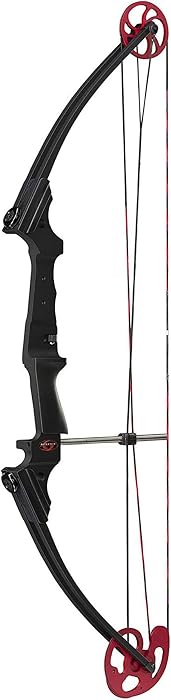
The hardest shopper in archery is a left-handed kid: big enough for a real bow, not big enough for a hunting weight, and choosing from a shelf built mostly for the other hand. The Genesis Original is the bow we send that family to. It arrives assembled, adjusts from 15 to 30 inches of draw and 10 to 20 pounds of pull, and the 6061-T6 aluminum riser with composite limbs takes the handling a school club or a backyard full of cousins will give it.

The single cam is what makes it easy to live with. One cam means one thing to keep in time, minimal recoil, and a bow that doesn't need a shop visit every time it's been knocked around, which is the kind of reliability you want from something that gets handed between shooters. We also like that the draw length and poundage can be walked down at the kitchen table as the archer grows, because that's the entire point of pairing a 15-inch floor with a 30-inch ceiling.

One thing to know before you buy: there's no let-off, so the archer holds the weight of the draw while aiming instead of settling into a wall. At 20 pounds that works as a training aid, building the muscle and the habit of holding steady, though a kid who has shot a friend's hunting bow will notice the difference in the first dozen arrows. Set the draw length, keep the string waxed, and this is the bow in the pair most likely to be handed down to a younger sibling in a couple of years.

Worth Noting

  • Capped at 20 pounds, so it suits targets, not hunting
Our Verdict

This is the bow we point a left-handed kid or a first-time archer toward, because nothing else here is this light, this adjustable, or this cheap to start on.

Check Latest Price

How We Chose and Tested Left-Handed Compound Bows

I started by pulling every left-handed compound bow I could find from archery shops, big-box listings, and brand catalogs, then narrowed the shortlist by draw-length range, adjustable draw weight, true left-handed riser and grip, and price. We ended up with eight bows and shot them for seven months. Testing happened in three places: my backyard range for daily 20- and 30-yard groups, an indoor shop lane for close paper work, and a weekend 3D course where we carried each bow for a full loop.

We weighed each bow bare and fully set up, then noted where the mass sat in the hand and whether it turned into fatigue on the 3D loop. For accuracy, we shot five-arrow groups at 20 and 30 yards, recorded group size and point of impact, and repeated the drill with a shorter-draw teen and a full-size adult. For adjustability, we changed draw length and draw weight through each bow’s available range, timing the work and checking whether the bow stayed in tune. For overall quality and build, we looked at limb pockets, riser finish, grip fit, serving wear, and whether anything loosened after a few hundred arrows.

At full draw, we noted whether the cams gave a clean let-off and a solid back wall or kept pulling against us—the no-let-off feel that makes holding on target harder. Value came down to what was included and how much tuning the bow needed before it shot well. The bows that survived the cut were the ones that stayed comfortable, accurate, and easy to adjust without asking for custom-shop money.

How to Choose a Left-Handed Compound Bow

Start With Draw Length

Draw length is where the bow meets the archer, and it decides whether anything else feels right. The two bows here cover unusually wide ground: 15 to 31 inches on the Edge 320, 15 to 30 on the Genesis. A 15-inch setting fits a small child and 30 or 31 fits a tall adult, which means the same bow can be reset every season instead of replaced. If the archer is still growing, that range is worth paying for.

The trap is assuming a wide range means the bow is already set for you. It arrives at one setting, so dial the draw length in before the first shot and recheck it after a growth spurt. A bow set an inch or two long has the archer leaning back and grouping low, and the bow usually gets blamed for it.

Match Draw Weight to the Job

Draw weight is the number that separates a target bow from a hunting bow. Ten to 20 pounds is instruction weight: light enough for a child to draw smoothly and hold while they learn, and about right for a club or a backyard. The Edge 320's 7-to-70 range starts in that same territory and ends at a serious hunting setup, which is why it can be one purchase rather than two.

Don't treat the top number as a starting point. Seventy pounds is headroom, not a setting. Start where you can draw and hold without shaking, then add weight as your form holds, because a bow you can't control puts arrows in worse places than a lighter one ever will.

Package or Bare Bow

A ready-to-hunt package includes the sight, rest, quiver, and peep, and it's the fastest route from the box to the target. A bare bow includes the bow, and the extras add up: a sight, a rest, a quiver, a release, and arrows cut to your draw length are all part of the real cost.

Our take is that a first bow is usually better bought as a package, even if the sight gets swapped in a season or two. If the archer already knows what they like, buy the bare bow and put the difference into the parts that matter to them.

Left-Hand Models and the Listing

A left-hand bow is held in the right hand and drawn with the left, and it's manufactured that way: the sight window in the riser and the cam setup are mirrored, so no shop can convert one to the other. That's why the same model shows up twice, sometimes with the word Left buried in a size field instead of the title.

Before you check out, confirm both the hand orientation and the size fields say left, and don't trust the product photo, which is usually the right-hand bow. Left-hand builds come in smaller runs, so the exact model you want may not be available the day you look, and it's worth settling the fit before you go hunting for stock.

Frequently Asked Questions

Final Verdict

The Diamond Edge 320 is our recommendation for most left-handed archers. It's the only bow here that reaches a 70-pound hunting weight, and its 15-to-31-inch draw range means the same bow fits a young teenager and a full-grown adult, so you buy once and adjust for years.

If the archer is a child spending their first seasons on targets, the Genesis Original is lighter, simpler, and far cheaper, and 20 pounds is exactly the right place to start. Buy the Genesis for the learning years and the Edge 320 when the archer starts thinking about a tag.