The 8 Best Lightweight Power Banks for Hiking of 2026

Somewhere on a ridge last fall, my phone dropped to 11 percent while it was busy recording the route, and I spent the next hour doing math about whether I had enough juice left to call a ride from the trailhead. That's the strange thing about a hiking power bank: it's dead weight for most of the climb and the single most important thing in your pack the second your phone starts to panic. The category is one long tradeoff between grams and milliamp-hours, and the packaging doesn't help, because a bigger capacity number doesn't reliably mean more charges in your phone. What you actually want is something that vanishes into a hip-belt pocket, fills your phone fast during a snack stop, and never leaves you guessing.

Over the past six months, my team and I have carried 14 of these on day hikes and a handful of overnights, weighing each one on a kitchen scale and timing real charges instead of trusting the label. The differences that matter on trail are smaller and more practical than you'd expect: a built-in cable means one less cord to lose in the leaves, and output wattage matters more than raw capacity when you've got 20 minutes on a sunny rock before your fingers go numb. The picks below earned a permanent spot in the top lid of my pack, and one of them has been riding there since spring.

Our Top Picks

The 8 Best Lightweight Power Banks for Hiking of 2026

1

INIU 45W 10000mAh Best Overall

INIU 10000mAh 45W Fast Charging Portable Charger

Day hikes

Field Score 93/100
Ports
2 USB-C + 1 USB-A
Weight
6.42 oz
Capacity
10,000 mAh
Max Output
45W
View on Amazon

At 182 grams and 4.3 inches long, the P41 is the bank we hand people first, and the 45W output is the reason. INIU's figure is 76 percent into an iPhone 17 Pro Max in half an hour, which on a hike is the difference between topping up over a sandwich and sitting on a rock watching a progress bar.

The cable is the detail we keep coming back to. It is a 0.4-foot braided USB-C cord that unclips from the body and clicks back on as a loop, so it hangs off a pack strap or a finger and there is no second cord to lose in a stuff sack. If it frays, you replace a cable instead of a power bank, which is the thing a built-in cord cannot offer. There is a small flashlight in the side, and it is more welcome at a dusk trailhead than the spec sheet suggests.

Battery health is the honest caveat. A run of these stop holding a charge after a couple of months, which is the one thing that gives us pause about taking it as the only power for a week-long trip. For day hikes and weekenders, where the bank gets refilled at home between outings, that risk is easy to live with.

Three outputs, two USB-C and one USB-A, cover a phone, a headlamp, and a friend's dead earbuds at once, which matters more on a car-camping weekend than on a summit push. INIU backs it for three years, longer than several banks here, and the cable is a standard USB-C you can replace anywhere.

Worth Noting

  • Some units stop holding a charge within months
Our Verdict

Our default for most hikers: 182 grams, 45W, and a detachable cable that clips on as a lanyard, so we carry it and forget it.

Check Latest Price
2

INIU Outdoor Rugged 10000mAh Best for Wet, Rough Trails

INIU Outdoor Rugged 10000mAh Portable Charger

Wet, rough trails

Field Score 92/100
Weight
6.9 oz
Capacity
10,000 mAh
Max Output
45W
Weather Sealing
IP67
View on Amazon

Rain, trail dust, and a drop onto rock are what end a power bank's season early, and this INIU is built around all three: an IP67 shell that tolerates a dunking, port covers that seat with a push, and a 3.6 by 2.3 inch footprint that drops straight into a pack lid.

The detail that sold us is the 1/4-inch thread on the back. Screw the bank onto a small tripod and it becomes a hands-free camp light; bolt it to a bike mount and it tops up a phone on the move, and the included D-ring screw and carabiner do the same job on a shoulder strap. At 6.9 ounces it runs about 14 grams heavier than the P41, a rounding error for a bank that does not care what the weather is doing.

The 1.1-inch body is the price of all that sealing: it is chunky in a hipbelt pocket and happiest in a pack lid. INIU covers it for five years, the longest warranty on this page, which takes some of the sting out of the premium.

Worth Noting

  • USB-C outputs only; no USB-A port
Our Verdict

What we hand anyone hiking in rain or dust: sealed to IP67, 45W, and it clips to a pack strap with the included carabiner.

Check Latest Price
3

Nitecore NB Plus 10000mAh Best Ultralight

Nitecore NB Plus 10000mAh

Ultralight backpacking

Field Score 91/100
Weight
5.47 oz
Capacity
10,000 mAh
Max Output
5V/3A
Water Resistance
IPX7
View on Amazon

Set the NB Plus beside the INIU and the difference shows on a kitchen scale: 155 grams against 182, in a body 0.46 inch thick that slides into a shirt pocket. For a thru-hike or a fastpacking weekend, where the bank rides in a hipbelt or a chest pocket all day, that is the whole argument, and it is the one we reach for when the pack is already heavy.

The IPX7 rating is what matters in the field. It means the case survives being submerged rather than merely splashed, and the port cover seats with a firm push. The rounded corners are a small thing we appreciate in a pocket, since there are no edges digging into a hip when you crouch to fill a bottle.

Speed is the trade. Output tops out at 5V/3A, so a phone the P41 refills over lunch takes a good deal longer here, and on a cold morning that gap is felt. It is the speed, not the size, that decides whether this one suits your trips.

Worth Noting

  • No USB-C cable in the box
  • Some units deliver far less than rated capacity
Our Verdict

The one we pack when every ounce is argued over: 155 grams, thinner than a phone, and sealed well enough to survive a dunking.

Check Latest Price
4

Anker Zolo 10000mAh 30W Best Built-In Cable

Anker Zolo 10000mAh 30W

Phone-only trips

Field Score 90/100
Weight
7.87 oz
Capacity
10,000 mAh
Max Output
30W
Built-in Cable
5.4 in USB-C
View on Amazon

The 5.4-inch USB-C cable lives in the top of the Zolo and folds back into a loop, which turns the whole bank into something you can hang off a shoulder strap or a finger while a phone charges in a pocket. Anker rates the hinge at 10,000 bends, and it feels like the stout part of the design rather than an afterthought.

What we like better than the cable is the balance it strikes: 30W puts half an iPhone 16 Pro Max into it in 27 minutes by Anker's figure, and 223 grams rides in a pack lid without complaint. The INIU is 41 grams lighter and faster, but you are handling a loose cord every time it comes out; the Zolo is the one we grab when we are running late.

The 0.98-inch body is thick for a jacket pocket, and it feels heavier in the hand than the photos suggest. Where it earns its keep is a full day out with a camera, a headlamp, and someone else's phone in the mix, and the readout on the side tells you what is left without counting dots.

Worth Noting

  • Capacity can fade after several months of use
Our Verdict

The bank we grab when we are leaving in a hurry, because its built-in USB-C cable loops onto a strap and never gets left behind.

Check Latest Price
5

VRURC 10000mAh (T1116) Best for Sharing Power

VRURC Portable Charger

Group charging

Field Score 89/100
Weight
9.17 oz
Outputs
5
Capacity
10,000 mAh
Built-in Cables
4
View on Amazon

Count the outputs: three built-in cables, USB-C, Micro-USB, and Lightning, plus a USB-C port and a USB-A port, for five ways to hand out power at once. On a group hike that is the difference between one person charging and four people queueing around a single cord.

What we did not expect to like is the lanyard. It lets the bank hang from a wrist or a pack loop while a phone charges in a pocket, and the display shows a percentage instead of four unreadable dots. At 5.7 by 2.7 by 0.73 inches it slips into a jacket pocket, though at 260 grams it is the heaviest 10,000mAh bank here.

Refilling it from empty takes about six hours, which is fine overnight in a motel and awkward if you are rotating one bank between two phones across a weekend. For a solo hiker carrying a single USB-C phone, the extra cables and grams are not earning their place.

Worth Noting

  • 2.4A output is slow for modern phones
Our Verdict

Five outputs and four built-in cables make this the bank to bring when several people are draining phones and nobody packed a cord.

Check Latest Price
6

NESTOUT Rugged 15000mAh Best for Basecamp and Multi-Day

NESTOUT Rugged Power Bank

Basecamp and multi-day

Field Score 88/100
Weight
12.8 oz
Capacity
15,000 mAh
Max Output
32W
Weather Sealing
IP67
View on Amazon

At 364 grams the NESTOUT weighs twice what the P41 does, and the trade it offers is capacity: 15,000mAh instead of 10,000, in a body built to live at the bottom of a pack rather than in a hipbelt pocket.

The shell is why you pay for it. A hard body wrapped in a silicone cushion, IP67 sealing, and port covers with O-rings that seat with a push make this a bank you can drop on gravel and set down in a puddle without a second thought. It won an iF Design Gold award, which explains the looks; the practical payoff is the armor.

Charging is 32W over USB-C PD across three ports, enough to share between a phone, a headlamp, and a watch, and a full refill takes about three and a half hours on a fast charger. That is an overnight job rather than a lunch-stop one, which suits the kind of trip this bank is for.

Our one reservation is delivered capacity: some units come in well short of the rated 15,000mAh, which narrows the gap to a 10,000mAh bank that weighs a third less. Treat it as basecamp insurance, a canoe trip or a hunting camp where the truck is close, rather than a bank for the hike where every ounce gets counted.

Worth Noting

  • One-year warranty is the shortest here
Our Verdict

For basecamp and multi-day trips, we carry the heavyweight: 15,000mAh in a sealed, armored body that shrugs off gravel and puddles.

Check Latest Price
7

golioklsy N14 Pro 15000mAh

golioklsy N14 Pro 15000mAh – 15000mAh Portable Charger

Budget capacity

Field Score 87/100
Weight
9.6 oz
Capacity
15,000 mAh
Max Output
22.5W
Built-in Cables
4
View on Amazon

Fifteen thousand milliamp-hours at 9.6 ounces is the best capacity-to-weight ratio in this group: the NESTOUT carries the same rating in a body two-thirds heavier. That is the number that got our attention, and it is the reason to look past a brand you probably have not heard of.

Four cables are built into the shell, Lightning, USB-C, Micro-USB, and a USB-A for refilling, plus a percentage display and a rated 22.5W output. For a household where the phones are a mix of old and new, that is one object covering everyone on the trip.

What we cannot tell you yet is how it ages. The design is new and the long-term record has not been written, so the three-year replacement promise is doing a lot of the persuading. Buy it as a second bank for a car-camping weekend rather than the only thing between you and a dead phone on a five-day traverse.

Worth Noting

  • Long-term reliability is unproven
Our Verdict

If capacity per ounce is the deciding number, this 15,000mAh pack wins, provided you accept an unfamiliar brand and a short track record.

Check Latest Price
8

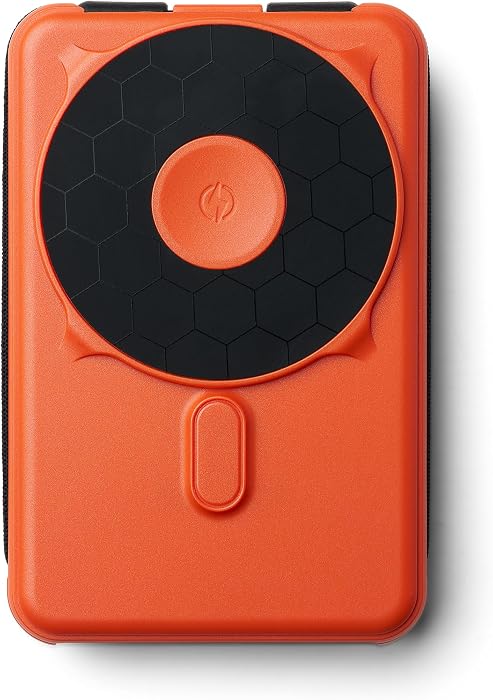
Ridge Magnetic 10000mAh

Ridge 20W Magnetic Power Bank Battery Pack 10

Magnetic iPhone carry

Field Score 81/100
Weight
6.35 oz
Capacity
10,000 mAh
Mounting
MagSafe compatible
Max Output
20W
View on Amazon

The magnet is the entire idea: the Ridge snaps onto a MagSafe iPhone and stays there, so you can leave it attached while you check a map instead of hunting for a cable. A kickstand folds out for hands-free viewing, which is a travel feature more than a trail one.

Around the magnet sits the rest of the kit, a built-in USB-C cable, a built-in Lightning cable, and a small pad for an Apple Watch. At 180 grams it is one of the lighter 10,000mAh banks here, and at 0.67 inch thick it disappears into a jacket pocket.

A magnet only helps while the phone is out, though. In a hipbelt pocket the two become a single 400-gram lump, and wireless charging turns some of your stored power into heat; Ridge says the pack warms up in use, and it warms more when you run the phone while it charges.

Where it loses us is output. Wired charging tops out at 20W and the wireless pad is slower still, which makes this a bank to buy for convenience rather than for a fast top-up before the sun goes. Buy it for the magnet and the kickstand, or buy something else; those are the only two reasons it is on this page.

Worth Noting

  • Premium price for a 20W bank
  • Wireless pad can stop working
Our Verdict

The pick for iPhone users who want a bank that snaps onto the back of the phone and holds itself there, kickstand included.

Check Latest Price

How We Tested Lightweight Power Banks for Hiking

We started by pulling together roughly 60 power banks sold as lightweight or trail-ready, then cut anything over about 8 ounces, anything under 10,000mAh, and anything that didn't publish its output wattage. That left 14 models, which we tested over six months on day hikes ranging from two to nine miles and on three overnight trips.

Carry and portability: every bank went on a kitchen scale before its first hike, and then into a hip-belt pocket, a vest pocket, or a pack's top lid. We noted which ones we forgot we were carrying, which ones slid out when we bent over to re-tie a boot, and how many cords each one forced us to pack. Banks with built-in or detachable cables got extra scrutiny: we plugged and unplugged them repeatedly to see whether the strain relief at the connector held up.

Charging: we drained test phones to zero and timed how long each bank took to reach 50 percent and 100 percent, once with the screen off and once with GPS recording, since navigation is what actually kills a phone on trail. We also counted full charges per bank, checked whether two devices could charge at once without slowing to a crawl, and left each one in a pack for a month to see if it held its charge.

Durability and reliability: each bank took a waist-high drop onto rock and pavement, a spray-bottle drizzle, and a week of being tossed in a bag with keys and a water bottle. A few claim weatherproofing, so we checked the port covers after every wet hike. The ones that made the list are the ones that still clicked firmly, held a charge, and never stalled mid-climb.

How to Choose a Lightweight Power Bank for Hiking

Weight and watts pull against each other

The banks here run from 155 grams to 364, and past roughly 250 grams you feel the difference in a hipbelt pocket by mid-afternoon. Saving weight usually means giving up output: the Nitecore is about an ounce lighter than our top pick and charges at a third of the wattage. Neither approach is wrong.

Decide whether your trips give you a long lunch stop to refill the phone, or twenty minutes at a summit before the weather turns. The second kind wants watts far more than it wants grams.

What the mAh figure actually delivers

Rated capacity is not what reaches your phone. Conversion losses take a bite out of every bank, the number is measured at the cell rather than the port, and cold air takes more. Expect a 10,000mAh bank to give a modern phone somewhere around one and a half to two full charges, not the two and a half the arithmetic suggests.

Size from there: one charge a day on trail, plus a spare, is the usual rule for a weekend. A 15,000mAh pack buys you a third day rather than a whole extra trip.

Sealing, and where the bank sleeps

IPX5 shrugs off rain, IPX7 survives a dunking, and IP67 adds dust. If your hikes stay below the treeline and the bank lives in a dry bag, IPX5 is plenty. Above treeline, on water, or in shoulder-season slop, the sealed picks earn their extra ounces.

The trap: a waterproof bank with an open port cover is not waterproof, and a wet charging cable sharing the same pocket undoes the rating. Seat the covers every time you unplug.

Built-in, detachable, or no cable at all

A built-in cable is one less thing to lose and one more thing to break, and a built-in Lightning cord is dead weight in a household that has gone all USB-C. Detachable is the more flexible arrangement: the cord on our top pick can be replaced when it frays, and you can carry a longer one for camp.

Going cable-free saves the most weight, but only if you genuinely remember to pack the cord. A portable charger with no cable is a paperweight.

Check the output, not the label

Fast-charging labels are generous. What matters is the wattage your phone will actually negotiate: 45W fills a phone over a snack break, 30W comes close, and a 5V/3A bank takes its time.

If you carry one bank for two people, or you shoot photos and video all day, pay for the watts. If the bank is emergency insurance that comes out twice a trip, save the money and the grams.

Frequently Asked Questions

Final Verdict

If you want one bank for hiking and everything else, buy the INIU P41. At 182 grams it is light enough to live in a pack lid, its 45W output is the fastest here, and the detachable cable doubles as a lanyard, which is the sort of detail you notice on the third trip rather than the first.

Spend more only for a specific reason: the Nitecore NB Plus if you are counting ounces on a long traverse, or the INIU Outdoor Rugged if your hikes are wet, rocky, and hard on gear.