The 7 Best Lithium AA Batteries for Outdoor Gear of 2026

The first time a smart lock died on me, I was on the front step with two bags of groceries and no free hand. That's the cruelty of battery-powered home gear: flawless for months, then dead at the worst moment. Lithium AAs are the fix most people land on — a steady 1.5 volts instead of a slow sag, no leaking, and enough cold tolerance to keep a doorbell camera alive through a January night.

The catch is cost — several times what an alkaline runs — and every cell is single-use, so the premium only pays off if the battery genuinely lasts. Capacity in milliamp-hours, ten- and twenty-year shelf-life promises, "for security cameras" on nearly every box: the labels are where it gets murky. My team and I spent five months living with 14 sets to see which claims held up.

What separated them wasn't raw power. It came down to whether a cell seated in a snug compartment without a fight, whether it still read full voltage after a cold night outside, and whether the cost per month justified the price. The ones that did are below.

Our Top Picks

The 7 Best Lithium AA Batteries for Outdoor Gear of 2026

1

Energizer Ultimate Lithium AA Best Overall

Energizer 100 AA Ultimate Lithium Leakproof Batteries

Overall outdoor power

Field Score 95/100
Voltage
1.5V
Capacity
3,400 mAh
Cell Type
Lithium
Leak Protection
Leakproof
View on Amazon

The Energizer Ultimate Lithium is the cell we reach for when a device has to keep working after the new-pack excitement wears off: a trail camera on a fence line, a smart lock on a gate, the flashlight that lives in the truck. Its 3,400 mAh rating is not the highest in this group, and that is fine by us. What earns it the top spot is the combination of stable 1.5V output, a leakproof build, and a familiar name that is easy to trust in gear you open twice a year.

Leak protection matters more than a capacity bragging right in outdoor gear. A corroded contact can end a device, not just a battery, and the cells that sit in a lock or a camera for months are the ones most likely to be forgotten. Energizer's leakproof claim is the reason we are comfortable leaving these in a device that stays outside.

Runtime is the caveat. A camera that wakes on every passing truck can drain any AA cell faster than the label suggests, and this pack is no exception. If your device is in a high-traffic spot, buy for the next swap, not for a year of neglect.

For most people with a mix of outdoor devices, though, this is the safe default. The cells are lighter than alkaline, so a spare set does not weigh down a daypack, and the large box makes sense for a club, a lease, or a property with several cameras. If you only own one device, the bulk is the thing to think twice about.

Worth Noting

  • Large bulk box outpaces casual use
Our Verdict

We recommend the Energizer Ultimate Lithium AA as the default for mixed outdoor gear; its leakproof build and stable 1.5V output make it the easiest cell to trust in devices you open twice a year.

Check Latest Price
2

EBL Lithium AA 12-Pack Best High-Capacity

EBL Lithium AA Batteries 12 Pack

High-drain devices

Field Score 91/100
Capacity
3,700 mAh
Pack Size
12 count
Shelf Life
25 years
Temperature Range
-68° F to 140 ° F
View on Amazon

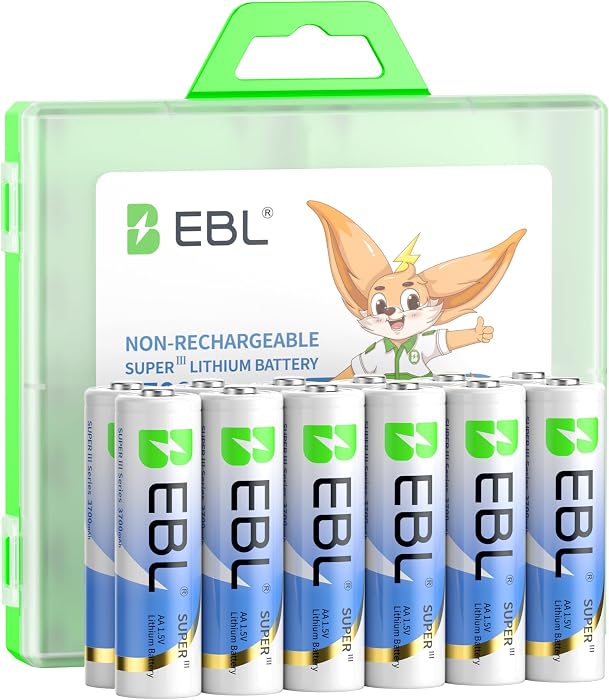
EBL's 3,700 mAh claim is the biggest capacity number in this group, and it is the first thing we checked against the 12-count box. That figure is a rating, not a promise of runtime in every device, but it gives the pack a clear reason to exist: high-drain gear like a game camera, a smart lock, or a controller that is always awake.

We like this pack for devices that are annoying to open. The 25-year shelf life is the detail that matters for seasonal use—half the box can sit in a hunting bag for years and still be ready when a camera needs a midseason change. The -68°F to 140°F range is wider than most here, which matters if the camera is on a north-facing fence line.

There is a practical limit to that capacity story: runtime in a busy camera still depends on how often it wakes, and the cells are more battery than a drawer of remotes and clocks needs, where a cheaper alkaline cell can do the job. That is a lot of capacity to pay for if your devices are low-drain.

For a high-drain camera or lock, the extra capacity is worth paying for; for a drawer of low-drain devices, it is overkill. We keep it in the high-drain slot in this guide, not the everyday slot.

Worth Noting

  • 12-pack is small for a full property
Our Verdict

We pick the EBL 12-pack when capacity is the priority; its 3,700 mAh rating and 25-year shelf life suit high-drain cameras and locks that are a pain to reopen.

Check Latest Price
3

Granicell Lithium AA 10-Pack Best for Cold Weather

Granicell 10-Pack Lithium AA Batteries

Cold-weather gear

Field Score 90/100
Capacity
3,500 mAh
Warranty
Lifetime support
Pack Size
10 count
Temperature Range
-40°F to 140°F
View on Amazon

Granicell's -40°F to 140°F rating is the reason this 10-pack has a place in our cold-weather gear, and the 3,500 mAh capacity keeps it from being a one-trick battery. We paid attention to it with winter in mind: a lock, a camera, or a weather station that has to wake up when the temperature drops.

The triple-layer leak protection and 10-year shelf life are the practical details. A 10-pack is one of the smaller boxes here, so it suits a few high-value devices rather than a drawer full of toys. The lifetime support promise is unusual in this group, though it is a backstop, not a substitute for testing a new pack before you install it in a gate lock.

The reservation is runtime. A 3,500 mAh cell is not automatically longer-lived than a 3,000 mAh cell in a camera that records constantly, and the cold-weather claim does not change that. Granicell earns its place on temperature range and pack size, not on a promise that you will never change the batteries again.

If your winter devices are few and expensive to reach, this is the pack we point to. The 10-year shelf life means the unused cells can wait for next winter instead of becoming clutter in the meantime.

Worth Noting

  • Capacity trails the 3,700 mAh leader
Our Verdict

We reach for Granicell when cold weather is the deciding condition; the -40°F rating and 10-year shelf life make it a strong fit for winter cameras, locks, and weather stations.

Check Latest Price
4

BEVIGOR Lithium AA 24-Pack Best for Long-Term Storage

BEVIGOR 1.5V Long-Lasting Lithium Batteries AA 24 Pack

Long-term storage

Field Score 89/100
Capacity
3,000 mAh
Pack Size
24 count
Shelf Life
20 years
Temperature Range
-40°F to 140°F
View on Amazon

A 20-year shelf life is the kind of number that sounds like marketing until you are restocking a storm kit in year six and find the cells still ready. BEVIGOR backs that claim with a 24-count box, a 3,000 mAh rating, and a -40°F to 140°F range. This is not the highest-capacity pack here; it is the one built for the back of a drawer and the bottom of a pack.

We like the self-discharge angle for seasonal gear. A trail camera that runs three weeks a year, a lantern that comes out for power outages, a set of spare cells for a hunting cabin—these are the jobs where a 20-year shelf life matters more than a capacity record.

The 24-count box is the practical reason this earns a place in the guide. It covers a multi-camera setup, a couple of locks, and a spare set without the commitment of a 100-pack. We also appreciate that the cells are rated for the same cold range as the premium picks.

The compatibility picture is the one place to slow down: some Blink cameras are picky about cells, and this pack is not the surest bet for every model. Test one camera before you swap a whole network, and keep the rest of the box for devices where fit and draw are less fussy.

Worth Noting

  • 24-pack is overkill for one or two devices
Our Verdict

We recommend the BEVIGOR 24-pack for seasonal kits and emergency drawers; the 20-year shelf life and low cost per cell reward buyers who need ready spares, not maximum capacity.

Check Latest Price
5

POWEROWL Lithium AA 16-Pack Best for Smart-Home Cameras

POWEROWL Lithium Batteries AA 16 Pack

Smart-home cameras

Field Score 88/100
Capacity
3,000 mAh
Pack Size
16 count
Shelf Life
10 years
Temperature Range
-40℉ to 140℉
View on Amazon

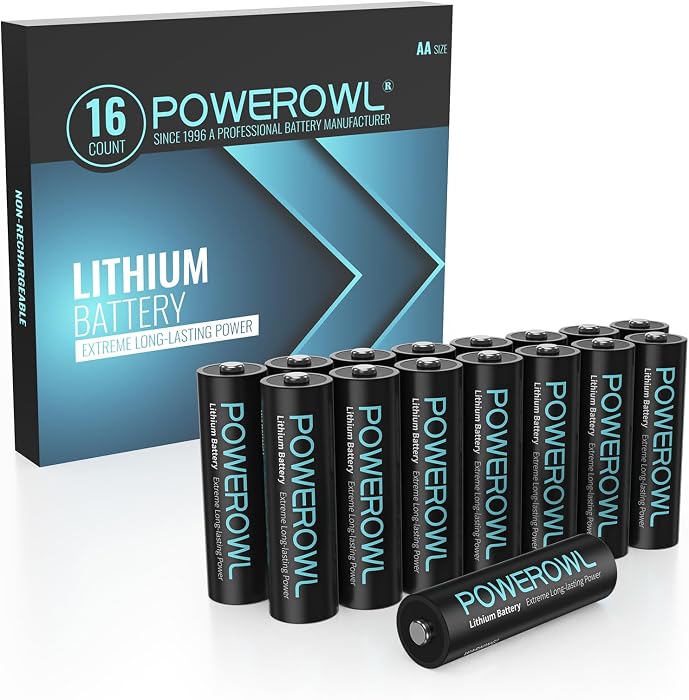
POWEROWL gives two capacity figures: 3,400 mAh in one spot and 3,000 mAh in the spec table. We go by the lower figure, which is still enough for a Blink camera, a doorbell, or a smart lock, and we prefer a conservative number to a box that overpromises.

The 16-count box is the reason this lands as a runner-up. It is enough for four Blink cameras or a mix of cameras and locks without the bulk of a 24- or 100-pack, and the 10-year shelf life means the spares can wait between swaps. We also like the leakproof design for devices mounted where a leak is expensive to clean up.

A weak cell can show up in a new box, so check the first pack in a low-stakes device before committing the rest to the cameras. The cells are aimed at smart-home gear, and that is where they make the most sense; a drawer of remotes is not the job this pack is built for.

For a smart-home setup with several cameras, the count and the conservative rating make it a sensible middle choice. It covers the everyday security job without overbuying. The 16-pack is the size we reach for when a doorbell and two cameras all need fresh cells on the same afternoon.

Worth Noting

  • Runtime can fall short in busy cameras
Our Verdict

We like the POWEROWL 16-pack for multi-camera smart-home setups; its count, 10-year shelf life, and leakproof build cover Blink cameras and locks without overbuying.

Check Latest Price
6

POWXS Lithium AA 8-Pack Best for Small Camera Setups

POWXS Lithium AA 8-Pack – 3200mAh 1.5V AA Lithium Batteries 8 Pack

Small camera setups

Field Score 87/100
Voltage
1.5V
Capacity
3,200 mAh
Pack Size
8 count
Shelf Life
10 years
View on Amazon

Eight cells is a useful size for a Blink camera setup when you want a spare set without committing to a drawer full of batteries. POWXS pairs that count with a 3,200 mAh rating, a 1.5V lithium cell, and a 10-year shelf life. The leakproof build is the detail we care about in a camera mounted under an eave.

The compatibility story is the strongest part: these cells are aimed at Blink cameras and doorbells, and that is where they make the most sense. A two-camera setup or a single doorbell can use the whole pack without leaving a partial box to migrate around the garage.

What keeps POWXS out of the top tier is the narrow job. Eight cells cover a doorbell and a camera, not a full security setup, and the 3,200 mAh rating is mid-pack. That is not a flaw if you are buying for two devices, but it is a reason to look at EBL or POWEROWL for a larger network.

We prefer a smaller pack with a clear job to a big box that sits half-used. Buy this one for the devices it names, not as a universal spare.

Worth Noting

  • Runtime falls short in busy cameras
  • High cost per cell for the count
Our Verdict

We suggest the POWXS 8-pack for a small Blink setup; the count matches a doorbell and a camera, and the leakproof build suits hard-to-reach mounts.

Check Latest Price
7

Enegitech Lithium AA 16-Pack Best for Mixed-Device Refills

Enegitech AA Lithium Battery

Mixed-device refills

Field Score 86/100
Capacity
3,000 mAh
Warranty
1 year
Pack Size
16 count
Temperature Range
-40°F to 140°F
View on Amazon

Enegitech's 16-pack is the plain brown wrapper of this group: no capacity record, no exotic temperature claim beyond the usual -40°F to 140°F range, just a workmanlike 3,000 mAh cell in a count that fits a lot of devices.

The specs are sensible: 1.5V, a 10-year shelf life, and leakproof construction. The 16-count box is the main draw—it outfits a handful of cameras, locks, and remotes without the commitment of a 24- or 100-pack. We also like that the cells are rated for the same cold range as the premium picks.

What we don't get is a standout reason to choose it over EBL or POWEROWL. The cells don't make a special claim beyond the basics. That is not a bad thing for a utility pack; it just means the purchase is about count and convenience, not a performance edge.

It stays in the mix as the straightforward bulk refill for a mixed drawer of devices. If you need the longest possible run from a high-drain camera, EBL is the better bet; if you want a no-drama 16-pack for locks, remotes, and a couple of cameras, Enegitech is easy to justify.

Worth Noting

  • One-year warranty is shorter than rivals
  • Capacity trails the 3,700 mAh leader
Our Verdict

We keep Enegitech in the mix as a plain 16-pack for mixed devices; the count and cold range are useful, but the capacity and warranty trail the leaders.

Check Latest Price

How We Tested the Best Lithium AA Batteries

We started by pulling every non-rechargeable lithium AA sold in packs of eight or more, then cross-checked rated capacity, voltage, and shelf-life claims against what buyers reported in reviews. That step alone eliminated a surprising number of listings that turned out to be rechargeable lithium-ion cells in disguise, which behave differently in a camera or a lock. We bought 14 sets at full retail and tested them over five months, so nobody was working from a free sample.

Each set went into the same rotation of devices: a video doorbell, two outdoor security cameras, a smart deadbolt, a glovebox flashlight, a weather station, a wireless mouse, and a couple of toys that drain batteries fast. We labeled every cell with the date it went in and read voltage with a multimeter before installing it — most arrive above 1.5 volts, and any that had already dropped in the package got flagged. Then we ran constant-load drains to log how long each cell held its voltage before falling off.

Compatibility got its own pass, because a battery that won't seat is useless. We measured length and diameter against a standard alkaline, installed each one in the tightest compartments we own, and watched the battery percentage reported by the camera and lock apps for the first week to see whether it fell off a cliff or tracked in a straight line. Half-used cells spent six weeks in a cold garage and a kitchen drawer, then came back out for a leak and voltage check.

Finally, we converted everything to cost per month of use rather than cost per cell, which is where the expensive sets either earned their keep or didn't. Because these are single-use, we also counted how many cells each device chewed through in five months — the number that actually tells you what a box will cost you over a year.

How to Choose Lithium Aa Batteries

Match capacity to the device

A 3,700 mAh rating looks better than a 3,000 mAh rating, but capacity is only useful if your device draws enough current to notice. In a trail camera, a smart lock, or a handheld GPS, the extra capacity can mean fewer ladder trips. In a remote or a wall clock, it is money you will not get back. We prioritize stable 1.5V output and a realistic capacity rating over the biggest number on the package. If a pack gives two capacity figures, plan around the lower one.

Check the temperature range before winter

Lithium AA cells handle cold better than alkaline, but they do not all carry the same temperature rating. For a trail camera on a ridge or a lock on an unheated gate, look for a stated range that covers your winter; -40°F to 140°F is common in this group, while one EBL pack goes lower on the cold end. The rating is not a runtime promise—a camera that triggers constantly still drains faster—but it is a useful filter for gear that lives outdoors.

Shelf life and pack size go together

A 20-year shelf life is worth paying for only if you will actually store the spares. For a storm kit, a hunting cabin, or a box of seasonal camera batteries, long shelf life and a larger count make sense. For one doorbell and one camera, an 8- or 10-pack is easier to use up before the cells get old. We like packs that match a real device count instead of the biggest box on the shelf. Store them in the original packaging, dry and at room temperature.

Treat leak protection and fit as device protection

Leakproof construction matters most in devices you open rarely: a gate lock, a camera under an eave, a weather station. No cell is worth corrosion on a contact. The other half is fit. A double-A compartment is a standard size, but some Blink cameras and smart locks are fussy about cell length or voltage behavior. Test one device before you swap a whole network, and do not force a tight cell into a compartment. If a device manual names a chemistry, follow it.

Plan for the non-rechargeable trade-off

These are single-use cells. They make sense where you need long storage, cold tolerance, or fewer battery changes, but they cost more per cell than alkaline and create waste. We do not recharge them. Buy the count you will use in a year or two, keep a small spare set in the truck or pack, and send spent cells to a battery recycler or household hazardous waste site. If you change batteries weekly, a rechargeable system is the better long-term answer.

Frequently Asked Questions

Final Verdict

For most people, the Energizer Ultimate Lithium AA is the default we recommend: it has the leakproof build, stable 1.5V output, and broad device support we want in a cell that goes into a trail camera, lock, or weather station. If cold weather is the deciding condition, Granicell's temperature rating and lifetime support make it the better fit. If you are stocking a seasonal kit and want the lowest cost per cell, BEVIGOR's 24-pack is the practical alternative.