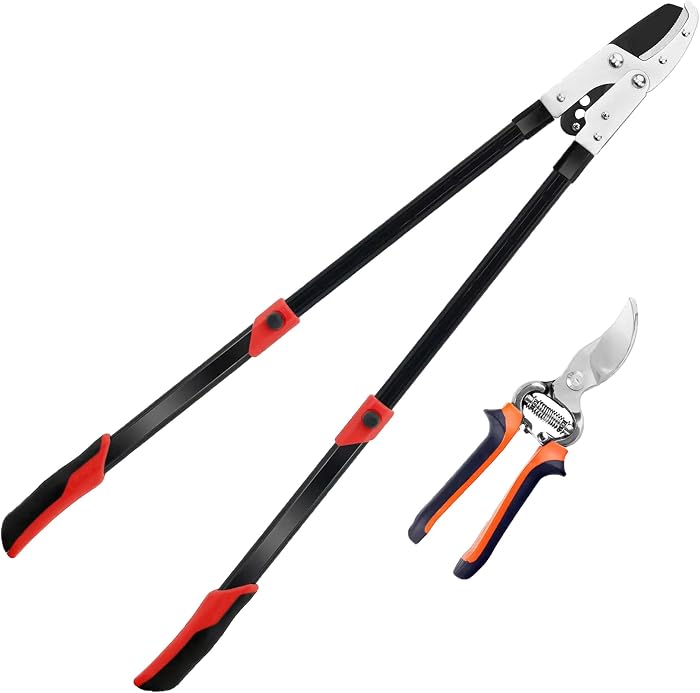
The 7 Best Loppers of 2026

Somewhere around the twentieth branch, your forearm tells you the truth about your loppers. Mine did, halfway through an overgrown lilac that had swallowed the back fence. Two handles, a blade, a hook — they look interchangeable on the shelf, but what separates a clean cut from a mangled stub is leverage, blade geometry, and how heavy the tool feels once you're reaching overhead.

It also helps to know the two families: bypass loppers slice like scissors and leave green wood clean, while anvil loppers crush through dead branches and can bruise living growth. Compound and ratcheting mechanisms multiply your squeeze, which matters if your grip isn't what it was. We spent six months with 12 pairs — 28-inch classics, extendable models, and a few heavy-duty bruisers — and the standouts separated quickly.

The picks below opened wide enough to straddle a real branch, held an edge through months of use, and didn't rattle loose at the pivot or leave my shoulders sore the next morning. Some are built for reach, others for raw force; most yards need a little of both.

Our Top Picks

The 7 Best Loppers of 2026

1

Fiskars 28-Inch Bypass Loppers Best Overall

Fiskars 28” Garden Bypass Loppers

All-purpose yard pruning

Field Score 96/100
Weight
2.9 lb
Blade Type
Bypass
Cut Capacity
1.5 inches
Overall Length
28 inches
View on Amazon

At 2.9 pounds with 28 inches of handle, this is the lopper we hand to someone who has never used one before. The blade opens to 1.5 inches, and the bypass head slices cleanly through live wood instead of crushing it the way an anvil does. That covers the suckers, water sprouts, and small limbs that make up most of a weekend's pruning, and it does it for less money than anything else here.

Two details earn their keep once you're a hundred cuts in. The low-friction coating on the blade keeps sap from dragging, so the cut stays smooth instead of gumming up halfway through a shrub, and the shock-absorbing bumpers stop the handles before your knuckles meet. The grips are ambidextrous too, which you won't think about until a left-handed helper picks them up and nothing needs adjusting.

The 1.5-inch rating is a ceiling, not a suggestion. Push past it on hardwood and the cut slows to a grind, the pivot takes the strain, and a joint that works loose is the wear issue to watch for on this model. If your pruning regularly runs thicker, the geared 32-inch Fiskars below is the better buy; for everything else the trade is worth it.

What settles it for us is how little this tool asks. There's no gear to learn, no ratchet to reset, no ladder for most cuts, and enough reach to work from the ground. Twenty-eight inches is short enough to steer inside a crowded shrub and long enough to keep your knuckles out of the thorns, and at this weight you can keep going after your shoulders would have quit on a heavier lopper.

Worth Noting

  • Pivot can work loose with heavy use
Our Verdict

Our pick as the default lopper: 1.5 inches of clean bypass cut at under three pounds, for the least money in this guide.

Check Latest Price
2

Fiskars PowerGear2 32-Inch Bypass Best for Thick Branches

Fiskars 32” PowerGear2 Garden Bypass Loppers

Thick, tough limbs

Field Score 95/100
Weight
3.9 lb
Blade Type
Bypass, geared
Cut Capacity
2 inches
Overall Length
32 inches
View on Amazon

Every lopper has a branch that stops it, and for the 28-inch Fiskars it's anything past an inch and a half. This is the tool for that gap. The PowerGear2 is rated to 2 inches, and the geared cam in the pivot is how it gets there: it multiplies your squeeze so a hardwood limb that would stall a plain lever keeps moving.

The difference shows up most on the dense stuff — oak, hickory, the dead limbs that shear instead of slice. The 32-inch aluminum handles add leverage on top of the gearing, and the rounded SoftGrip stays comfortable through a long session. Two inches of capacity doesn't mean two inches of ease, though; expect to work for the last quarter inch on seasoned hardwood, and expect that work to pay off where a plain lever gives up.

The gear that makes the cut easy is also why the handles travel so far: the cam converts a long squeeze into a short, powerful bite, so the jaw swings wider before it seats. Out in the open that's nothing. Inside a dense shrub, or between two trunks you're trying not to scar, it's cramped — plan your cuts from the outside of the plant in.

Worth Noting

  • Handles must open very wide to seat the jaws
  • Heavy at 3.9 pounds overhead
Our Verdict

Buy this one when your pruning regularly runs past 1.5 inches; the geared head gives you 2 inches without reaching for a saw.

Check Latest Price
3

Spear & Jackson 8290RS Telescopic Ratchet Best for High Branches

Spear & Jackson 8290RS Razorsharp Heavy Duty Telescopic Ratchet Anvil Loppers

High, hard-to-reach cuts

Field Score 94/100
Weight
4.2 lb
Blade Type
Ratchet anvil
Cut Capacity
2 inches
Handle Extension
Up to 40 1/2 inches
View on Amazon

The limb is eight feet up, the stepladder is in the garage, and nobody wants to be the person holding it. That's the job this one was made for. The aluminum handles telescope in steps to 40 1/2 inches, putting the jaws on branches well above head height with both feet on the ground, and each step locks so you aren't fighting the handle mid-cut. If your pruning happens above your shoulders, this is the pick.

The ratchet is the other half of the story. Instead of one big heave, you take two or three short squeezes and the jaws keep each gain, so a 2-inch hardwood limb comes apart in bites. The SK5 carbon steel upper blade is PTFE coated to shed sap and rust, and a 10-year guarantee backs the tool.

Expect to work at it. The ratchet has to be cycled deliberately, and the jaws want a full open before they reset, so a run of small twigs is slower than it would be with a plain bypass lopper. That's the deal: a specialist for the handful of big cuts a year you'd otherwise climb for.

Worth Noting

  • Heavy at 4.2 pounds, worse extended
Our Verdict

The pick for high, hard-to-reach limbs: telescoping handles and a ratchet that takes big cuts in short, controllable bites.

Check Latest Price
4

Corona FL 3420 Compound Anvil Best for Dead Wood

Corona Tools Compound Action Anvil Lopper

Dry, dead wood

Field Score 93/100
Weight
2.7 lb
Blade Type
Compound anvil
Cut Capacity
1.5 inches
Overall Length
32 inches
View on Amazon

An anvil head doesn't slice, it bites. One curved blade closes onto a flat bed and the wood gives way in a compressed cut, which is the wrong tool for green growth and exactly the right one for dead, dry, and hard wood — the branches that make a bypass blade skate across the bark instead of biting.

Compound action is what makes it work. The linkage multiplies your squeeze the way gearing does, and at 2.7 pounds on 32-inch fiberglass-and-steel handles it reaches up into a canopy without wearing you out. Of the picks here, this is the one we keep for the deadwood pass: seasoned limbs that would take three bites from a bypass lopper come apart in one, and the flat bed keeps the cut from wandering.

It's a second tool, not a first one. An anvil bruises green wood and leaves a ragged wound that's slow to heal, so keep a bypass lopper for live growth and pull this out for the late-winter cleanup. That pairing is how we work, and it's cheaper than replacing a generalist every few seasons.

Worth Noting

  • Cutting knife can bend past the rating
Our Verdict

For dead and dry branches, this is the tool we reach for; its compound anvil cuts wood that makes a bypass blade skate.

Check Latest Price
5

Tabor Tools GL16A Bypass Lopper Best for Green-Wood Pruning

TABOR TOOLS GL16A Bypass Lopper

Green-wood pruning

Field Score 92/100
Blade Type
Bypass, carbon steel
Cut Capacity
1.25 inches
Overall Length
28 inches
View on Amazon

If the Fiskars is the bargain, this is the plainer version of the same idea: a 28-inch bypass lopper with a hardened carbon steel blade, rubberized grips, and no gears anywhere in it. That simplicity is the appeal. There's nothing to adjust, nothing to reset, and nothing to explain when you hand it to someone else — you squeeze, and it cuts.

The blade takes an edge and holds it, the coated face keeps sap from building up, and the shock guard in the grip takes the sting out of a long run of cuts. The hanging hole in the handle is a small thing we appreciate more each season, because it means the tool goes on a hook instead of into a pile on the bench. Figure it for shrubs, saplings, and green growth rather than a hardwood thinning.

Worth Noting

  • 1.25-inch capacity is the smallest of the full-size picks
Our Verdict

A solid, gear-free 28-inch bypass for shrubs and light limbs, and the easiest of these to hand to a helper.

Check Latest Price
6

YRTSH Extendable 28-41 Inch Loppers

YRTSH Extendable 28-41 Inch Loppers – Loppers Branch Cutter Heavy Duty Tree Trimmer with Compound Action

Budget overhead reach

Field Score 91/100
Blade Type
Compound anvil
Cut Capacity
2 inches
Handle Extension
28 to 41 inches
View on Amazon

Reach is usually the expensive part of a lopper. This one is the cheapest way to get it: the aluminum handles extend in six steps from 28 to 41 inches, which is roughly the same span as the Spear & Jackson for appreciably less money.

The head is compound action with a 2-inch rating, and the alloy steel blade carries a Teflon coating to keep sap from grabbing. Collar it down to 28 inches and it's an ordinary lopper for reachable work; run it out and you're trimming a fencerow or a hedge line with both feet planted. The soft rubber grips are the detail that makes the long setting tolerable in hand.

What you give up is rigidity. At full extension the handles flex and the head swings more than it does short, so a precise cut at 41 inches can take a second attempt to seat. Buy it for occasional overhead work, trail clearing, and fence lines — not as the lopper you use every weekend on the same orchard.

Worth Noting

  • Locking collars can slip under load
Our Verdict

The budget route to overhead cutting: extendable to 41 inches with a 2-inch compound head, for less than the other telescoping pick.

Check Latest Price
7

YRTSH 18-Inch Compound Anvil Best for Trucks and Tight Spots

YRTSH 18-Inch Compound Anvil – Loppers for Tree Trimming Heavy Duty Branch Cutter

Trucks and tight spots

Field Score 90/100
Weight
2.4 lb
Blade Type
Compound anvil
Cut Capacity
1.6 inches
Overall Length
18 inches
View on Amazon

Not every lopper lives in a shed. Eighteen inches overall and 2.4 pounds means this one drops into a truck box, a horse trailer, or a saddlebag and stays there, and the compound anvil head gives it a 1.6-inch bite — more than its size suggests.

The linkage does the heavy lifting: compound action multiplies leverage well beyond a plain lever, which is why such short handles can still get through a cedar branch or a woody blackberry cane. The grip is non-slip rubber, the alloy steel blade is coated to keep sap off, and the whole thing is short enough to control close to your body when you're working in a tight spot.

Where it earns its place is the cuts you make away from the bench: a low limb over a fence line, a sapling across a trail, canes that have gone woody at the base. Where it doesn't is an afternoon of orchard pruning — the short handles mean less leverage per squeeze, and your forearms will know it by mid-afternoon. It's the tool that lives in the vehicle, not a replacement for a 28-incher.

Worth Noting

  • Blade can snap on wood beyond 1.6 inches
Our Verdict

The one to keep in the truck or trailer: 18 inches, 2.4 pounds, and a compound bite that handles trail-side limbs.

Check Latest Price

How We Chose and Tested the Best Loppers

We started by gathering the models shoppers actually compare: bypass and anvil designs, fixed and extendable handles, and cut ratings running from about an inch up to two. From there we filtered by handle length, replacement-blade availability, and price so the final group covered everything from weekend cleanup to serious orchard work. Twelve pairs made the cut, and each spent six months in real yards — late-winter pruning, storm-downed limbs, stubborn dead wood, and plenty of sappy green growth that gums up an edge.

In the first week we weighed every pair on a kitchen scale, then noted how that number felt after an hour of cutting overhead, since a few ounces stops mattering at waist height and matters a lot above your shoulders. We measured how wide each jaw opened and whether it would straddle a branch at its rated capacity without slipping off the bark. Then we counted: how many squeezes a ratchet needed to work through a two-inch limb, whether the mechanism released cleanly between bites, and whether the jaw lock held when we carried the tool up a ladder.

Cut quality got the closest look. We checked each severed end for crushed fibers versus a clean slice, and kept cutting until the blade started to drag. Durability was less scientific — pairs got left out in the rain, tossed in a bucket, and used on grit-covered limbs — after which we checked the pivot for side-to-side play and the blade for nicks. The ones that finished the season tight, sharp, and rust-free are the ones that made the list.

How to Choose Loppers

Bypass or Anvil: Match the Head to the Wood

A bypass lopper works like scissors: a curved blade passes the flat hook and slices, leaving a clean wound on live tissue. An anvil lopper closes one blade onto a flat bed and crushes instead, which is slower on green growth but far easier on dead, dry, and hard wood that makes a bypass blade skate across the bark.

If nearly everything you cut is green, buy bypass and stop there. If you do a deadwood pass every late winter, add an anvil head rather than trying to make one lopper do both — that pairing outlasts a single generalist tool.

Read the Cut Capacity, Then Discount It

Every branch cutter here carries a rating: 1.25 inches on the smallest full-size pick, 2 inches on the geared and ratcheting models. That number is a maximum under good conditions, not a working size. Cutting at the limit puts the whole load into the pivot and the blade, and a bent blade ends the tool.

Choose a capacity a comfortable step above the biggest branch you meet in a normal session. If your usual work is three-quarter-inch suckers and shrubs, a 1.5-inch lopper is already generous; if you routinely take down two-inch hardwood, you want the gearing that comes with the larger rating.

Gearing Buys Power With Handle Travel

Compound linkage, power-lever cams, and ratchets all do the same job: they turn one long squeeze into a short, forceful bite. Nothing is free. The geared 32-inch pick here has to open its handles noticeably wider than the plain 28-inch one before the jaws seat, and a ratchet needs several strokes to finish a single cut.

That matters most in tight places. Between two close trunks, inside a dense shrub, or against a fence, a wide-opening geared head can be impossible to position. If your pruning happens in open air at chest height, the trade is almost all upside.

Weight and Length: The Overhead Test

These tools run from about 2.4 to 4.2 pounds, and the difference only shows up in one place: above your shoulders. A 28-inch lopper is the control sweet spot, short enough to steer inside a shrub and long enough to keep your knuckles clear. Thirty-two inches adds leverage and reach at the cost of swing you feel after twenty minutes.

Before you buy, picture the height of the cuts you actually make. Ground-level work rewards capacity and gearing; anything above your head rewards low weight and, past a point, a telescoping handle.

Telescoping Handles: Reach Versus Rigidity

An extendable lopper gets you to 40 inches or more and keeps your feet on the ground, which is worth real money if you have tall shrubs and no safe ladder setup. The cost is flex — fully extended, the handles bend and the head swings, so precise cuts take a second attempt.

Check the locking collars before each session, extend only for the cut in front of you, and collapse the handles before you carry the tool. Buy one for occasional high work; keep a fixed-length lopper for the everyday pile.

Frequently Asked Questions

Final Verdict

We recommend the Fiskars 28-inch bypass as the first lopper to buy. It's the lightest full-size tool here, its 1.5-inch capacity covers the bulk of yard, fence-line, and trail work, and it costs the least of anything in this guide. Most people will never need a second one.

Change the requirement and the answer changes. If your pruning runs to two-inch hardwood, move up to the geared PowerGear2. If the branches sit above your reach, the Spear & Jackson's telescoping handles and ratchet justify the premium, and the Corona anvil earns its place in the deadwood pile beside a bypass lopper.