The 8 Best Nail Pullers of 2026

The nail you can see is the easy one. The one that ruins a Saturday is snapped off flush with the baseboard — too short for a hammer claw, too stubborn for a putty knife. Getting under it without gouging the wood is the whole job of a nail puller, and a quarter inch of claw thickness is often what decides whether the trim survives.

Cheap ones are a false economy. My team and I spent four months with 16 pullers — cat's paws, mini crowbars, end-cutting pliers, and a couple of two-piece sets — on salvaged lumber, pried-up baseboards, and pallet wood, and the ones worth keeping were forged, stayed sharp, and didn't flex. The value question answered itself the first time a bargain bent.

Worth knowing before you buy: a cat's paw with a striking head and a thin claw is built for headless trim and framing nails, while end-cutting pliers handle staples and brads that a cat's paw would chew up. The picks below run from a pocket-sized 7-incher to a full 19-inch bar.

Our Top Picks

The 8 Best Nail Pullers of 2026

1

Estwing 12" Nail Puller Pry Bar Best Overall

Estwing 12" Nail Puller Pry Bar

All-around nail removal

Field Score 96/100
Claw
Precision thin claw
Length
12 inches
Weight
1.2 lb
Construction
Forged one-piece steel
View on Amazon

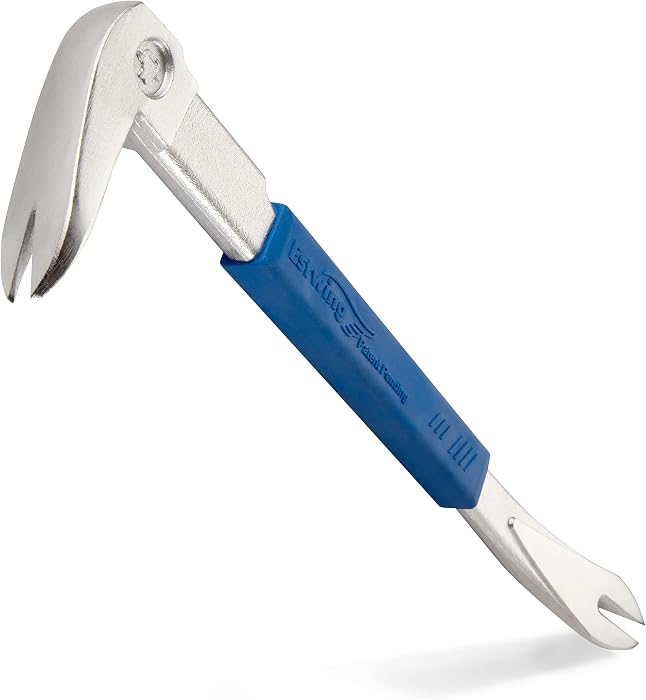
Twelve inches is the middle ground we keep coming back to. The Estwing DEP12 has enough handle to lean on a stubborn 16-penny nail, but it still drops into a tool bag and slips under a deck board without asking for two hands. The forged one-piece steel body is the real reason it earns the top spot: there is no joint or handle to loosen, and the thin claw bites under a head that a thicker bar skates over.

We used it across trim, subfloor, and deck work, and the curved claw is the part that stayed with us. It gets a grip on headless nails and lifts them without chewing a crater in the wood, provided you keep the bar in line with the shank instead of levering sideways. The 1.2-pound weight gives it a solid feel without making it a chore to carry. It is also easy to read in the hand: the bar tells you when it is seated, and the narrow tip lets you aim before you put weight on it.

For most construction, repair, and demolition pulls, this is the one we hand someone first. If you are working on delicate trim, keep a scrap shim under the claw and let a thinner finish tool take the last few nails. That is not a knock on the Estwing; it is simply the line between a demolition bar and a finish puller.

Worth Noting

  • Less reach than a 19-inch demo bar
Our Verdict

For deck, subfloor, and general demolition pulls, we recommend the forged 12-inch Estwing DEP12 first.

Check Latest Price
2

Estwing 9" Pro Claw Nail Puller Best Compact

Estwing 9" Pro Claw Nail Puller

Tight, compact spaces

Field Score 95/100
Claw
Thin precision claw
Length
9 inches
Weight
6.6 oz
Construction
Forged one-piece alloy steel
View on Amazon

The 9-inch Pro Claw is the one that disappears into a nail pouch until a trim job needs it. Its 6.6-ounce forged body and slim claw are made for the gap between a door casing and a cabinet, the place where a 12-inch bar is too much tool. We found it quick to choke up on and easy to control one-handed.

The catch is capacity. The compact claw does not open wide enough for every 16-penny nail, and a large head needs a firm seat before it will bite. For brads, finish nails, and small trim nails, it is a pleasure: the thin tip slides under a head without splitting the surrounding wood, and the one-piece steel gives it more backbone than its size suggests. We kept it in the pouch as a second puller, not the only one.

If your work is cabinets, trim, and small repairs, the size is an advantage rather than a compromise. The narrow tip is less likely to crush a molded edge than the thicker claw on a full-size bar, and the short handle gives you a readable amount of control in a tight corner. It is the one we reach for when a repair has to leave the surrounding wood intact.

Worth Noting

  • Short handle limits leverage on deep nails
Our Verdict

Keep the 9-inch Estwing in your pouch as a compact second puller for trim and tight cabinets; it is not your only bar for big nails.

Check Latest Price
3

Spec Ops 10" Nail Puller Pry Bar Best Lightweight

Spec Ops Tools Nail Puller Cats Paw Pry Bar for Prying

Light belt carry

Field Score 94/100
Length
10 inches
Weight
11.2 oz
Features
Dual strike zones; two nail pullers
Material
High-carbon steel
View on Amazon

At 11.2 ounces, the Spec Ops 10-inch claw bar is the one we notice least on a belt, and that is its case. It is light for its length, with a high-carbon steel body that feels stiff rather than chunky. The dual strike zones are the useful surprise: you can seat the claw with a hammer, then use the second puller notch for a different angle without swapping tools.

We like it for trim, baseboard, and small demolition because it is quick to control and the claws are honed thin enough to get under a head. The slim profile slips into a tight gap without levering against the surrounding drywall, and the cutouts in the body keep the weight down without making it feel hollow. The upside is a bar that stays with you on a ladder or in a crowded bag.

The price is the other reason it earns a place: this is the least expensive full-length bar in this group. If you want one light, low-cost puller for household repairs and trim, it is an easy yes. The lanyard-ready hole is a small but welcome detail on a roof or ladder.

Worth Noting

  • Short body limits leverage on deep nails
Our Verdict

When belt weight matters more than raw leverage, the light, low-cost Spec Ops bar is the one we reach for on trim and household repairs.

Check Latest Price
4

Bates 7" Nail Puller Set Best for Trim and Staples

Bates 7" Nail Puller Set

Trim and staples

Field Score 93/100
Size
7 inches, 2-pack
Handle
Ergonomic non-slip
Material
Alloy steel
Functions
Nail, staple, and wire cutting
View on Amazon

End-cutting pliers solve a different nail problem. The Bates set puts two 7-inch pullers in the bag, and the jaws grab a brad or staple by the shank when a pry bar cannot fit between the trim and the wall. We used the pair for finish nails and carpet staples; the narrow tips reached into spots where a bar just pushed the molding around.

The two-pack is the smart part. One lives in the finish kit and one stays in the shop, so you are not walking back to the truck for a tool you use on small jobs. The non-slip handles are comfortable for repeated pulls, and the alloy steel has held up to normal trim work. The jaws are sharp enough to cut wire, but that same sharpness means they can snip a thin nail instead of pulling it; use a light grip and come at the nail straight.

For trim carpenters, furniture repair, and anyone pulling staples from a subfloor, this is the pair we reach for before a bar. Two colors make it easy to keep one pair for clean trim and one for mucky staple work. That is a small thing, but it keeps the right tool where you need it.

Worth Noting

  • Not for framing nails or heavy prying
Our Verdict

For brads, staples, and finish nails in tight trim, reach for the Bates two-pack before a pry bar.

Check Latest Price
5

WORKPRO 2-Piece Nail Puller Set Best Set for Homeowners

WORKPRO 2-Piece Nail Puller Set

Homeowner tool kit

Field Score 92/100
Shaft
Hexagonal
Includes
12" pry bar and 8" mini crowbar
Material
Forged carbon steel
Set Weight
1.37 lb
View on Amazon

A two-piece set is the practical answer for a homeowner who does not want to choose between a trim bar and a demolition bar. WORKPRO pairs a 12-inch cat's paw with an 8-inch mini crowbar, both forged from carbon steel and finished with an anti-rust oil. The 8-inch tool gets under baseboard and tile; the 12-inch bar handles the nails that need a real pull.

We appreciate the hexagonal shafts, which give the bars six flat faces to grip when your hand is sweaty, and the heads are shaped to take a strike from a hammer. The set is not as refined as a single forged Estwing, but for occasional repairs the pair covers more situations than one mid-priced bar. The 12-inch bar has a little more flex under a hard pull, which is where the set feels built to a price. The blue finish makes them easy to find in a cluttered bag.

Where the set earns its keep is in a first toolbox or a rental property kit. You get a small bar for trim and a larger one for light demolition, and neither is so precious that you baby it. If you already own a good 12-inch puller, the 8-inch mini is the only reason to add this.

Worth Noting

  • 8-inch bar is too short for framing
Our Verdict

A homeowner who wants one small bar and one larger puller gets the smartest first buy in the WORKPRO set.

Check Latest Price
6

Shark 10" Prybar and Nail Puller Best for Finish Work

Shark 10" Prybar and Nail Puller – 21-2225 10-Inch Prybar and Nail Puller

Finish carpentry

Field Score 91/100
Blade
Curved thin blade
Length
10 inches
Weight
2.4 oz
Material
Heat-treated Cr-V alloy
View on Amazon

The first thing you notice about the Shark is the weight: 2.4 ounces, which is less than many pocketknives. That is not a gimmick. The thin, curved blade is made to slide behind door casing and baseboard, and the light handle lets you feel exactly where the tip is before you lever. We used it on trim and found the narrow edge did less tearing than the thicker pry bars in the group.

The nail-puller end bites into small heads and headless nails, and the back of the tool is shaped as a striking surface. The trade-off is strength: this is a finish tool, not a demolition bar. The blade is thin enough to flex if you lean on it. Keep it for trim, molding, and light repairs, and let a heavier bar take the framing nails.

What it does better than the bigger bars is protect the work. The thin edge gets under a delicate piece without the blunt claw crushing the face, and the light weight makes it easy to control in one hand. For finish carpentry, that is worth more than raw leverage. It lives in the finish bag, not the demo bucket.

Worth Noting

  • Short handle limits leverage
Our Verdict

Finish carpenters should carry the Shark: it is light, thin, and gentle on trim, with no pretense of being a demolition bar.

Check Latest Price
7

OX 12" Nail Puller Pry Bar Best for Hammering and Pulling

OX 12" Cats Paw Nail Puller Pry Bar

Hammering and pulling

Field Score 90/100
Grip
Non-slip rubber
Head
Carbon steel hammer head
Claws
Polished beveled
Length
12 inches
View on Amazon

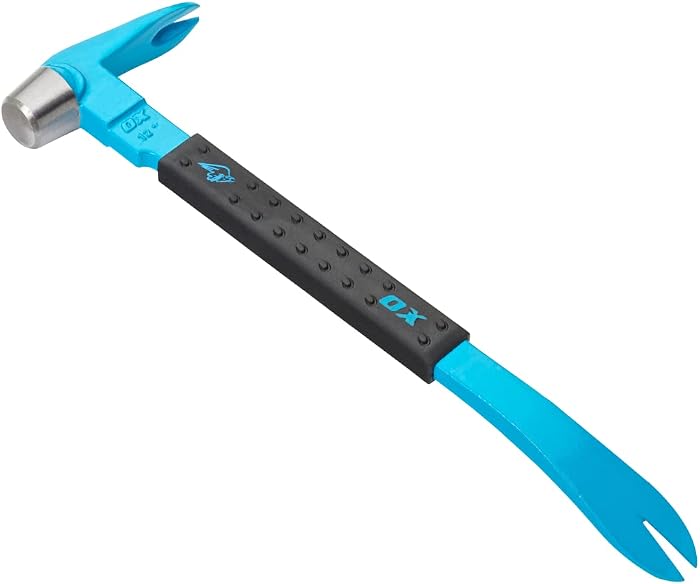
Not every pry bar needs a hammer head, but the OX makes a convincing case for one. The forged carbon-steel head gives you a striking surface right above the claw, so you can tap the bar into a tight gap and then pull without reaching for a second tool. The rubber grip is the other immediate difference: it is comfortable and secure in a way bare steel bars are not.

We found the 12-inch length easy to control and the polished beveled claws thin enough to get under trim and small nails. The blue finish is easy to spot in a pile of tools, and the grip stays put when your hands are dusty.

Compared with the forged Estwing 12-inch, the OX is the friendlier bar for someone who wants a grip and a hammer head in one tool. The Estwing is the one we trust for the hardest pulls; the OX is the one we reach for when comfort matters and the nails are not trying to fight back.

For trim, framing repairs, and light demolition, the OX is a comfortable all-rounder that saves a tool swap. It is not the bar we choose for a full day of deck demolition, but that is a different job.

Worth Noting

  • Rubber handle is the wear point
Our Verdict

If you want a rubber grip and a hammer head on a 12-inch puller, the OX is the comfortable all-rounder to choose.

Check Latest Price
8

Crescent 19" Nail Puller Best for Heavy Flush-Nail Work

Crescent 19" Nail Puller

Heavy flush-nail work

Field Score 89/100
Jaw
Hardened, tempered
Length
19 inches
Weight
3.9 lb
Material
Alloy steel
View on Amazon

The Crescent 19-inch nail puller is the specialist of the group. Its long handle and hardened, tempered jaw are built for flush or headless nails that have defeated a shorter bar, and the box-joint design gives it a different kind of bite. It looks like a tool from another era, which is part of the appeal.

The length gives you serious leverage, but it also makes the tool awkward in tight spots. We found it shines when you can stand over the work and pull straight up; on a ladder or against a finished wall, the 19-inch handle is more tool than you want. It takes practice to set the jaw so it bites instead of slipping.

The jaw is the other half of the story: it is hardened and tempered, and it bites a flush nail that a thin claw slides off. That bite is why the tool exists. It is not a finish tool; the long handle and broad jaw are built for demolition and repair, not for easing a brad out of a door casing.

This is a problem-solver, not a first puller. For a remodel with a hundred flush nails and room to work, the leverage is worth the weight. For finish carpentry, the Shark or the Bates pliers are the better call. Keep it in the demo trailer and bring it out when a nail has no head left to grab.

Worth Noting

  • Heavy 3.9-pound body
  • Can mark soft wood around nails
Our Verdict

Save the Crescent 19-inch for stubborn flush nails and jobs where you have room to lean on a long handle.

Check Latest Price

How We Tested the Best Nail Pullers

We started with hundreds of customer reviews and spec sheets, then narrowed the field to 16 tools that covered the shapes and sizes people actually buy: 7- to 12-inch cat's paws, end-cutting pliers, mini crowbars, and a few sets. Anything with a claw too thick to slide under a flush nail head, or a bar that felt like it would twist in the hand, was cut before testing began.

For four months, every puller lived in a tool belt or on a bench. We pried baseboard and door casing off a kitchen wall, broke down a stack of pallet wood, and pulled old fasteners out of salvaged fence boards. To test nail removal directly, we drove nails flush, snapped the heads off with a chisel, and timed how long each tool took to get under the shank and lift it — noting whether the claw bit and held or skated across the steel, whether the bar flexed under a stubborn 16-penny, and whether the tip stayed sharp after a hundred pulls or rolled over.

Grip and ergonomics got their own pass: bare-handed, then in work gloves, then with sawdust on our palms, checking whether the handle twisted or a rubber grip stayed put. The end-cutting pliers got a separate run on carpet staples and brads, where we looked at whether the jaws snipped clean or crushed the legs. Size was judged in place — a 19-inch bar on a ladder versus a 7-inch puller in a corner behind trim — because the biggest tool is rarely the best one in every spot.

Finally, we weighed what each tool cost against what it did. A two-pack that handles staples and brads can be the better buy over one expensive bar you reach for twice a year, and we said so when that was the honest answer.

How to Choose a Nail Puller

Match the Puller to the Nail

Cat's-paw bars and nail-pulling pliers are not interchangeable. A bar is for common nails, deck boards, subfloor, and demolition, where you need leverage and a claw that can bite a head or a shank. End-cutting pliers are for brads, finish nails, staples, and wire, where the access is tight and the nail is small. We reach for pliers first on trim and a bar first on framing. If you are buying one tool, buy the bar; if you do finish work, the pliers earn their keep.

Length Is Leverage, Until It Becomes Clumsy

Short bars fit into cabinets and between studs; long bars give you the reach and torque to break a stubborn nail loose. A 9- or 10-inch puller is a detail and belt tool. A 12-inch cat's paw is the best compromise for most repair, deck, and subfloor work. A 19-inch puller is a specialist for flush nails and open demolition sites, not a finish tool. The trap is assuming longer is always stronger: a long bar can be too tall to swing in a closet or against a wall, and the extra weight wears on you by afternoon.

Weight, Grip, and the Strike Zone

An 11-ounce bar disappears on a belt; a 2.4-ounce finish tool feels like a pencil; a 3.9-pound puller is a two-hand tool when you are standing over the work. Grip matters most when your hands are dusty or gloved. Rubber handles are comfortable, but on a steel bar the handle is often the first part to wear. If you plan to hammer the tool, buy one with a designated strike zone and keep the blow square. Do not hit a bar that was not made for impact, and wear eye protection.

Claw Shape and Wood Damage

A thin, sharp claw slides under a nail head and lifts with less splintering. A thick or blunt claw gives you more steel but can crush the edge of soft trim. The same bar that pulls a deck nail cleanly can leave a dent in a door casing if you lever against the face. Use a scrap shim under the bar, keep the pull in line with the nail, and switch to a thin finish tool before the wood gives. A hardened jaw helps, but technique protects the work.

Build a Two-Tool Kit

Most buyers do not need a drawer full of pullers. A 12-inch forged nail puller and a pair of end-cutting pliers cover the common range: framing nails, deck boards, trim brads, and staples. Add a compact 9- or 10-inch bar if you work in cabinets or overhead. A 19-inch puller is worth adding only when flush nails are a recurring problem. The right second tool is the one that fits the access your work actually gives you, not the one with the longest handle.

Frequently Asked Questions

Final Verdict

For most people, the Estwing 12-inch nail puller is the one to buy. It has the length to pull a 16-penny nail, the thin forged claw to get under a headless one, and enough control for trim and repair work. The 9-inch Estwing is the better second tool for tight cabinets and finish nails; the Bates pliers earn their place for staples and brads. Start with the 12-inch and add the specialty tool your work actually asks for.