The 9 Best Saddle Soaps of 2026

A good saddle soap should lift dirt and sweat out of leather without leaving a sticky film, a chalky haze in the stitching, or a color shift behind. I learned that the hard way on a pair of pale tan boots that looked worse after I cleaned them. The wrong bar can sit in seams, darken lighter hides, or feel tacky for days; the right one cleans, conditions, and sinks in.

Over the past four months, my team and I worked through 14 saddle soaps in bars, liquids, sprays, and kits, using them on saddles, bridles, boots, and a scuffed leather chair. We watched how quickly each cut through grime, whether it left residue or a sticky feel, how much leather absorbed, how the leather looked dry, and whether color shifted or stitching discolored. Ease of use mattered—a spray is handy for quick wipe-downs, while a bar gives more control on tack and seams—and value came down to how far each formula went and how well it held up between uses. The picks below got that balance right.

Our Top Picks

The 9 Best Saddle Soaps of 2026

1

Bickmore Saddle Soap Plus Best Overall

Bickmore Saddle Soap Plus 6.5 oz

Tack and boots

Field Score 97/100
Form
Paste, 6.5 oz tin
Best On
Smooth finished leather
Conditioners
Lanolin and neatsfoot oil
View on Amazon

Lanolin and neatsfoot oil are the two ingredients that put Bickmore at the top of this list. They turn a cleaning job into cleaning plus conditioning, which is why this is the tin we reach for first on a saddle that's been ridden hard or a pair of boots that have been through a wet week. The soap lifts dirt, grime, and salt stains; the oils go back into leather that sweat and weather have dried out.

It behaves the way a paste should. Load a damp sponge, work up a thin lather over the panels, wipe the residue away with a clean cloth, then buff. What struck us is how little it takes to cover a fender or a boot — a film of lather does more work than a fistful of suds — and the buffed finish is a soft sheen with nothing greasy left on the surface.

Bickmore's own directions tell you to follow with Bick 4 conditioner once the soap is fully removed, and on tack that lives in a damp barn we do. On leather in reasonable shape, the oils in the soap carry it far enough that the second step can wait.

Speed is where it gives ground. A spray beats it for a five-minute wipe between rides, and in a cold tack room the paste stiffens enough that you'll want to warm the tin in your hands before loading a sponge. For a weekly deep clean, that extra minute buys a much better result on ground-in dirt.

Worth Noting

  • Costs more than a plain glycerine bar
Our Verdict

We recommend Bickmore as the default: it cleans sweat and grime and puts moisture back in the same pass, which is what most tack and boots actually need.

Check Latest Price
2

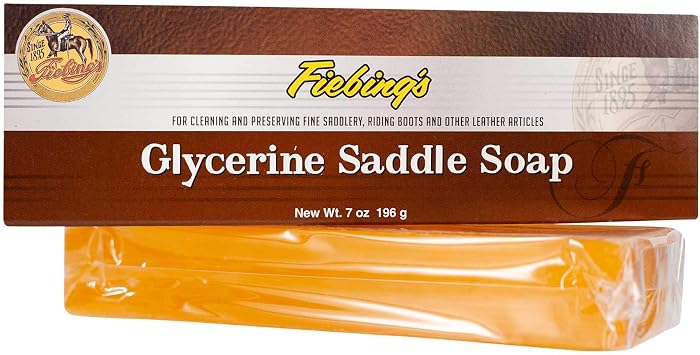
Fiebing's Glycerine Saddle Soap Bar Best Bar Soap

Fiebing's Glycerine Saddle Soap Bar 7oz

Show-day shine

Field Score 96/100
Form
7 oz solid bar
Scent
Unscented
Finish
Satin sheen
Glycerine
100% glycerine
View on Amazon

A bar is the least messy way to soap a saddle. You wet a sponge, rub it across the bar until it loads, and work the lather into the leather. That means you decide exactly how wet the leather gets, and there's no open tin of water to knock over or dribble into.

Fiebing's 7-ounce bar is the one we keep for show tack. It's 100 percent glycerine and unscented, with no added oils or perfume, and it lathers mildly and rinses clean. The finish is a satin sheen rather than a hard polish — the look you want on a bridle that's going to be judged — and it's the same bar the show circuit reaches for to put a healthy gleam on a horse or a cow before a class.

Two practical points. The bar lives loose in a tack box with no lid to lose, and because you reload it from the sponge rather than digging into a tin, one bar covers a long stretch of cleanings. It's also the pick we point a beginner toward, since rubbing a sponge on a bar teaches you how much lather you actually need.

Worth Noting

  • Glycerine alone won't soften dry leather
Our Verdict

Buy the Fiebing's bar if you want the tightest control over water and a satin finish; it is the cleanest way we have found to soap a good saddle.

Check Latest Price
3

Farnam Leather New Best Spray for Daily Wipe-Downs

Farnam Leather New Easy-Polishing Glycerine Saddle & Leather Cleaner

Daily wipe-downs

Field Score 95/100
Use
Daily, after every ride
Form
32 oz spray bottle
Type
Glycerine cleaner and conditioner
Finish
Dries to a natural shine
View on Amazon

The moment this bottle earns its place is the one right after a muddy ride, when the bridle is stiff with sweat and you have ten minutes before the horse goes out again. Two sprays onto a cloth, a wipe over the straps, and the leather is clean, conditioned, and shining. Farnam builds it as a glycerine cleaner, conditioner, and polish in one step, and for tack that gets handled daily, that's exactly what it is.

The 32-ounce bottle is the rest of the argument. It sits on a shelf in the barn and doesn't run out, and the finish dries to a natural shine without the greasy rub-off that ends up on riding pants. For bridles, boots, and chaps that get wiped down constantly, that combination is hard to argue with.

Two things to know. The spray can leave a tacky feel if you lay it on thick — give it a couple of minutes and a buff with a dry cloth and it settles. And the bottle is tall enough that it wants shelf space rather than a corner of the tack trunk.

Worth Noting

  • Not a deep cleaner for caked mud and salt lines
Our Verdict

For tack that gets wiped down after every ride, this is the bottle we keep on the shelf: fast, easy to keep stocked, and gentle enough for daily use.

Check Latest Price
4

Fiebing's Yellow Saddle Soap (12-Pack) Best for Multi-Horse Barns

Fiebing's Yellow Saddle Soap for Leather (12 Pack

Multi-horse barns

Field Score 94/100
Form
Paste tins, 3.5 oz each
Pack
12 tins, 42 oz total
Color
Yellow
Best On
Saddlery, boots, and shoes
View on Amazon

Twelve tins at 3.5 ounces each, 42 ounces of yellow saddle soap in a single order — this is a barn quantity, not a household one, and that's the reason it's on the list.

The soap itself is the classic yellow paste people picture when they hear saddle soap. Load a damp sponge, work it into the leather, wipe off the residue, buff to a matte finish. It cleans without leaving a greasy film and penetrates dry leather instead of sitting on top of it, which is what makes it worth handing to a rider who hasn't cleaned tack properly before.

Color is the caveat, and it matters: yellow paste on pale, natural, or brightly dyed leather can darken the finish or leave a cast. Soap a hidden panel first, and if it shifts, keep this tin for brown and black. The other consideration is simply volume — twelve tins is a lot to store for one horse. It makes sense in a lesson program or a boarding barn where each rider soaps their own tack after a ride, and for a single rider the Bickmore tin is the more sensible size.

Worth Noting

  • Twelve tins is far more than one rider needs
  • Yellow paste can tint pale or dyed leather
Our Verdict

A barn-sized buy: twelve tins for a lesson program or a group of boarders, as long as the leather is brown or black and the color test comes back clean.

Check Latest Price
5

Saphir Etalon Noir Soap Best Premium Pick

SAPHIR Etalon Noir Soap

Fine leather goods

Field Score 93/100
Form
3.53 oz tin
Best On
Saddle leather and smooth leather
Key Ingredient
Glycerin
View on Amazon

Three and a half ounces in a small tin, at the top of the price range here. Saphir's Etalon Noir is for someone who already owns the brush, the cream, and the wax, and wants the step that comes before all three of them.

The job it does best is stripping old polish, wax, and grime so the leather underneath is clean enough to take a fresh cream. It turns a dull, product-caked boot back into something a conditioner can actually reach, and it doesn't leave the leather dry afterward. That's a narrower skill than the all-in-one tins here, and on good leather it's the one we want.

The trade-off is real: a 3.5-ounce tin doesn't go far if you're soaping a saddle every week, and it's the wrong purchase for a barn. Keep it for good boots, a good bag, and the saddle you actually show. There are cheaper bars and tins on this list for everything else.

Worth Noting

  • Smallest tin here at the highest price
Our Verdict

Buy Saphir if the leather is worth the fuss: it strips old polish, leaves a clean base for cream and wax, and a little covers a lot of boot.

Check Latest Price
6

Otter Wax Saddle Soap Best Natural Formula

Otter Wax Saddle Soap : All Natural Leather Cleaner 2oz Tin

Natural ingredients

Field Score 92/100
Form
2 oz tin
Scent
Lemongrass
Free Of
Silicone and petroleum
Ingredients
Beeswax, castile soap, lemongrass oil
View on Amazon

This is the tin to choose if you've been avoiding saddle soap because of what's usually in it. Otter Wax uses beeswax and castile soap with lemongrass oil, no silicone and no petroleum, made in small batches in Portland, Oregon. On finished leather it foams into a light lather, wipes off clean, and leaves the surface soft and pliable.

It's gentle more than powerful. Dusty boots, a bag that's seen a season of commuting, a saddle that gets cleaned regularly — those come up well, and the lemongrass makes it the most pleasant thing here to use indoors. Heavy soil is the trade-off: on caked tack you'll scrub longer than you would with a paste that has more bite.

Two things to weigh before you buy. The tin is 2 ounces, the smallest of the paste options here, and it's a premium price for the amount — soaping a saddle weekly will have you reordering. And it can darken lighter-colored leather, so test a hidden panel first. For boots, bags, and gear you want clean without a chemical smell, it's a lovely thing to keep on the shelf.

Worth Noting

  • Two-ounce tin goes quickly on big jobs
  • Can darken lighter-colored leather
Our Verdict

We like it for tack and boots that need a gentle clean rather than a deep one, and for anyone who wants a plant-based soap in the tack box.

Check Latest Price
7

Absolutely Clean Saddle Soap Spray Best for Odor and Synthetics

Absolutely Clean Amazing Saddle Soap Spray for Leather Cleaning & Tack Cleaner

Odor and synthetics

Field Score 91/100
Job
Cleans and deodorizes
Form
16 fl oz spray
Formula
Natural enzyme blend
Works On
Leather and synthetic gear
View on Amazon

Most saddle soaps don't touch the reason a barn smells like a barn. This one is built for it: a 16-ounce enzyme spray that breaks down sweat, dirt, and odor on leather, and on the synthetic pads and gear that a glycerine soap shouldn't go near.

It sprays on, wipes off, and leaves a clean scent rather than a perfume cover-up, with no sticky film to buff out. Two limits: it's a cleaner first and a conditioner second, so stiff or dry leather still wants a soap with oils in it, and on polished leather it can leave the shine flatter than it found it. Keep it for working tack, pads, and anything that comes in sweaty.

Worth Noting

  • Cleaning-focused; dry leather needs a separate conditioner
Our Verdict

Reach for this one when the problem is smell rather than stiffness; enzymes knock down sweat and barn odor, and it is fine on synthetic pads.

Check Latest Price
8

Leather Nerd Saddle Soap

Leather Nerd Saddle Soap – Saddle Soap for Leather

Neglected leather

Field Score 90/100
Form
Paste tin
Best On
Boots, jackets, and handbags
Included
Sponge applicator
View on Amazon

Open the tin and the first thing you notice is texture. This is a heavy, waxy paste rather than a soft cream, and in a cold tack room it's stiff enough that warming the tin in your hands for a minute makes a real difference when you load a sponge.

That heaviness is the point on thirsty leather. It sinks into dried-out boots and forgotten jackets instead of sitting on the surface, and the sponge that comes in the box is a decent one — damp it, lather, work it in, wipe clean. A little covers more than you expect, so the tin keeps going.

Where it earns its place is appetite. It's the cheapest tin in the roundup, and it's the one we use on a pile of neglected gear without worrying about wasting it. What it won't give you is the refined matte finish a glycerine bar leaves on show tack — this is a working soap for working leather.

Worth Noting

  • Waxy paste needs warming before it spreads
Our Verdict

Buy it for a pile of dried-out, scuffed leather you are not precious about: it is the cheapest tin here and it drinks into thirsty gear.

Check Latest Price
9

Eagle Saddle Soap Kit

Eagle Saddle Soap for Leather

First tack box

Field Score 89/100
Form
Paste soap in tin
Best On
Old boots and dry purses
Kit Contents
Soap, applicator, cloth
View on Amazon

Three pieces in the box: a tin of saddle soap, an applicator, and a cloth. If you've ever stood in a barn hunting for something to load soap onto, that's the whole appeal — there's nothing else to find before you start.

It does solid work on old leather. The soap lifts grime out of boots and purses that have gone stiff and dull, conditions without leaving them greasy, and buffs to a decent shine with the cloth. A little goes a long way, so the tin outlasts the first few projects you point it at.

The soap is soft, and soft soap can separate in the container — a layer of clear liquid on top and a lid that fights you. Stand the tin upright and stir it if that happens. Beyond that, the only real question is whether you need the extras: if your tack box already has a sponge and a cloth, put the money into a bigger tin of soap. As a first kit or a gift for someone starting out, it's neatly put together.

Worth Noting

  • Extras duplicate tools you may already own
Our Verdict

A sensible first kit: soap, applicator, and cloth in one box, ready for a saddle that has been hanging in the barn all winter.

Check Latest Price

How We Tested Saddle Soap

I started with a shortlist of more than 30 cleaners and conditioners, then narrowed it by format, price, and the leathers each one was meant for—tack, boots, furniture, and car seats. I ruled out anything that was mainly a conditioner with little cleaning power, and I set aside duplicate sizes of the same formula. That left 14 products to test over four months.

Testing happened where leather actually gets dirty: after muddy trail rides, on dusty bridles and saddles in the tack room, on scuffed boots by the door, and on a leather chair that had seen too many movie nights. For each one, I followed the label with a damp sponge or cloth, worked it into seams and creases, wiped away the lather, and let the leather dry overnight. I noted how fast dirt lifted, whether soap stayed in the stitching, and whether the surface felt soft or tacky the next morning.

To judge residue and appearance, I rubbed each dried section with a clean dark cloth and checked for white streaks, chalky haze, or a dull film. I also compared light tan and dark brown scrap leather before and after, watching for color shift, discoloration, and how quickly each formula absorbed versus pooled on the surface. Ease of use came down to time and control—how long a bar took to lather, whether a spray overshot onto nearby fabric, and whether a kit's applicator made seams easier to reach. For value, I tracked how much product a saddle, a pair of boots, and a chair cushion used, and whether the bar or bottle held up between sessions.

How to Choose a Saddle Soap

Match the Form to Your Routine

If your tack gets cleaned after every ride, buy a spray. Farnam's 32-ounce bottle cleans, conditions, and shines in a single wipe, and a bottle you can reach in five seconds is the one that actually gets used. If cleaning happens on Sunday with a bucket, buy a paste or a bar.

A paste like Bickmore's loads onto a damp sponge and gives the longest contact time on ground-in dirt. A bar like Fiebing's gives you the most precise control over water, because you load the sponge from the bar instead of dipping into a wet tin.

Read the Label: Cleaner or Conditioner?

Most of what's sold as saddle soap — often labeled leather soap — is glycerine, which cleans well and conditions barely at all. That's fine for tack that's already supple. For dry, sweat-stiffened leather, look for lanolin, neatsfoot oil, or beeswax on the label: Bickmore's Saddle Soap Plus pairs the first two with the soap, and Otter Wax uses beeswax for a gentler clean.

A soap with oils still isn't a substitute for a conditioner on neglected leather. Bickmore's own directions have you follow with Bick 4 once the soap has been fully removed.

Use Less Water Than You Think

The most common way to damage leather with saddle soap is to soak it. A dripping sponge drives water into the fibers, and leather that dries from soaked goes stiff and cracks. Wring the sponge out, load a thin lather, work one panel at a time, and wipe the residue off with a dry cloth before moving on.

Then let the piece air-dry away from a heater or direct sun. If the leather looks dark when wet and stays dark after it dries, you used too much water.

Test Color Before You Work a Whole Panel

Glycerine soaps lift dirt and can lift dye along with it, and the traditional yellow paste can leave a tint on pale leather. Soap a patch nobody sees first — the underside of a flap, the inside of a boot shaft — and let it dry. If the color shifts, save that soap for brown and black.

Keep every product here off suede, nubuck, patent leather, and rawhide. None of them are made for those finishes, and soap will flatten the nap or dull the surface.

Decide Whether the Extras Earn Their Place

A kit like Eagle's adds an applicator and a cloth to the soap, which is genuinely useful when you're starting from nothing: a first saddle, a first set of boots, a gift for someone who just bought a horse.

If your tack box already holds a sponge and a brush, that's money better spent on a larger tin of soap. Buy the soap you'll use and add tools as you notice you need them.

Frequently Asked Questions

Final Verdict

Buy the Bickmore Saddle Soap Plus if you want one tin that handles dirty tack and leaves the leather soft afterward. The lanolin and neatsfoot oil are what make it the default here: it cleans and conditions in the same pass, which is what most saddles and boots actually need.

If your tack gets a wipe after every ride rather than a weekly bath, keep the Farnam spray on the shelf instead — that's the difference between a chore you do and one you skip. And if the leather in question is a good boot or the saddle you show, Saphir's small tin earns its keep.