The 8 Best SD Cards for Trail Cameras of 2026

A trail camera has one job: catch what walked past while you were asleep, and the SD card decides whether it actually did. I've driven out to a fence line expecting two weeks of deer and pulled a card my laptop wouldn't mount, and I've had cheap cards run through a July heat wave without a hitch.

What separates a card that lasts a season from one that quietly quits isn't the label. It's whether your camera reads the capacity at all, since plenty of trail cams still top out at 32GB and won't format anything larger, plus how the card handles sustained video writes and a wet fall inside a plastic housing. We've spent five months cycling 16 cards through cameras behind my house and on a friend's hunting lease.

The buying math is different here, too: a card faster than your camera can write buys you nothing, and one that needs reformatting in the field costs you a morning. The picks below all came back with footage worth keeping, and the only question is which fits the camera you already own.

Our Top Picks

The 8 Best SD Cards for Trail Cameras of 2026

1

GIGASTONE 32GB 5-Pack Best Overall

GIGASTONE 32GB SD Card 5-Pack UHS-I U1 Class 10 SDHC Memory Card High-Speed up

Trail camera rotation

Field Score 95/100
Pack
5 cards with mini cases
Capacity
32 GB
Read Speed
Up to 80 MB/s
Speed Class
Class 10, U1, V10
View on Amazon

Five snap cases come in the box, and that small piece of plastic is why this pack became our default for trail cameras. A rotation lives or dies on organization — one card in the camera, one formatted spare in your pack, the rest labeled and dry instead of loose in a glove box with lint on the contacts. Each card holds 32 GB, which is a comfortable stretch of stills and short clips between visits.

The ratings are exactly what a game camera needs: Class 10, U1 and V10, which together guarantee the sustained write speed 1080p video requires, and up to 80 MB/s read to empty a full card into a laptop. It's full-size SDHC, so it goes into the slot on everything from a decade-old body to this year's model, and GIGASTONE names SPYPOINT, TACTACAM and WOSPORTS among the cameras it's built for.

What we noticed across a season of swapping is boring in the best way. The cards formatted in the camera on the first try, wrote every clip we asked for, and read back without an error. That's the entire job, and a card that does it quietly is worth more than one with a bigger number printed on the label.

If your camera records 4K clips, or you want a card that lives in a DSLR between hunting seasons, the SanDisk Extreme PRO is the better buy. For the camera on the fence line, the one at the scrape, the one you forget about until February, this is the pack we reach for first.

Worth Noting

  • Costs more per card than the budget multi-packs here
Our Verdict

If you're buying one pack for trail cameras, make it this one: five 32 GB cards, a case for each, and the fewest surprises we've had from any card here.

Check Latest Price
2

SanDisk Extreme PRO 64GB Best for 4K Trail Cameras

SANDISK 64GB Extreme PRO SD Memory Card

4K trail cameras

Field Score 94/100
Capacity
64 GB
Card Type
SDXC
Read Speed
Up to 200 MB/s
Speed Class
U3, V30, Class 10
View on Amazon

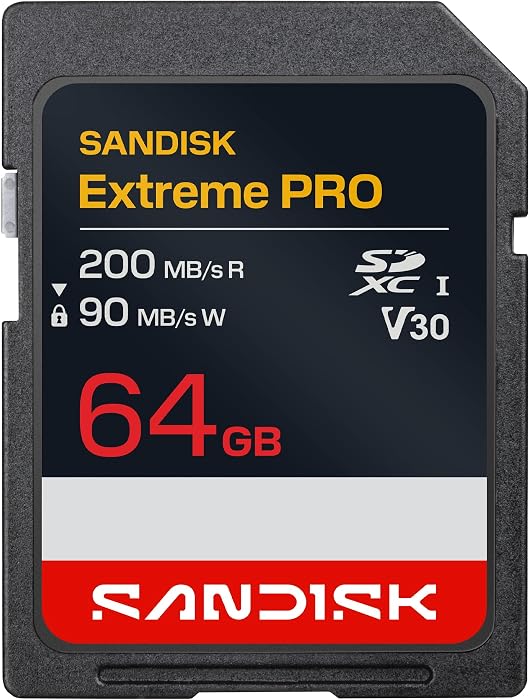
Most of the cards here are Class 10 workhorses built to a price. This one is the outlier: U3 and V30 ratings, up to 200 MB/s read, and a 64 GB version rated to 90 MB/s write. A stills-only trail camera will never touch that headroom — but a camera that records 4K clips, or fires a burst when a buck steps into the lane, can use every bit of it.

The format is what to check before you order. At 64 GB this is SDXC, and a lot of trail cameras, especially anything more than a few years old, list 32 GB as their ceiling. An SDXC card in an SDHC-only slot can leave you holding a card the camera won't format and won't record to, so look up your model's maximum first.

Where it earns its place is a modern body shooting 4K, or a card that travels between the woods and a camera bag with a DSLR in it. Speed is only half the argument; the other half is that this is the card we hand someone who can't afford to lose the trip.

Worth Noting

  • One card, so a failure takes everything on it
  • SDXC card will not work in SDHC-only cameras
Our Verdict

Worth the premium if your camera records 4K or the card will live in a DSLR too, as long as the camera accepts SDXC.

Check Latest Price
3

Silicon Power 32GB 5-Pack Best Budget Multi-Pack

Silicon Power 32GB 5-Pack – 32GB 5-Pack SDHC Class 10 UHS-1 Flash Memory Card by Silicon Power

Budget camera spreads

Field Score 93/100
Pack
5 cards
Capacity
32 GB
Read Speed
Up to 40 MB/s
Speed Class
Class 10
View on Amazon

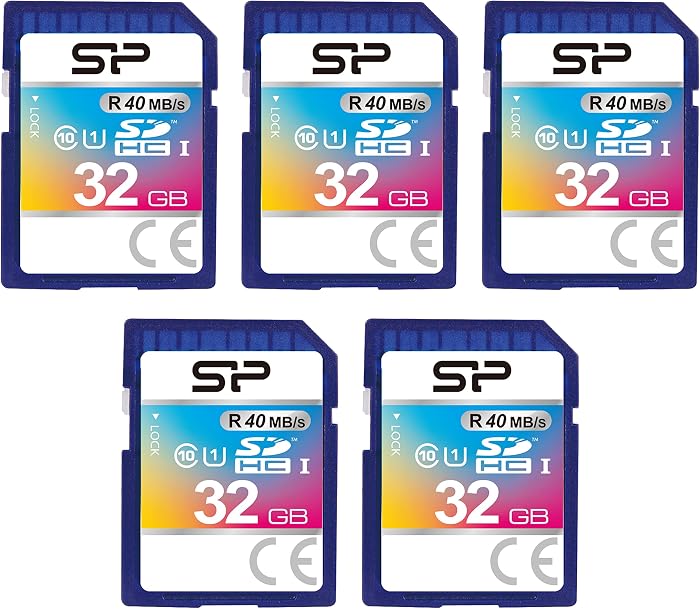
Five full-size 32 GB cards for less than two of the premium singles here: that's the argument, and it's a good one for a property with several cameras. Build a rotation out of this pack and you pull every card at once, drop fresh ones in, and sort through images at the kitchen table instead of standing in the rain with a card reader.

The spec sheet is honest about what this is: Class 10, up to 40 MB/s read, SDHC at 32 GB, which is the format older cameras with a 32 GB ceiling actually recognize. For trail camera duty we prefer five adequate cards to one fast one. The camera writes both at the same speed, and the only real cost of five is remembering which is which.

Where the savings show is in the extras: no V rating, no cases, plain packaging. None of that matters for a card that lives in a camera and gets wiped every few weeks. If you also want to shoot 4K clips with the same camera, put the money into a V30 card instead.

Worth Noting

  • Slowest transfers of the 32 GB packs here
  • No cases included
Our Verdict

The cheapest way we know to build a five-card rotation at 32 GB, and the plain spec sheet won't cost you a single picture.

Check Latest Price
4

SanDisk Ultra 128GB Best for Long Check Intervals

SanDisk 128GB Ultra SDXC UHS-I Memory Card

Long check intervals

Field Score 92/100
Capacity
128 GB
Card Type
SDXC
Read Speed
Up to 140 MB/s
Speed Class
Class 10, U1
View on Amazon

If your camera sits on a scrape line two miles from the truck and you get out to it once a month, capacity buys you something real: fewer trips. That's the case for this card — 128 GB on one SDXC chip, C10 and U1, up to 140 MB/s read — enough headroom that you stop thinking about capacity between visits.

For a camera you check weekly, we still prefer a stack of 32 GB cards, but that's a preference about rotation rather than a knock on this one. Where the Ultra earns its place is the camera you can't get to often, or a cellular unit that uploads as it goes and only needs somewhere to keep the originals until you download them.

One check before you buy: this is SDXC, and plenty of trail cameras list 32 GB as their maximum. A body that can't see an SDXC card may not format it or record to it at all, and the symptom looks like a dead camera rather than the wrong card. The manual settles it in thirty seconds.

Worth Noting

  • SDXC, so many trail cameras cap it at unusable
  • A single card puts a whole stretch in one place
Our Verdict

Buy this one when the camera is a long walk away: 128 GB buys you time between visits, if the camera can read SDXC.

Check Latest Price
5

elecacc 16GB 3-Pack Best for Older Cameras

elecacc 16GB 3-Pack – 16GB SD Card (3 Pack)

Older capped cameras

Field Score 91/100
Pack
3 cards
Capacity
16 GB
Read Speed
Up to 90 MB/s
Speed Class
Class 10, U1
View on Amazon

Some of the cameras still strapped to fence posts are old enough to be picky: SDHC only, a ceiling of 16 or 32 GB, and a bigger SDXC card stops them cold. This three-pack is aimed squarely at that camera.

Each card is 16 GB, Class 10 and U1, with up to 90 MB/s read and built-in error correction. In practice that means a card an older body formats without an argument, enough speed for 1080p if the camera offers it, and a download that takes seconds rather than minutes once you're back at the kitchen table.

Sixteen gigabytes fills faster than a 32, and on a busy trail that means more swaps — which, if we're honest, is how most of us should be running a camera anyway. A card that comes out every couple of weeks gets looked at. One that comes out in February gets forgotten.

Three cards is a modest rotation, and if you're feeding five cameras you want a five-pack instead. For two or three older bodies — the spare behind the house, the one a kid carries — this is the set we hand over, because it fits and it works.

Worth Noting

  • Only three cards in the pack
  • 16 GB is thin if the camera records long clips
Our Verdict

Our pick for the old camera that refuses anything bigger: three 16 GB SDHC cards that format and record where modern cards won't.

Check Latest Price
6

INLAND 16GB 5-Pack Best for Cheap Five-Camera Setups

INLAND 16GB SDHC Flash Memory Card Standard Full Size SD Card (5 Pack)

Cheap five-camera setups

Field Score 90/100
Pack
5 cards
Capacity
16 GB
Speed Class
Class 10, U1
Read/write Speed
60 MB/s read, 10 MB/s write
View on Amazon

Ten megabytes per second is the write speed this card's own spec sheet claims, and it's the least glamorous number in the roundup. It's also, for a trail camera, enough. Class 10 exists to guarantee exactly that floor, which is what 1080p recording and quick still bursts need to keep up.

The rest of the package is sensible: 16 GB SDHC that older cameras accept, 60 MB/s read, five cards, and a three-year limited warranty longer than most here. Per card it's one of the cheapest ways to fill five cameras, and these are sold for trail and hunting cameras rather than adapted to them.

Durability is the open question, and it's why this pack sits below the better-behaved ones above. When these go bad they tend to go bad early — arriving unrecognized, or dropping out of a camera within the first few weeks — which turns a cheap five-pack into an expensive afternoon. Buy it for cameras you can afford to visit twice, format and test all five the week they arrive, and it's a perfectly serviceable budget set.

Worth Noting

  • Cards that arrive dead or quit within weeks
  • 16 GB per card
Our Verdict

An inexpensive 16 GB five-pack that fills five cameras, provided none of them are a walk you only make once a season.

Check Latest Price
7

INDMEM 16GB 10-Pack Best for Large Camera Spreads

INDMEM SD Card 16GB 10‑Pack

Large camera spreads

Field Score 89/100
Pack
10 cards
Capacity
16 GB
Read Speed
Up to 90 MB/s
Speed Class
Class 10, UHS-I
View on Amazon

Ten cards in one order is a different purchase from a five-pack. This is the box for a hunting club's worth of cameras, or a property where every stand gets its own card and you want a couple left in the truck. At 16 GB a card, the cost per unit is about as low as it gets in this group, and one order covers a whole lease.

The claim worth paying attention to is the flash itself. These are built on MLC memory, the type that generally tolerates more rewrite cycles than the TLC chips used in the cheapest cards, and in a camera that overwrites the same card all season, endurance is the spec that eventually matters. The 90 MB/s read figure is fine for downloads; nobody needs more than that for stills.

The long haul is the open question. The brand's track record is short, and a bulk pack is exactly where a dud hides, so test all ten before the season starts rather than finding the bad one on a January check. Sixteen gigabytes also means a fresh card every few weeks on a busy trail, so pair this with a labeling habit.

Worth Noting

  • 16 GB per card fills fast on a busy trail
Our Verdict

The pack for a club or a big property: ten 16 GB cards on MLC flash, at a per-card cost that's hard to beat here.

Check Latest Price
8

EASTBULL 8GB 5-Pack Best for Small-Capacity Cameras

EASTBULL 8GB 5-Pack – 5-Pack of SD Cards

Small-capacity cameras

Field Score 88/100
Pack
5 cards with mini cases
Capacity
8 GB
Speed Class
Class 10, U1
Read/write Speed
95 MB/s read, 30–45 MB/s write
View on Amazon

Eight gigabytes looks like a step backwards, and for a current camera it is. But there are still a lot of older bodies in service with a maximum well under 32 GB, and a card above that ceiling is a paperweight — the camera won't format it, won't record to it, and won't explain itself.

What you get is five 8 GB SDHC cards, Class 10 and U1, up to 95 MB/s read and roughly 30 to 45 MB/s write, formatted FAT32 out of the box, each in its own mini case, with an SD-to-microSD adapter in the bag. Nothing here is exotic; it's the plain, compatible end of the market.

The included adapter is the one piece we leave in the drawer. It puts a second set of contacts between your images and the camera, and in a damp hinge-back housing that's one more thing to go wrong. If your camera takes a full-size card, use the full-size card.

Five cards make a real rotation out of a camera that would otherwise have you standing in the woods deleting files to free space. Where it falls down is the modern unit on a busy trail: 8 GB is a short leash, and you'll be back at that tree sooner than you want. Buy it for the old body, the kid's camera, the beater in the barn — not the 4K unit on the ridge.

Worth Noting

  • 8 GB fills fast on a busy trail
  • Bundled microSD adapter is a weak link
Our Verdict

Five small cards for the old body with a low ceiling, as long as you accept more trips to the tree.

Check Latest Price

How We Picked and Tested Trail Camera SD Cards

We built the shortlist from cards that come up repeatedly on trail camera forums and in hunter threads, then filtered out anything that couldn't sustain video: Class 10 and U1 at minimum. We kept a spread of capacities from 8GB to 128GB, a mix of single cards and multipacks, and just a couple with included mini cases so storage wasn't a tiebreaker we quietly ignored. That left 16 cards.

Each one went into a camera strapped to a tree or fence post aimed at a bird feeder, a worn deer trail, and the driveway, and stayed there at least three weeks, with several running a full five-month stretch in rotation. Back at my desk, I read each card with a card reader and counted how many days of footage it held before the camera began overwriting, whether that loop ran cleanly, and whether every clip opened.

Compatibility got its own pass: every card was formatted in-camera, then moved between an older camera and two newer ones to see whether the camera recognized the full capacity or choked. For durability, cards sat in a closed truck cab on a 95-degree afternoon, spent a night in freezing temperatures, got dropped on a garage floor, and were pulled and reseated dozens of times to check how the contacts held up.

We also timed how long it took to offload a few hundred clips and noted whether a card ever stalled the camera mid-burst. Cost per usable gigabyte got weighed against capacity, since a big card you never fill and a small multipack you swap twice a season solve the same problem.

How to Choose Sd Cards for a Trail Camera

Capacity: Why 32 GB Beats 128 GB in Most Cameras

Match the number on the card to how often you visit, not to the biggest capacity you can afford. In most setups 32 GB holds weeks of stills and short clips, and it caps what you lose when a card corrupts or a camera walks off. Bigger cards earn their place in exactly one situation: a game camera you check monthly, or a cellular unit that uploads as it goes and only needs somewhere to keep originals.

Below 16 GB you'll be swapping constantly on an active trail. Above 32 GB you have to confirm the camera accepts SDXC at all, which is not a given.

What the Speed Ratings Actually Promise

Class 10 and U1 both guarantee a sustained write floor of 10 MB/s, which covers 1080p video and the still bursts a camera fires at dusk. U3 and V30 push that floor higher and matter only if the camera records 4K. The big number in a product title is read speed — how fast a card empties into your laptop — and it has nothing to do with how fast the camera writes.

We take a modest read speed and a card that never errors over a headline figure every time.

SDHC, SDXC, and the Ceiling in Your Camera

Cards up to 32 GB are SDHC; 64 GB and up are SDXC. They're the same physical size and fit the same slot, but the camera's firmware decides how much it can address, and plenty of trail cameras top out at 32 GB. That's why 32 GB SDHC is the safest standard when you're feeding a mixed bag of cameras.

Look up your model's stated maximum before you order anything larger, and don't count on a firmware update lifting it.

Build a Rotation, Not a Stockpile

Two cards per camera is the minimum that makes sense: one in the body, one formatted and ready. That's the job a five-pack does, and it's why we favor packs that include a case for each card — a card loose in a truck console collects grit on the contacts and starts throwing errors.

Label them, because a card you can't identify is a card you'll format by accident. Rotate on a schedule instead of waiting for a camera to fill, so a failing card shows itself before the season depends on it.

Watch for Counterfeits and Test What Arrives

Fakes are the quiet problem here. A counterfeit high-capacity card that's really a fraction of the size will record happily until it wraps around and starts overwriting the first images it saved. Buy from a seller you trust rather than the cheapest marketplace listing you can find.

Then test what shows up: format each card in the camera, record a burst, and read the files back on a computer. Five minutes at the kitchen table is the only reliable way to catch the dud in a multipack.

Frequently Asked Questions

Final Verdict

Buy the GIGASTONE 32 GB five-pack and you have the rotation most trail camera owners actually need: five cards, a case for each, and a capacity that formats in nearly anything with an SD slot. It's the pack we'd put in a new camera without a second thought.

Two situations change the answer. Step up to the SanDisk Extreme PRO if the camera records 4K or the card will pull double duty in a DSLR, and take the SanDisk Ultra 128 GB if the camera is somewhere you only get to once a month — provided the manual allows SDXC.