The 5 Best Shooting Bags of 2026

A rifle propped on a backpack holds steady right up until the moment you actually need it to. I learned that the hard way when a borrowed rear bag bled sand across my mat mid-string, and I learned what a good shooting bag is for in the same afternoon: it turns a bench, a fence rail, or a truck hood into something solid, without leaking, sagging, or dragging down your pack on the walk in.

My team and I have spent the past five months shooting off a dozen of them, filled and unfilled, front rests and rear squeeze bags, water-resistant nylon and plain canvas, and the differences rarely show up in a product photo. Fill is the one that matters most: whether a bag takes sand or beads evenly, and whether the seams keep holding them after a season of use.

Size and weight are a trade you feel on the hike, not on the bench, and the front and rear of a rifle want different things from a bag. Both ends are covered below, and every pick earned its place.

Our Top Picks

The 5 Best Shooting Bags of 2026

1

Caldwell Deadshot Combo Best Overall

Caldwell Deadshot Shooting Rest with Front and Rear Rests

All-around range use

Field Score 95/100
Fill
Filled (corn cob)
Weight
10.5 lb
Front Height
8 in
Configuration
Front and rear combo
View on Amazon

The Deadshot combo is the one we reach for when someone wants a complete rest without assembling a kit. Both bags arrive filled with corn cob, so there is nothing to source or stuff before a range session. The front bag measures 10 by 7.5 by 8 inches and the rear 5 by 5 by 4.5 inches, and the pair weighs 10.5 pounds. That weight is the point: it settles onto a bench or tailgate and gives the rifle something solid to sit on.

We like the front bag's size for full-size rifles and crossbows, and the filled corn cob has enough give to nest a stock without feeling like a brick. The rear bag is the part we question. It is noticeably smaller than the front, and under a wide stock it can feel cramped or need to be repositioned between shots. We prefer that smaller rear bag to a floppy one that never holds its shape, but it is still the compromise in this kit.

Where the Deadshot earns its keep is versatility. It works on a bench, a truck hood, or a hay bale, and the filled bags do not send you to the hardware store for media. If you mostly hunt from a blind, the Caldwell Blind Bag below is the more specialized hanging rest; for everything else, this is the pair we start with.

Worth Noting

  • Seams can tear under heavy recoil
Our Verdict

We recommend the Deadshot combo as the default first shooting bag because it arrives filled, covers front and rear support, and has enough weight to settle onto a bench.

Check Latest Price
2

Caldwell Blind Bag Best for Hunting Blinds

Caldwell Filled Blind Bag with Durable Construction and Water Resistance

Hunting blind use

Field Score 92/100
Fill
Filled
Weight
2.2 lb
Material
600D fabric
Configuration
Single hanging bag
View on Amazon

The Caldwell Blind Bag is the one in this group that is built to hang rather than sit. Throw it over a fence, a tree limb, or the side of a stand, and the filled bag gives you a quick rest where a bipod has nothing to push against. It is shaped for a standard bolt-action hunting rifle, and the 600-denier shell is water-resistant and colored to blend into outdoor surroundings.

We like the idea of a bag that stays useful in a blind, where a flat bench is not an option. The fill gives it enough structure to steady a rifle, but this is not a heavy-duty sandbag; it is a smaller, lighter rest for a quick shot. The weight is the trade-off. It is heavy enough to hang steady, yet some shooters will want more mass for a long-range rest. For a 100-yard shot from a blind window, the compromise makes sense.

This is a hunting specialist, not a replacement for a bench kit. If you shoot mostly from a concrete bench, the Deadshot combo is the better all-around buy; if you need a rest that hangs on the stand you already hunt from, this is the bag that solves that problem. Keep it in the truck during season and check the fill level before you head out.

Worth Noting

  • Lighter than a full sandbag
Our Verdict

We recommend the Caldwell Blind Bag for hunters who need a quick rest over a fence, limb, or blind window and do not want to carry a full front-and-rear kit.

Check Latest Price
3

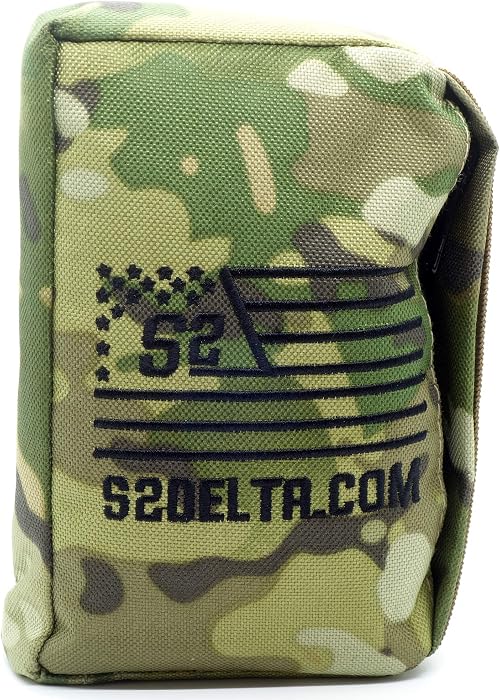
S2Delta Rear Squeeze Bag Best Lightweight Rear Bag

S2Delta Rear Squeeze Bag – Tactical Rear Squeeze Bag

Lightweight rear support

Field Score 89/100
Fill
Filled (plastic beads)
Height
6.5 in
Weight
1 lb
Configuration
Single rear bag
View on Amazon

At 1 pound and roughly the size of a thick paperback, the S2Delta rear bag is the one that disappears into a pack until you need a quick rear support. It is filled with plastic beads in a removable inner bag, so you can swap in a sock or lighten the fill for a hunt where every ounce counts. The 1000-denier nylon shell is meant to shrug off gravel and truck-bed abuse.

We like the removable inner bag more than we expected. It gives you a way to tune the firmness without cutting open the outer shell, and the rear and side handles make it easy to position under the stock. The trade-off is size: this is a rear squeeze bag, not a platform for a wide stock, and shooters who want a tall rear rest will find it low. The compact footprint is the feature, not a flaw, as long as you match it to a rear-support job.

For a quick prone shot, a PRS-style stage, or a walk-in hunt, the small footprint is what makes it useful. Pair it with the Deadshot front bag and you have a light rear support that does not add a second heavy sandbag to the walk. If you need one bag to do everything, start with the Deadshot combo instead.

Worth Noting

  • Compact size runs small for wide stocks
Our Verdict

We recommend the S2Delta as a packable rear squeeze bag for hunters and PRS-style shooters who want light support without a heavy sandbag.

Check Latest Price
4

Buffalo Creek Unfilled Set Best Unfilled Set

Buffalo Creek Unfilled Set – All Weather Durable Front and Rear Shooting Rest Bags

Custom fill setups

Field Score 87/100
Fill
Unfilled
Material
Oxford leather
Configuration
Front and rear combo
Maximum Height
7.08 in
View on Amazon

The Buffalo Creek set arrives empty, and that is the whole pitch: you decide whether the front and rear bags get rice, corn cob, sand, or something lighter. For a shooter who has strong opinions about fill weight and firmness, that control is worth more than the convenience of a pre-filled kit. The two bags connect with a quick-connect system, which keeps them together in the truck and makes the pair easier to grab than two loose sacks.

We appreciate the Oxford leather outer and the 7.08-inch maximum height, which puts the set in bench-and-prone territory rather than tall tactical rest territory. The main unknown is the seams. An unfilled bag depends on its stitching, so inspect the top seam and the fill opening before you load it. Start with a light fill, shoot a few groups, and add more only if the front bag rocks.

This is the pick for the tinkerer: someone who wants to tune a two-bag set for a specific rifle and does not mind sourcing fill. If you want to open a box and shoot, the Deadshot combo is the better call. If you already know you like a heavier sand fill, this set gives you the room to build it.

Worth Noting

  • Arrives unfilled; filler is extra
Our Verdict

We recommend the Buffalo Creek set for shooters who want to choose their own fill and do not mind tuning a two-bag kit before the first range day.

Check Latest Price
5

TWOD Front & Rear Set

Twod Outdoor Shooting Rest Bags

Budget two-bag set

Field Score 86/100
Fill
Unfilled
Material
600D polyester
Configuration
Front and rear set
Water Resistance
Water-resistant
View on Amazon

The TWOD set is a low-cost way here to get a front and rear bag, and that is the reason it stays on the page. It is an unfilled two-bag set in 600-denier polyester, so you are buying the shells and doing the sourcing yourself. We treat it as a starter set, not a long-term precision kit.

The low price makes it a reasonable second set for a camp, a truck box, or a loaner. The bags are light before you add fill, and the water-resistant shell is a sensible choice for outdoor use. The catch is the seams: the top seam is the spot to inspect, and sand can escape through gaps. Fill it lightly, check the stitching, and keep a repair patch handy.

For a spare set that lives in the truck or a cabin, the price is hard to argue with. Just do not expect the dense, planted feel of the 10.5-pound Deadshot; this one is light because you have not added the fill yet. Check the seams before each season, and treat it as a consumable rather than an heirloom.

Worth Noting

  • Seams can split under fill weight
Our Verdict

We see the TWOD as a spare or starter two-bag set: the price is low, but the unfilled shells and seam risk keep it out of our top picks.

Check Latest Price

How We Tested Shooting Bags

We started with more than 30 bags pulled from match-day forums, hunter threads, and the shelves of two local ranges, then cut the list by fill type, footprint, shell material, and how the maker expects you to fill it, since several arrive empty by design and that changes what you're actually buying. Twelve made the cut, and we've been using them for five months.

They lived where shooting bags actually live: on a concrete bench at an outdoor range on a gusty Saturday, prone in the dirt through a two-day precision class, and on a truck hood and a fence post during early-season scouting. In the garage we filled each empty bag with dry sand and then with poly beads, noting how much it took to get the bag firm, whether fill settled into the corners, and whether the zipper or funnel worked with one hand. Then we loaded them into a duffel, drove an hour of washboard road, and checked the trunk for grit.

Stability we judged by shooting, five-shot groups off a bench plus dry-fire reps on a barricade, watching for bags that rocked, flattened, or lost their shape under the stock. Every bag got hosed down and left out in the rain to see whether water beaded or soaked through, and we squeezed the ears of each rear bag a few hundred times to catch seams opening or fill escaping.

Weight and bulk we checked the honest way, on a kitchen scale and then on our backs during the walk to the firing line. At the end we asked the least glamorous question: after five months, would we still carry it, and did it feel worth what it asked? The bags that survived kept their fill, held their shape, and did their job at both ends of the rifle.

How to Choose Shooting Bags

Start with the support you actually need

A front bag carries the forend, a rear bag supports the stock, and a combo gives you both. If you are building a first kit, the filled front-and-rear Deadshot combo is the simplest way to cover bench and prone work. If you already have a front rest, add a rear squeeze bag such as the S2Delta and keep the kit light. A single hanging bag like the Caldwell Blind Bag is for a hunter who needs a rest over a fence or blind window, not a bench kit. Buy the support you are missing, not a duplicate of what you own.

Fill controls firmness more than you think

A bag should give slightly under the stock, not feel like a brick. Corn cob is light and quiet, sand is heavy and planted, and polymer beads stay light and do not absorb water. Filled bags save you a step, but unfilled sets such as the Buffalo Creek let you tune the weight and firmness for a specific rifle. Overfilling is the common mistake: it makes the bag hard, bouncy, and difficult to squeeze. Start with less fill, shoot a few groups, and add more only if the bag rocks or the stock sinks.

Match height and footprint to the rifle

The front and rear bags here run about 7 to 8 inches at the front and 4.5 to 6.5 inches at the rear, a useful range for typical bench and prone setups. A rear bag that is too tall can be as awkward as one that is too short, especially with a wide stock or a long magazine. If you shoot an AR with a 30-round magazine, check clearance before you fill the bag completely; a taller rear bag can help, but a tall, skinny bag can rock. Set the rifle on the bags first, then adjust the fill and your bench height.

Inspect seams and fill ports before you trust a bag

A shooting bag is a container as much as a rest, and the weak points are the seams and the fill opening. Seam tearing and filler leakage are the two recurring problems in this category, and they matter more than a cosmetic stitch line. Check the stitching around the top seam and the fill port before you load the bag. If a port seeps, tape it or use a liner; if the top seam looks stressed, do not overfill. A cheap bag that holds its fill is more useful than a premium bag that leaves a trail of sand.

Decide whether it lives in the truck or walks in with you

Weight is a trade-off, not a spec-sheet winner. A 10.5-pound combo is stable on a bench or tailgate but a chore to carry up a ridge; a 1-pound rear bag disappears into a pack but will not replace a heavy front rest. If the bag stays on the range bench, choose weight and a broad footprint. If it goes into a hunting pack, start with a rear squeeze bag and add a light front bag only when the hunt calls for it. The best bag is the one you actually carry and use.

Frequently Asked Questions

Final Verdict

The Caldwell Deadshot combo is the shooting bag we recommend first because it is a complete, filled front-and-rear kit that covers bench, prone, and field shooting without a shopping list of extra parts. It is heavy enough to settle down and simple enough to use as soon as it comes out of the box.

If you hunt from a blind or fence line, the Caldwell Blind Bag is the specialist; if you already have a front rest and want a packable rear support, choose the S2Delta. The right answer changes with how you shoot, but the Deadshot is the easiest place to start.