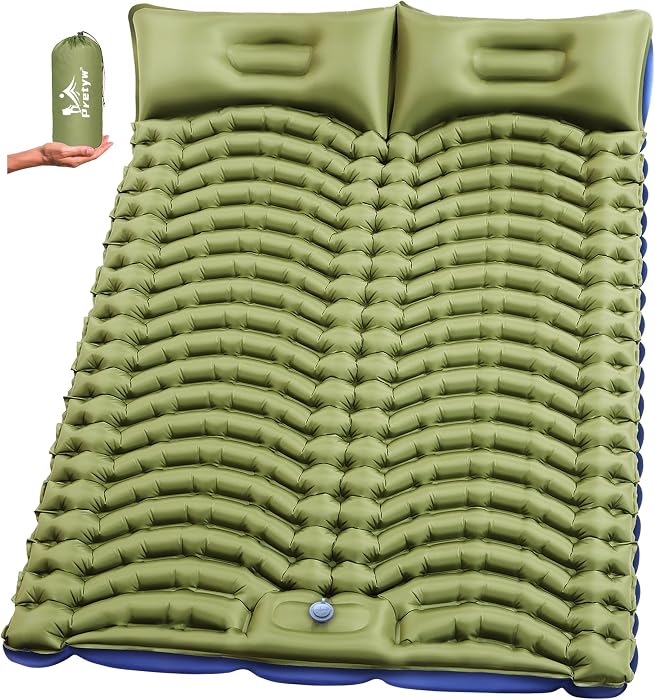
The 8 Best Sleeping Pads for Side Sleepers of 2026

Side sleeping is the easy part. Finding a camping pad that doesn’t turn your shoulder into a pressure point by 3 a.m. is the hard part. I’m a committed side sleeper, and I’ve spent enough nights on thin inflators to know that a pad can feel fine when you first lie down and feel like a board by midnight. You want cushioning that stays put at the hip and shoulder, plus a pad that’s easy enough to inflate and pack that you’ll take it along.

Over the past six months, our team tested 14 sleeping pads, from memory foam roll-ups to ultralight air mats. Thickness alone didn’t predict comfort; foam density and how the pad handled pressure mattered more. A built-in foot pump saves your lungs at camp but only if the valve seals and the pad firms up quickly. Foam feels plusher but eats trunk space; air pads pack small but demand careful inflation. We also tracked packed size, strap function, and whether the pad stayed under us overnight. The picks below are the ones worth your space.

Our Top Picks

The 8 Best Sleeping Pads for Side Sleepers of 2026

1

Cymula Memory Foam Camping Mattress Pad Best Overall
Cymula Memory Foam Camping Mattress Pad – Memory Foam Camping Mattress Pad

Side-sleeping car campers

Field Score 92/100
Weight
7.5 lb
Material
Memory foam
Dimensions
72"L x 24"W x 3"Th
Water Resistance
Waterproof
View on Amazon

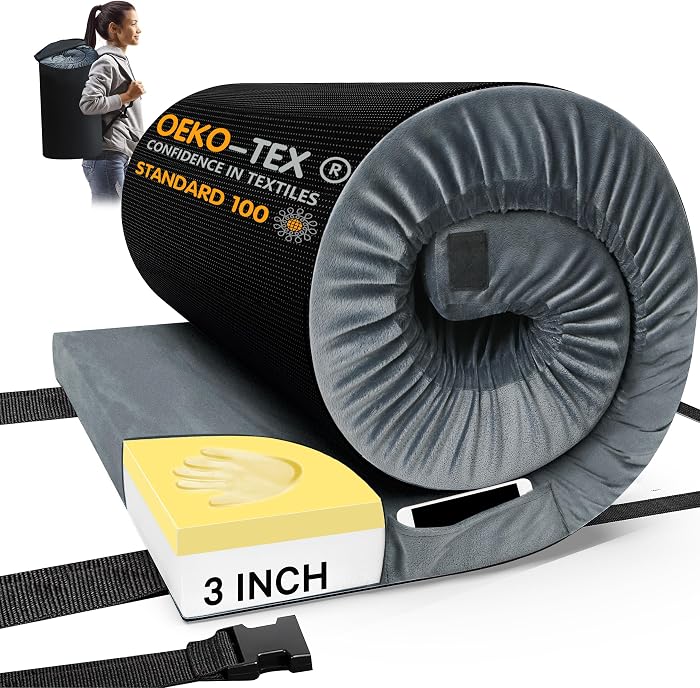
Three inches is the number that decides this one. You put most of your weight through a hip and a shoulder when you sleep on your side, and a pad that bottoms out under that small patch is what wakes you in the middle of the night. The Cymula stacks memory foam over a high-density base: the top layer takes the shape of a shoulder, and the base underneath keeps you off the ground.

That combination is the one we trust most in a roll-up pad, and it is why this one leads the group. On a tent floor it sleeps firm and quiet — no bounce, no crinkle, nothing to top off in the dark. The 24-inch width is the part we paid closest attention to, because it is enough for a bent knee and a forearm to stay on the mat, and that is the difference between sleeping on your side and fighting to stay there.

The cover is brushed fleece with a waterproof backing, so a damp floor doesn't wick through, and the bottom is textured enough to stay put on slick nylon. It is OEKO-TEX certified as well, which is worth knowing if the pad spends half the year as a guest bed in the house.

Seven sizes is the detail we kept coming back to. The 72-by-24 we slept on is the small single, and the line runs up through twin and full, so a tall side sleeper can go longer and a couple can turn two pads into an actual bed in the tent.

Worth Noting

  • Rolls into a bulky 7.5-pound bundle
Our Verdict

For side sleepers who drive to the campsite, this is the pad we point to first: three inches of memory foam that hold a hip off the ground and never soften at 2 a.m.

Check Latest Price
2

Ogery Self-Inflating Memory Foam Pad Best Hybrid

Ogery Self-Inflating Memory Foam Pad

Tuning firmness by feel

Field Score 91/100
Weight
6 lb
Material
Memory foam
Inflation
Self-inflating with foot pump
Dimensions
76.77"L x 27.17"W x 3.15"Th
View on Amazon

Every air-only pad fails the same way: it feels fine at bedtime, then a little air shifts out from under a hip and by morning you are sleeping in a shallow bowl. The Ogery answers that with foam inside the air chamber, so the pad keeps its shape even when the pressure drops a touch, and the built-in foot pump lets you add firmness at 2 a.m. without leaving the bag. Of everything here, this is the pad we reach for when a shoulder is already sore.

At 77 by 27 inches it is longer and wider than most of the foam pads in this group, and the extra width is what lets you sprawl instead of lying like a pencil. The foam layer also quiets it — air pads announce every move with a crinkle, and this one doesn't, which matters in a shared tent or a thin-walled camper.

Fine-tuning takes a little practice. Open the valve, give the foam a few minutes to pull air in on its own, then step on the pump in short bursts. Overinflate it and the foam stops doing its job and you are back on a balloon. We liked it best firm to the hand and still yielding under a thumb.

Worth Noting

  • Six pounds and a bulky roll
Our Verdict

An air pad with foam inside it and a pump to tune it — the hybrid we reach for when a shoulder needs more than a plain air mat can give.

Check Latest Price
3

Kingfun 3-Inch Memory Foam Camping Pad Best Wide

Kingfun 3-Inch Memory Foam Camping Pad – 3 Inch CertiPUR-US Memory Foam Camping Mattress Pad

Sleepers who sprawl

Field Score 90/100
Cover
Removable velboa with TPU coating
Dimensions
75"L x 30"W x 3"Th
Foam Layers
1" gel memory foam over 2" support foam
Certification
CertiPUR-US
View on Amazon

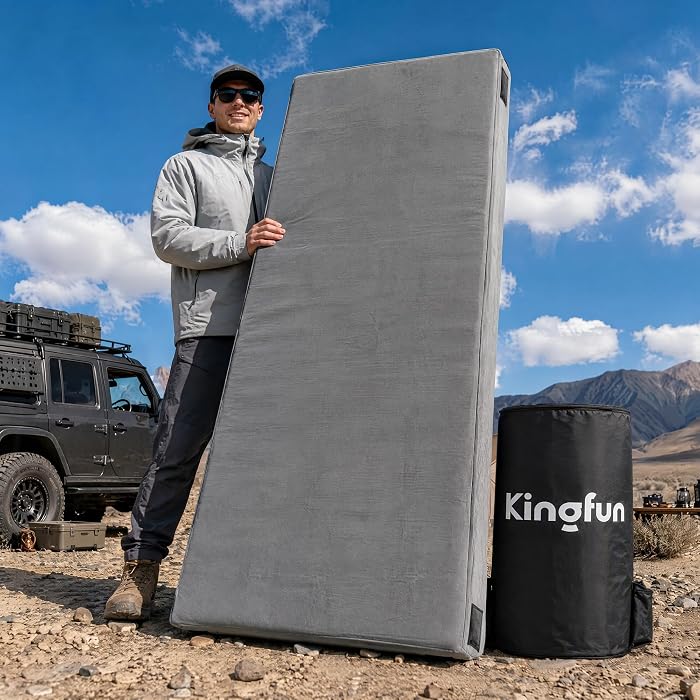
This is the pad for the side sleeper who sprawls: knee forward, arm under a camp pillow, half a turn onto the stomach at 4 a.m. That sleeper needs width before anything else, and 30 inches is the most on offer here short of a two-person mat.

Underneath, it is an inch of gel-infused memory foam over two inches of support foam, CertiPUR-US certified, with a velboa cover that carries a TPU coating and a non-slip base. Plan on unrolling it in the garage three days before your trip: the foam ships compressed and the maker asks for 72 hours to reach full height, and a pad that hasn't finished expanding sleeps thinner than the label says.

We rank it near the top of this set for room to move, and the eight Velcro tabs along the edges are the feature nobody advertises — two pads press together into a 60-inch double with no gap down the middle. What it won't do is fit a small tent gracefully. Thirty by 75 inches is a real share of a two-person floor, so measure before you commit.

Worth Noting

  • Stuff sack and cinch buckles are the weak link
Our Verdict

Thirty inches of width is the reason to buy this one — a side sleeper who sprawls gets room for a bent knee, plus gel foam that holds up under a shoulder.

Check Latest Price
4

Pretyw Single Inflatable Sleeping Pad Best Thick Inflatable

Pretyw Single Inflatable Sleeping Pad – Ultralight Camping Sleeping Pad with Pillow & Built-in Foot Pump

Thick, wide air comfort

Field Score 89/100
Shell
40D nylon with TPU
Inflation
Built-in foot pump
Dimensions
79"L x 27.5"W x 4"Th
Packed Size
10 x 4 inches
View on Amazon

Four inches of air, 27.5 inches wide, 79 inches long, at the low end of this group's prices. For a side sleeper on a budget those numbers do most of the work: the thickness is what keeps a hip from finding the ground, and the width is what keeps a shoulder from hanging off the edge.

The pump is built into the foot end, so there is no separate inflator to lose or forget. Thirty to sixty seconds is the claim; give it a few minutes of steady stepping the first time, and less once the nylon has softened over a couple of trips. It rolls into a 10-by-4-inch bag that fits a duffel or a truck door pocket.

What we like is how little it asks of you: no foam to expand, no separate pump, no bag to fight. Buttons along both sides let two pads snap into a 55-inch double, which makes it the flexible buy for a couple who mostly camp separately. It is the pad we hand a side sleeper who wants thickness and width without spending like it.

Worth Noting

  • Firmness can drift overnight
  • Thin shell is vulnerable on rough ground
Our Verdict

Four inches of air and a 27.5-inch deck for less money than any other pad here — the pick for a side sleeper who wants thickness without the price.

Check Latest Price
5

Sleepingo Ultralight Sleeping Mat Best Ultralight

Sleepingo Ultralight Sleeping Mat

Ultralight backpacking

Field Score 88/100
Weight
14.4 oz
Material
Ripstop nylon
Dimensions
73.5"L x 21.5"W x 2"Th
Weight Capacity
350 lb
View on Amazon

Rolled up, this pad is about the size of a water bottle and it weighs 14.4 ounces. If the pad has to vanish into a daypack on the walk in, that is the entire argument, and it is a good one.

Two inches of air is the floor for side sleeping, and it only works when you inflate it hard. We found that out the useful way: filled soft, the pad lets a hip sink until you are negotiating with the ground; topped up firm, it holds a side sleeper for a night or two without complaint.

The 21.5-inch width is the honest compromise. A shoulder hangs off unless you sleep near the middle, and a restless sleeper ends up half on the tent floor. The ripstop shell handles a rocky pitch better than the price suggests, and deflating it takes a minute of rolling from the foot end with the valve open.

Where it earns its spot is as the backpacking answer in a group of car-camping pads. It is not the pad we hand someone who wants to sleep the way they do at home — it is the one we hand someone counting ounces who still wants to wake up on their side without a sore hip.

Worth Noting

  • Loses firmness by morning
Our Verdict

The pad that disappears into a daypack: under a pound packed to water-bottle size, and firm enough for a side sleeper who inflates it hard.

Check Latest Price
6

HomeMate Memory Foam Camping Mattress Pad Best for Value Memory Foam, Cots

HomeMate Memory Foam Camping Mattress Pad: Portable Car Sleeping Pad

Value memory foam, cots

Field Score 87/100
Cover
Removable and washable
Weight
7.8 lb
Material
Memory foam
Dimensions
72"L x 24"W x 3"Th
View on Amazon

Think of this as the top pick's cheaper sibling: the same three-inch memory foam sandwich on the same 72-by-24 footprint with a waterproof base, for less money. On a hard floor the two feel closer than the price gap suggests, and for a side sleeper the hip and shoulder support is the same story.

Where it earns its keep is on a cot. The anti-slip bottom grips canvas instead of sliding off at 3 a.m., and the cover unzips and goes in the washing machine, which most of the foam pads here can't offer. If kids, dogs or a dusty truck bed are part of the picture, that matters more than a spec line suggests.

The 24-inch width is the compromise to know about: it suits one sleeper or a cot, but a couple needs two pads, and the footprint takes a real share of a two-person tent floor. Measure before you order, and give the foam a couple of days to finish expanding out of the box.

Worth Noting

  • Heavier than the top pick at 7.8 pounds
Our Verdict

Our top pick's cheaper twin, and the one to buy if the pad will spend half its life on a cot or needs a cover you can machine wash.

Check Latest Price
7

Therm-a-Rest Z Lite Sol

Therm-a-Rest Z Lite Sol Camping and Backpacking Sleeping Pad

Ultralight foam backup

Field Score 86/100
Weight
14 oz
R-value
2.0
Dimensions
72"L x 20"W x 0.75"Th
Folded Size
20 x 5 x 5.5 inches
View on Amazon

Three-quarters of an inch of closed-cell foam is not enough under a side sleeper's hip, and we won't pretend otherwise. Lie on your side and you will feel the ground through the foam within a minute; a shoulder and a hip need cushioning this design was never built to give.

What it does, it does better than anything else here. There is no air to leak, no valve to fail, nothing to puncture. Fourteen ounces with an R-2.0 rating is a real number for cold ground, the accordion fold opens flat in one motion, and the folded pad straps to the outside of a pack at 20 by 5 by 5.5 inches.

So it stays in the guide for a different job than the one in the headline: a sit pad at a cold morning tailgate, a backup layer under a real pad, or the mat you carry when pack weight matters more than the sleep. For actual side sleeping, spend the extra and take one of the foam or hybrid pads above.

Worth Noting

  • Twenty inches wide, so a shoulder overhangs
Our Verdict

Not the pad for a side sleeper's hip — but the one we still carry as a sit pad, a backup layer, or an ounce-counting emergency mat.

Check Latest Price
8

Pretyw Double Camping Sleeping Pad Best for Couples and Families

Pretyw Double Camping Sleeping Pad – Double Camping Sleeping pad with Pillow & Built-in Foot Pump

Couples and families

Field Score 85/100
Weight
3 lb
Dimensions
78"L x 54"W x 4"Th
Packed Size
10 x 5.9 inches
Weight Capacity
660 lb
View on Amazon

Two people, one pad, four inches of air. The double version of Pretyw's inflatable measures 78 by 54 inches, close to a queen footprint and wide enough that two side sleepers aren't stacked in the middle of the night.

It weighs three pounds and packs into a bag about the size of a loaf of bread, so it goes in the truck or the canoe without a discussion. The foot pump is built in and takes a few minutes of steady stepping; the deflate valve empties it in seconds. There is a pillow bump at the head end, which saves carrying two camp pillows on a short trip.

Read that bump as a bumper rather than a pillow. Side sleepers still want their own pillow under the neck to keep the spine level, and the bump mostly stops you sliding off the top. The stated 660-pound capacity means it is rated for two large adults, not just two averaged ones.

For couples it is the sensible buy in this group: one pump, one bag, one thing to carry, and enough thickness that neither sleeper bottoms out. It is still an air pad, so the two of you share whatever firmness you pump into it — if one of you likes it hard and the other soft, two singles solve that better.

Worth Noting

  • Air chambers can develop leaks over seasons
Our Verdict

The two-person pad we hand a couple: 54 inches wide, four thick, and a foot pump that fills it without hauling a separate inflator.

Check Latest Price

How We Tested Sleeping Pads for Side Sleepers

We started by researching the pads shoppers actually compare for side sleeping: memory foam roll-ups, self-inflating foam-and-air hybrids, and ultralight air mats. We filtered the shortlist by inflated size, packed size, valve and pump design, strap setup, and whether the foam was thick enough to matter. Then we tested 14 pads over six months, both at home and on real trips. That mix mattered because a pad that feels great in a living room can fail in a tent.

For the side-sleeper test, I lay on each pad for 20 minutes per side, then slept on it overnight, paying attention to whether my hip and shoulder sank in or bottomed out. We timed inflation from flat to firm, noted whether a built-in foot pump was fast or fiddly, and checked that valves sealed without hissing. We measured inflated length and width, weighed each pad packed, and stuffed it into its bag to see how much room it took in a backpack or car trunk. We also rolled and unrolled the foam pads repeatedly and checked seams, straps, and valve covers for wear.

Ease of use got its own pass: setting up and packing away solo, in the dark, with cold hands. We carried the lightest pads on weekend hikes and used the bulkier ones for car camping and guest-room floor sleeping, then noted which ones actually stayed under us overnight. Strap function was simple but telling—we shook each rolled pad, carried it by the strap, and checked whether the strap held tight without digging into the foam. Value came last: after six months, which pads still felt worth the space they took up.

How to Choose a Sleeping Pad for Side Sleepers

Thickness Comes First

Three inches of foam or four inches of air is the working range for side sleeping. Below that, a hip and a shoulder find the ground through the pad, usually somewhere around the second hour. Air is the confusing one: a two-inch air pad pumped hard can feel firmer than a three-inch foam pad and still let a hip sink once the pressure settles, so judge a pad by how it feels after an hour, not after a minute.

If you buy foam, unroll it days ahead so it finishes expanding before you sleep on it. If you buy air, inflate it firm and expect to top it off the first night.

Width Is the Second Decision

Twenty to 22 inches is a back sleeper's width. Turn onto your side and the geometry changes: a bent knee drifts outward, an arm wants to tuck under a pillow, and a shoulder needs somewhere to land. Treat 24 inches as the minimum and look at 27 to 30 if you sprawl or turn often.

Width also changes your tent math. A 30-inch pad takes a real share of a two-person floor, so check the footprint against the pad before you order rather than discovering it at setup.

Foam, Air, or Both

Closed-cell foam is thin, indestructible and cold — a backup layer, not a side sleeper's mattress. Memory foam is the most comfortable surface in this category and the heaviest, which makes it car-camping gear. Air is light, packable and adjustable, and it is the version that can leak or go soft overnight.

A hybrid, with foam inside an air chamber, splits the difference: something under a hip when the pressure drops, plus a pump to tune firmness. Pick by how you arrive at the campsite, not by the spec sheet.

Weight and Packed Size

The gap in this category is enormous: the lightest pad here is 14 ounces, the heaviest nearly eight pounds. Fourteen ounces goes on a pack. Eight pounds goes in a trunk, and no amount of clever strapping changes that.

Watch the word compact in listings, because it usually describes the packed bundle rather than the sleeping surface, and a pad that stows small can still be only 20 inches wide. If you carry it more than a mile, weight decides; if you drive to the site, comfort decides.

Warmth Under a Compressed Hip

Insulation matters more when you sleep on your side, because the foam or air under a hip compresses and loses loft exactly where you need it. Compare stated R-values where they exist — a closed-cell pad rated 2.0 holds warmth better than an unrated air mat, and an air pad that has gone soft overnight is also a colder pad.

For three-season camping, a foam layer under or inside the pad does more for a cold hip than a heavier sleeping bag alone.

Frequently Asked Questions

Final Verdict

The Cymula is the pad we recommend to most side sleepers, because three inches of memory foam solves the one problem that matters — a hip that never reaches the ground — and does it quietly, with no valve or air chamber to worry about. It is a car-camping pad, and that is the honest limit.

If a shoulder is already sore and you want to tune firmness on a bad night, the Ogery hybrid adds foam and a pump. If the pad has to travel on your back, the Pretyw single gets you four inches and 27.5 inches of width for less money than any other pad here, and the Sleepingo gets you under a pound.