The 8 Best Whittling Knives of 2026

A dull whittling knife is the one that cuts you. When the edge gives up, you start pushing, and a blade that needs pushing goes wherever it wants — usually toward the thumb steadying the wood. So the first thing I check on a carving knife isn't the grain of the handle or how handsome the gift box is; it's whether the edge will shave a curl off a basswood blank without me leaning into it.

Sharpness gets complicated, though. High-carbon steel takes a fine edge and holds it, but leave a blade damp on the workbench overnight and you'll find spots by morning — and plenty of knives people give up on were never dull, they just needed thirty seconds on a strop. We've spent eight months with 12 whittling knives, from bare fixed blades to full beginner kits, and the ones worth keeping got the steel, the handle shape, and the way you carry it right at the same time. The picks below sort themselves out by how you plan to carve.

Our Top Picks

The 8 Best Whittling Knives of 2026

1

Flexcut KN500 Starter Set Best Overall

Flexcut Wood Carving Knives

First carving set

Field Score 95/100
Handle
Ash hardwood
Set Weight
7.04 oz
Blade Steel
1095 high-carbon steel
Blades Included
Cutting, detail, roughing
View on Amazon

Three blades is the right answer for most carvers, and this Flexcut set chooses the three that matter: a cutting knife for general shaping, a detail knife for tight curves, and a roughing knife for removing stock. Switching among them feels less like changing tools than changing the scale of the cut. That range is why the set earns the top spot over a single excellent knife.

We like the 1095 high-carbon steel because it takes a clean edge and comes back quickly on a strop, and the ash handles give us a secure grip without filling the palm like a tradesman's chisel. The knives arrive sharp enough to start carving, which matters when the alternative is a first session spent learning to sharpen instead of making shavings.

The blades are thin and slightly flexible, a combination that helps them follow curves and take light slicing cuts. It also means we treat them as carving tools, not pry bars; heavy leverage is the quickest way to damage a tip. The set is focused: three knives, no project wood or templates, which is exactly what we want in a carving-tool purchase.

The set also teaches blade vocabulary by feel. After a few projects, you know which profile you reach for without looking at the label, and that is a more useful education than another gadget in the box.

Worth Noting

  • No strop or compound included
  • Costs more than a single starter knife
Our Verdict

For most people buying a first serious whittling knife, we recommend this set: three useful blade shapes, comfortable ash handles, and edges that are ready to carve.

Check Latest Price
2

Morakniv Wood Carving 120 Best Single Fixed-Blade

Morakniv Wood Carving Knife 120

All-around whittling

Field Score 94/100
Handle
Oiled birch
Weight
2.4 oz
Blade Length
2.35 inches
Blade Material
Laminated steel
View on Amazon

The 120 is short where it counts: a 2.35-inch laminated steel blade on a knife that weighs only 2.4 ounces. The oiled birch barrel handle is the other half of the design, giving the hand several places to sit without a hard shelf or a slick finish. This is a knife built for control rather than leverage.

We used it as the fixed-blade answer to general whittling: shaping a blank, rounding edges, and cleaning up curves. The short blade lets us choke up near the tip for detail, while the barrel handle supports a relaxed grip when we are taking longer paring cuts. It is not a hogging tool; for bowl work or heavy stock removal, a sloyd or hook knife is faster.

What sold us is how little the knife asks of the hand. At 2.4 ounces it disappears during a longer session, and the laminated steel takes a fine edge without feeling fragile in normal carving. We also appreciate that the handle is wood rather than a molded plastic shell; it warms up in the hand and gives a little traction.

A beginner can grow with it, but an experienced carver will also keep it close for the cuts that need a short, precise blade. It is the one here we reach for when the shape is already established and the work turns to refinement.

Worth Noting

  • Plastic sheath feels basic
  • Thin tip can break if pried
Our Verdict

We recommend the 120 as the best one-knife answer here: short enough for detail, light in hand, and built around a comfortable birch grip.

Check Latest Price
3

Hutsuls Whittling Kit Best Beginner Kit

Hutsuls Wood Whittling Kit for Beginners

Spoon carving start

Field Score 93/100
Handle
Ashwood
Knives
Whittling, hook, chip
Pieces
8
Edge Care
Leather strop and compound
View on Amazon

The hook knife is what makes this kit more than a beginner's sampler. A straight whittling knife can shape the outside of a spoon, but the hook is the tool that hollows the bowl, and having one in the same box saves a separate purchase. We think that combination is the most sensible first buy for someone who wants to carve spoons and cups rather than just sharpen a stick.

The whittling knife and chip carving knife cover the straight cuts, and the ash handles are shaped to fill the hand without hotspots. The carbon-steel blades arrive sharp and respond well to the leather strop and compound included in the kit. That maintenance kit is not filler; it is the difference between a knife that keeps working and one that gets put away dull.

The set packs into a compact gift box, and the whole thing is light enough to take to a class or a kitchen table. We like that it gives a new carver the three shapes that cover most small projects, plus the means to maintain them, without a pile of basswood blanks and templates that may never get used. The box is the one part we are indifferent to; it is more display than shop storage, but it does keep the pieces together.

Our Verdict

For a first spoon-carving kit, this Hutsuls set is our pick because it pairs three useful blades with the hook knife and strop a beginner actually needs.

Check Latest Price
4

BeaverCraft C4 Sloyd Best Budget Sloyd

BeaverCraft Wood Carving Knife C4 3.14" Whittling Sloyd Knife for Roughing

Budget roughing

Field Score 92/100
Handle
Oak
Blade Steel
High-carbon steel
Blade Length
3.14 inches
View on Amazon

The C4 is a single sloyd, not a kit, and that is the appeal. A 3.14-inch high-carbon blade on an oak handle gives you a proper roughing tool without paying for a roll of profiles you may not use. It is the least expensive way into a real carving blade in this group, and it does not feel like a toy.

We like it for hogging off wood: the longer blade and slight belly take bigger shavings than the short Morakniv, and the edge touches up quickly on a strop. The handle is comfortable for its size, though it is a small-handled knife; carvers with large hands may prefer the fuller barrel of the 120.

The blade is the reason to buy: sharp, simple, and easy to maintain. For a carver who already has a detail knife, this is the roughing companion that earns its space, and the low price leaves room for a strop.

Worth Noting

  • Thin cover is not a real sheath
Our Verdict

The C4 is the budget sloyd we point to for roughing out blanks before detail work, and it costs less than most single carving knives here.

Check Latest Price
5

Flexcut Whittlin' Jack Best Folding

FLEXCUT Whittlin' Jack (JKN88) 2-Blade Pocket Carving Knife

Travel whittling

Field Score 91/100
Blades
1.5-inch detail, 2-inch roughing
Handle
Aluminum and wood
Weight
3 oz
Closed Length
4.25 inches
View on Amazon

Folded to 4.25 inches and weighing about 3 ounces, the Whittlin' Jack is the one here that disappears into a jacket pocket. It carries two high-carbon blades, a 1.5-inch detail blade and a 2-inch roughing blade, in an aluminum and wood handle. That is a whole carving session in a package smaller than a wallet.

We like the blade pairing because it covers the two cuts that matter away from the bench: taking off a little stock and then cleaning up a curve. The handle feels more solid than the price suggests, and the blades take a keen edge. This is a pocket tool, not a bench knife; we use it for short sessions and small projects.

What we appreciate most is the honesty of the design: it does not pretend to be a bench knife, and it does not take up pocket space like one. The two blades cover the cuts that matter, and the handle gives enough control for small figures and spoons in the round. It is the knife that goes in the bag for a lunch break, not the one that stays on the bench for a full spoon.

Worth Noting

  • Blades can be stiff to open
  • No blade lock for heavy cuts
Our Verdict

For whittling on the move, the Whittlin' Jack is the two-blade folder we choose, with a compact carry and a useful pair of profiles.

Check Latest Price
6

BeaverCraft S18X Deluxe Kit Best Premium Set

BeaverCraft Deluxe Wood Carving Kit S18X

Full carving bench

Field Score 90/100
Tools
8 whittling tools
Handle
Chocolate walnut
Storage
Genuine leather pouch
Blade Steel
High-carbon steel
View on Amazon

Eight tools and a leather pouch is a different proposition from a three-knife starter set. The S18X is for the carver who has already decided that whittling is a keeper and wants the profiles on hand rather than buying them one at a time. The roll opens flat, the tools sit in individual slots, and the whole package looks like something you keep on a bench rather than in a drawer.

The set uses high-carbon steel blades and chocolate walnut handles, and the tools come sharp enough to carve. The profiles cover roughing, detail, and the curved work that a straight knife cannot reach, and the stropping kit gives you a way to keep them working. We found the handles comfortable over a longer session, with enough shape to index the tool without looking.

The leather pouch is the part that makes the set feel considered. It protects the edges, keeps the profiles organized, and makes the whole thing easy to move from shelf to table. It is the kind of storage that makes you more likely to pick up a tool for a ten-minute session rather than leave it in a drawer.

What tips it for us is the combination of range and storage: everything needed for a session is in one roll, and the tools feel substantial without being fussy. For a carver who wants to stop assembling a set piece by piece, this is the shortcut.

Worth Noting

  • Premium price for a full set
  • Tools have no identifying marks
Our Verdict

When one roll needs to cover a whole bench, this deluxe BeaverCraft set is the one we recommend; the leather pouch keeps eight tools organized.

Check Latest Price
7

Morakniv Wood Carving 106 Best for Green-Wood Shaping

Morakniv Wood Carving Knife 106

Green-wood shaping

Field Score 89/100
Handle
Oiled birch
Blade Length
3.2 inches
Blade Material
Laminated steel
Overall Length
7.4 inches
View on Amazon

The 106 is the 120's longer sibling: a 3.2-inch laminated steel blade instead of 2.35 inches, on the same oiled birch handle. We prefer that extra length for green wood and fast stock removal, where a short detail knife can feel like it is nibbling at the work. It is still light in the hand and still a one-hand carving tool.

The longer blade gives up some tip control; it is not the knife we choose for tight curves or fine facial details. That is the trade-off, and it is worth making if your projects are spoons, kuksa blanks, or rough-shaped figures rather than miniature carvings. The handle is the same comfortable birch barrel, so the grip does not change with the blade length.

Laminated steel takes a fine edge, and the knife sharpens and strops easily. The blade is simple to keep working, and the slim profile lets it follow a shaving cut without a lot of steering. We treat it as the roughing half of a two-knife setup, not the only knife in the roll.

If you already own a short detail knife, the 106 is the complement that makes green-wood projects move faster. If you are buying only one knife, the 120 is the more versatile place to start.

Worth Noting

  • Carbon steel needs drying and oiling
Our Verdict

The 106 is our longer sloyd for green wood and fast stock removal, with the same comfortable birch handle as the 120.

Check Latest Price
8

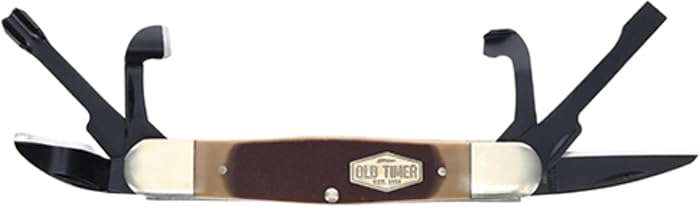
Old Timer 24OT Splinter Carvin' Best for Camp Whittling

Old Timer 24OT Splinter Carvin' 6in Traditional Folding Whittling Knife

Camp whittling

Field Score 88/100
Blades
Six carving profiles
Weight
3.9 oz
Blade Length
1.5 inches
Overall Length
6 inches
View on Amazon

Six carving profiles in a 6-inch folder is a lot of tool for the money. The 24OT packs a straight gouge, hook blade, v-scorp, gouge scorp, chisel, and a 1.5-inch detail blade into a sawcut-handled slip joint that weighs 3.9 ounces. For a traditional-folder fan, that is an appealing pocket carver.

The 65Mn high-carbon steel and nickel silver bolsters give it the look of an old-school camp knife, and the short blades are best suited to small carvings rather than big spoon bowls. The back springs have a firm snap, and the profiles let you try a gouge or a scorp without buying a separate tool for each.

We see the appeal most clearly at a camp table or on a porch, where a single pocket tool can cover several small projects. It is not a precision bench set, and the short blades limit how much wood you can remove in one pass. The value is in the variety, not in the finish.

What makes it worth a place here is the breadth: six shapes in one compact folder, at a price that lets you experiment. It is a camp carver rather than a bench set, and that is the right way to judge it.

Worth Noting

  • Blades need sharpening out of the box
  • Slip joint has no blade lock
Our Verdict

The 24OT is a compact six-profile camp carver for traditional-folder fans, and a lot of carving shapes for the money.

Check Latest Price

How We Tested: Eight Months, 12 Knives, and a Pile of Basswood

We started by pulling every carving knife with a real following, then filtered by blade steel, handle material, and whether the knife arrived with a way to sharpen and carry it. We bought 12 — a mix of bare fixed blades, folding pocket carvers, and full beginner kits — and used them for eight months.

Each knife got the same first test out of the box: a shave test on arm hair, then a stop cut and a long paring cut through a basswood blank. I noted whether the blade bit on contact or skated across the surface, how much pressure it took to steer through a curve, and whether the edge felt rolled by the end of a 45-minute session. When a knife dulled, we timed how long it took to bring the edge back on a strop versus a stone, and we left the carbon blades damp overnight to see how quickly they spotted.

Handles got the hot-spot test — a full evening of roughing out spoon blanks, with notes on cramping, blisters, and exactly where the palm pressed hardest. Folding models were opened and closed one-handed, locked and then twisted under side pressure to check for wiggle, and carried loose in a pocket to judge how easy the blade was to get at. Sheaths and kit boxes were shaken upside down, worn on a belt for a weekend, and checked for whether a knife could work its way free.

Cost counted only against what came in the box. A bare blade had to beat a kit on steel and edge retention to justify itself, and a kit had to earn its extras — a strop, a compound, a pouch — rather than pad the count with filler. After eight months, the knives still in the roll are the ones that never needed excuses.

How to Choose a Whittling Knife

Start With Blade Shape

A short blade gives you control at the tip, which is what detail work needs; a longer sloyd removes stock faster; a hook knife hollows a spoon bowl. Most wood carving knives in this group are really whittling tools, so look at the profile before the steel. If you want one knife, choose a 2- to 3-inch sloyd with a comfortable handle. If you carve spoons, budget for a hook knife or buy a set that includes one.

Fixed or Folding

Fixed blades are simpler and stronger, with no joint to flex or clean, and they are the better choice for a bench carver. A folder earns its place when the knife lives in a pack or a pocket; the Whittlin' Jack is the compact option here, and its two blades cover detail and roughing. Check the opening action before you commit. Stiff blades are a nuisance, and a blade with no lock demands lighter cuts and more attention.

Handle Shape and Grip

Whittling is hand work, so the handle matters as much as the edge. A barrel-shaped handle lets your hand slide into different grips; a straight handle with a palm swell locks the hand in one position. Neither is better for everyone. Hold the knife before a long project if you can, and avoid a handle that is too small for your hand. The C4 is a compact sloyd, while the Morakniv 120 has a fuller birch barrel. A glove helps with grip and cuts, but it should not be so thick that you lose feel.

Steel, Sharpening, and Care

High-carbon steel takes a fine edge and responds well to a strop, which is why most carving knives use it. The trade-off is rust: dry the blade after use and keep a thin film of oil on it. Laminated steel puts a hard core between softer layers for a keen, flexible blade. A leather strop and compound are more useful than a fancy sharpening system for day-to-day upkeep. If a set includes them, as the Hutsuls and S18X do, that is real value rather than filler.

Buy a Focused Set, Not a Project Box

The useful set is the one with several blade profiles and a way to maintain them. A box with wood blanks, templates, sandpaper, and chisels can look like a bargain, but much of it may sit unused. We prefer a focused knife set for a first purchase and separate wood when you know what you want to carve. If you need only one knife, buy one good sloyd and add a hook knife later; if you want a bench in one roll, the S18X is the thorough option.

Frequently Asked Questions

Final Verdict

The Flexcut KN500 is the set we recommend for most people because it puts three working profiles in your hand without turning the purchase into a full kit. If you prefer one fixed blade, the Morakniv 120 is the simpler answer; if spoons are the goal, the Hutsuls kit adds the hook knife and strop that make hollowing practical. Start with the shape of the work you do most, and the choice becomes clear.