The 7 Best EDC Knives Under $50 of 2026

The trouble with a cheap pocket knife is rarely the price — it's the lock, the steel, and the weight. I've had budget knives fold back on my knuckles, and I've had others go dull halfway through a single moving box. So those were the three things we started with when we went looking at the affordable end of the folding-knife market, plus one more that matters just as much: whether a knife is small and light enough that you'll actually carry it. That's what a good everyday carry knife fixes — it stops being a drawer ornament and becomes the thing you reach for without thinking.

Over the past four months, my team and I have carried 14 of them, clipped to jeans, gym shorts, and work pants, cutting rope, breaking down cardboard, and whittling kindling. The details that separate a keeper from a drawer filler are small ones: an opener that works one-handed, a clip that grips without shredding the seam, a lock that feels solid when you press on the spine. And check your local blade-length rules before you buy — they change the moment you cross a state line.

A few of these are tiny enough to vanish in a coin pocket, a couple are built for rougher work than opening mail. All of them earn their place on a modest budget.

Our Top Picks

The 7 Best EDC Knives Under $50 of 2026

1

CIVIVI Mini Praxis Best Overall
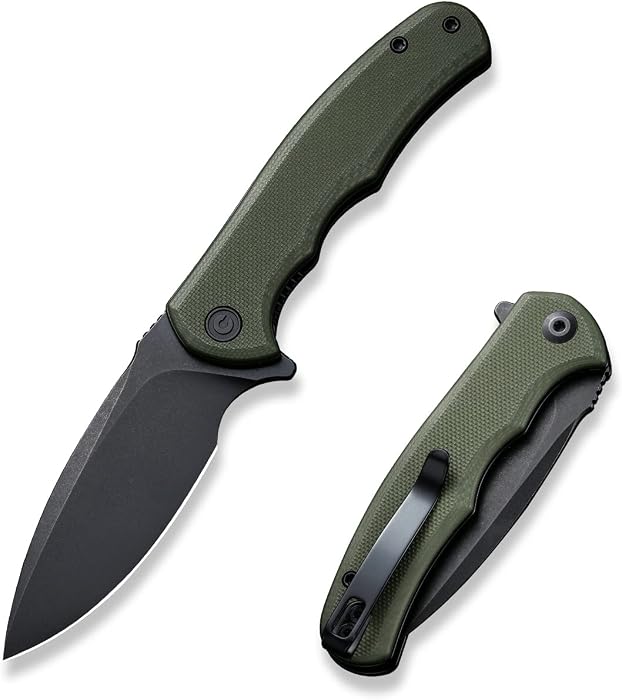
CIVIVI Mini Praxis Folding Pocket Knife

Everyday all-around

Field Score 97/100
Handle
G10
Weight
4.05 oz
Blade Steel
D2
Blade Length
2.98 inches
View on Amazon

D2 steel and a G10 handle are the two choices that make the Mini Praxis our top pick. The 2.98-inch blade is long enough for boxes, cord, and camp chores but stays in the sub-3-inch range many people look for. G10 is the right call for a working knife because it resists moisture and temperature changes, and the ceramic-bearing pivot gives the flipper a quick, smooth action.

The 4.05-ounce weight is the trade-off. That heft gives the knife a solid feel and a handle you can hold onto during harder cuts, but it is noticeably heavier than the Gerber or the Kershaw. The clip is set for right-hand carry only, so left-handed users should look elsewhere. We also like that the manual flipper does not depend on a spring; it takes a full stroke, but there is less to go wrong.

D2 holds an edge longer than the budget steels here, though it is not a stainless steel in the same sense as the 440-class blades. Wipe it dry after wet work and it will treat you well. The pivot can feel stiff at first, and a timid flip may not lock the blade fully open, so practice the motion. That is the one habit this knife asks for.

For a mix of shop, trail, and errands, the Mini Praxis is the one we keep coming back to. It has the most modern materials here without moving into a higher price class, and the handle shape makes long cutting sessions less tiring than the slim metal frames. It is not the smallest or the lightest knife in the roundup, but it is the most complete.

Worth Noting

  • Heavier than compact picks
  • Clip is right-hand only
Our Verdict

For a modern every-day folder that handles real work without feeling disposable, start here: D2 steel and a secure G10 grip make the Mini Praxis the best all-around value in this set.

Check Latest Price
2

Kershaw Cryo Best Compact

Kershaw Cryo Pocket Knife

Light-pocket carry

Field Score 96/100
Handle
Stainless steel
Blade Steel
8Cr13MoV
Blade Length
2.75 inches
Overall Length
6.5 inches
View on Amazon

The Cryo is the assisted folder in this group: press the flipper, and the 2.75-inch drop point snaps out with one hand. The 8Cr13MoV blade has a black carbo-nitride finish, and the contoured stainless handle gives it an all-metal look that hides its budget price.

We like it for a compact work knife, especially for someone who opens boxes or cuts hose while wearing gloves. The assisted action is genuinely quick, and the liner lock is easy to find with a thumb. The catch is the handle: 2.75 inches of blade leaves a short grip, so larger hands may feel crowded. We also treat assisted opening as a feature to practice rather than a fidget toy; it rewards a firm, deliberate push.

The steel will not hold an edge like D2, but 8Cr13MoV sharpens quickly on a simple stone, which suits a knife that sees dirty jobs. The pocket clip is reversible for left- or right-hand carry, a detail we appreciate on a knife at this end of the market. The assisted action is the reason to choose it over the Mini Praxis; the short handle is the reason to try it in hand first.

Worth Noting

  • Short handle can crowd larger hands
Our Verdict

When one-handed opening and an all-steel build matter more than a roomy handle, the Cryo is the compact assisted folder we recommend.

Check Latest Price
3

Outdoor Edge RazorLite Best for Hunting

OUTDOOR EDGE 3.5" RazorLite EDC Knife. Pocket Knife with Replaceable Blades

Hunting and skinning

Field Score 95/100
Weight
4.8 oz
Blade Type
Replaceable
Blade Length
3.5 inches
Blades Included
6
View on Amazon

The RazorLite is a hunting knife that happens to fold. Its 3.5-inch blade sits in a 420J2 stainless holder, and when the edge goes dull you release it and click in a fresh one rather than hunt for a sharpener. Six blades come in the box, and the blaze-orange handle is easy to spot on a tailgate or in a pack.

The Grivory frame with TPR inserts gives you a non-slip grip when your hands are wet, which is exactly what field dressing demands. The replaceable edge is razor sharp, and swapping blades takes seconds. The trade-off is a blade that is thinner and more delicate than a conventional hunting folder. It is not a pry bar or a chopper, and the plastic pocket clip is the first part to watch if you snag it on a branch.

For a deer hunt, a fishing trip, or a camp kitchen, that disposable edge is a real pleasure: you finish the job with a sharp blade instead of stopping to hone one. We also like that the orange handle makes the knife hard to leave behind. For pure everyday carry, the CIVIVI is the more conventional choice, but for messy field work the RazorLite earns its place.

Worth Noting

  • Plastic pocket clip can break
  • Blade is too fine for prying
Our Verdict

Hunters and camp cooks should start with the RazorLite: swap in a fresh blade instead of stopping to sharpen, and keep the blaze-orange handle where you can find it.

Check Latest Price
4

Smith & Wesson Extreme Ops Best Budget Full-Size

Smith & Wesson Extreme Ops SWA24S Tactical Folding Knife

Toolbox and truck

Field Score 94/100
Weight
3.52 oz
Blade Edge
Serrated
Blade Steel
7Cr17MoV
Blade Length
3.1 inches
View on Amazon

The Extreme Ops is the least expensive full-size knife here, and it does not pretend to be a premium folder. You get a 3.1-inch serrated clip point in 7Cr17MoV, a black aluminum handle, and a liner lock, with a finger flipper and ambidextrous thumb knobs.

The serrated edge is the practical reason to pick it. It tears through rope, hose, and heavy cardboard without the edge sliding, and the black oxide finish shrugs off scuffs. The action is the catch: the knife can be stiff to open and close, and one-handed deployment is not a sure thing. We treat it as a two-handed beater, not a fidget-friendly daily folder.

For a truck box, tackle bag, or a first knife that will get loaned out, that stiffness can be a fair trade for the low price. The 7Cr17MoV steel takes a quick edge, though the serrations need a tapered sharpener or a rod. We keep this one in the rotation because it is the knife we do not mind abusing; it is not the one we reach for when we want a precise slice.

Worth Noting

  • Stiff two-handed action
  • Serrated edge needs a special sharpener
Our Verdict

If the knife will live in a toolbox or truck, the Extreme Ops gives you a full-size serrated blade for less money than anything else here.

Check Latest Price
5

Mossy Oak Mini Best Tiny Backup

Mossy Oak Mini Folding Pocket Knife with G10 Handle

Tiny backup

Field Score 93/100
Handle
G10
Weight
3.5 oz
Blade Steel
3Cr13
Blade Length
2.5 inches
View on Amazon

The Mossy Oak Mini is tiny: 2.5 inches of blade, 3.5 ounces, and a 6-inch overall length. That puts it in keychain or fifth-pocket territory rather than full-size EDC. The G10 handle is the surprise; it gives the little knife a grip that feels more expensive than the rest of the package.

The extras are the reason to look: a bottle opener, glass breaker, and cord cutter are built into the frame. The bottle opener is the function you will use most; the glass breaker is the one you hope never to need. The liner lock is simple, and the drop-point blade handles tape and packages without drama.

The limits show up when you ask it to be a primary knife. The blade is short, the handle is short, and the edge can arrive less sharp than the rest of the package suggests. It is also not a hard-use tool; the compact frame is built for light tasks, not batoning or prying.

We like it as the knife that lives where a good knife should not: under a truck seat, in a tackle box, or clipped to a daypack. It adds real utility for very little money, and it will not crowd a pocket. Just do not expect it to replace the Mini Praxis for a full day of cutting.

Worth Noting

  • Edge can arrive dull
  • Short blade and handle limit hard use
Our Verdict

A tiny backup with a bottle opener and glass breaker is exactly what the Mini delivers, as long as you do not expect it to replace a primary blade.

Check Latest Price
6

Gerber Paraframe Mini

Gerber Gear Paraframe Mini Pocket Knife

Ultralight backup

Field Score 92/100
Handle
Stainless steel
Weight
1.6 oz
Blade Steel
Stainless steel
Blade Length
2.2 inches
View on Amazon

The Paraframe Mini is the knife you forget you are carrying: a 2.2-inch blade, 5.25 inches overall, and just 1.6 ounces in a skeletonized stainless frame. It fits a jean's fifth pocket, and the clip holds it steady without adding much bulk. That combination makes it our pick for an ultralight backup rather than a main EDC.

The 2.2-inch clip point is sharp enough for boxes, letters, and loose threads, and the all-steel handle feels more substantial than the weight suggests. The action is the part to know about. Opening and closing can be stiff, and the lock bar takes deliberate pressure, so it is not a knife for fast one-handed use. We kept reaching for it as a secondary blade, not as the knife we open twenty times a day.

For a light pack, a pocket organizer, or a knife to leave in the car, that small size is the point. It gives up handle room and speed, but it also takes up almost no space. The clip is the detail that makes it work: a tiny knife is only useful if it stays where you put it.

Worth Noting

  • Stiff two-handed action
  • Too small for a primary EDC
Our Verdict

Choose the Paraframe Mini for an ultralight fifth-pocket backup, not for anyone who wants fast one-handed opening.

Check Latest Price
7

Good Worker Legal Pocket Knife

GOOD WORKER Legal Pocket Knife with 2.95” Serrated Blade

Car emergency kit

Field Score 91/100
Extras
Glass breaker, seat-belt cutter
Weight
4.16 oz
Blade Steel
440C
Blade Length
2.95 inches
View on Amazon

The Good Worker is a sub-3-inch folder with a rescue-tool brief: a 2.95-inch serrated blade, a glass breaker, and a seat-belt cutter in a 4.16-ounce aluminum frame. The handle runs long for a compact blade, so the knife takes up more pocket space than the blade length suggests.

We like that combination for a car console or a range bag. The serrated 440C blade cuts straps and rope with less sawing than a plain edge, and the glass breaker and cutter are the kind of backup you want within reach. The blade stops just under three inches, which is the size many people look for when they want a compact, less conspicuous folder. It is a practical tool rather than a collector's piece, and the aluminum handle wipes down easily after dirty work.

The action is the part to check. The liner lock can be stubborn, and the blade does not always snap open with a thumb flick, so practice opening and closing it before you rely on it in a hurry. The serrated edge also takes more care to sharpen than a plain blade. For a glovebox or emergency kit, the extra tools earn their space; for a knife you open twenty times a day, the stiff action wears thin.

Worth Noting

  • Liner lock can be stubborn
  • Heavier than compact picks
Our Verdict

Worth a look for a car or emergency kit, the Good Worker pairs a sub-3-inch blade with a glass breaker and seat-belt cutter, provided the lock checks out.

Check Latest Price

How We Tested Budget EDC Knives

We started with a list of roughly 40 folding knives and filtered it down by listed blade steel, handle material, weight, and whether the knife had a locking blade and a pocket clip — the four things that decide whether an inexpensive knife is worth carrying. That got us to 14, which we bought at retail like anyone else would.

For four months, each knife went into someone's rotation: clipped to jeans for a workday, dropped into gym shorts for a dog walk, riding in a jacket pocket on weekend hikes. We weighed every one on a kitchen scale, measured closed length against a closed fist, and logged how it sat in a front pocket without gouging a thigh. The clip got its own full day on a pair of denim jeans, after which we checked whether the pocket seam had frayed and whether the clip had loosened its grip.

Sharpness got the hardest use: breaking down a stack of moving boxes, cutting three-quarter-inch manila rope, whittling dry pine for kindling, and slicing apples at lunch. We noted whether the edge bit immediately or skated across the surface, and whether it still shaved paper afterward. Most of these use a liner lock, so we paid attention to how much of the lock face actually met the blade tang; we opened each blade, pressed the spine against a cutting board with steady pressure, and looked for rock or play. Then we closed each one one-handed a dozen times to see whether the release sat where a thumb could find it without putting fingers in the path of the edge.

Value came last, on purpose. A knife with a solid lock and steel that gives up by Tuesday isn't a bargain at any price, and a plain one that keeps cutting for months is.

How to Choose an Edc Knife

Blade steel: spend where it affects the edge

At this price, steel falls into a few rough groups. D2, as on the Mini Praxis, favors edge retention and toughness, while 8Cr13MoV on the Cryo is easier to sharpen and still takes a working edge. The 3Cr13 and 440-class blades on the cheapest picks cut fine but need more touch-ups. We put more value on a steel that suits your sharpening habits than on a name that sounds tactical. If you will not maintain the edge, a replaceable-blade knife makes more sense than a premium steel.

Blade length and local law

Most daily tasks are handled by a 2.5- to 3-inch blade, and that size keeps the knife compact in a pocket. Do not assume under three inches is legal everywhere, though: state and city rules vary, and workplace or school policies can be stricter. Check your local rules before you carry, especially if the knife has assisted opening. A shorter blade like the Paraframe Mini's 2.2 inches is easier to justify in an office or campus-adjacent setting, but it gives up reach and handle room.

Weight, handle, and pocket footprint

A pocket knife that weighs 1.6 ounces disappears in a pocket; a 4-ounce knife reminds you it is there. That extra weight often buys a sturdier feel and a larger handle, but it is not automatically better. Handle material matters just as much: G10 and textured polymer stay grippy with wet hands, while smooth metal can get slick in cold weather. We look for a clip that keeps the knife low in the pocket and a handle long enough to fill your palm. If you wear light shorts, start with the lighter options here.

Opening and locking: choose the action you can run safely

Assisted opening, as on the Cryo, is fast and fun, but it demands a deliberate grip and may draw more attention. A manual flipper with a bearing pivot, like the Mini Praxis, is nearly as quick once you learn the motion and is simpler to live with. Whatever the action, the lock has to engage fully and release without pinching. Practice opening and closing with the blade pointed away from your body; if the lock feels sticky or the blade does not snap into place, do not force it.

Replaceable blades versus sharpening

If you hunt, fish, or cut a lot of rope and cardboard, a replaceable-blade knife can be the practical choice: the RazorLite turns a dull edge into a fresh one in seconds. Accept the trade-off: those blades are thinner and not meant for prying. A conventional knife needs a sharpener and a few minutes of upkeep, but it handles harder use and costs less over time. We keep one of each: a replaceable blade for messy field work and a conventional folder for daily utility.

Frequently Asked Questions

Final Verdict

Most people should buy the CIVIVI Mini Praxis. It has the best balance here of blade steel, grip, and usable size, and its manual flipper is easy to live with. If you want a compact assisted opener, the Kershaw Cryo is the better fit for a small pocket or a short grip. Hunters should go straight to the Outdoor Edge RazorLite, where a fresh blade beats a sharpening stone at the end of the day.