The 5 Best Mini Greenhouses of 2026

Every February I buy more seed packets than I have windowsills for, and by March the kitchen counter is a wall of leggy seedlings leaning toward the glass. A mini greenhouse fixes that: it traps warmth and humidity long enough for seeds to germinate and shields young starts from a late cold snap, all for less than a flat of nursery plants.

My team and I have spent the past seven months living with 13 of them, and the pattern that emerged had less to do with shelf count than with the cover and the zipper. A greenhouse is only as good as its seams: a zipper that sticks or a cover that splits at a corner turns a sturdy frame into a windblown one by June.

One thing I'd tell a first-time buyer: measure the spot before you fall for the tier count, since a tall rack in a narrow footprint shades its own lower shelves. The picks below run from a tabletop pop-up one person can carry to a house-shaped frame that shrugs off weather on an open deck.

Our Top Picks

The 5 Best Mini Greenhouses of 2026

1

Ohuhu 4-Tier Mini Greenhouse Best Overall

Ohuhu Mini Greenhouse for Indoor Outdoor

Patio seed starting

Field Score 89/100
Cover
PE, UV-resistant
Tiers
4
Footprint
27"L x 19"W x 62"H
Shelf Capacity
22 lb per shelf
View on Amazon

Four shelves in a footprint barely wider than a doormat is the reason the Ohuhu 4-Tier earns our top spot. The rack measures 27 by 19 inches at the base and stands 62 inches tall, so it can turn a balcony corner or a sunny patch of patio into a vertical seed-starting station. Each shelf holds up to 22 pounds, enough for a loaded seed tray or a row of nursery pots, and the PE cover slides over the frame and ties down.

We put it together without tools and without a second person; the push-fit joints are easy enough to sort before you start. The zippered roll-up door gives decent access to the lower shelves, though you will reach around pots on the upper tiers. The cover is UV-resistant and ties over the frame; when the season ends, store the unit out of direct sun.

On a sheltered patio, the enclosed space warms quickly on a sunny morning, which is exactly what seedlings want; the single vent and zippered door give you enough control to keep the air from turning stale. We prefer it for starts and small potted plants, because the shelf spacing favors flats. Keep it out of exposed wind and anchor it if it lives outdoors. Once tomatoes or peppers need real headroom, move them to a low house rather than trying to rearrange the shelves.

Worth Noting

  • Cover can stiffen after a season in sun
  • Zipper can stick if the cover is pulled tight
Our Verdict

The Ohuhu 4-Tier is the mini greenhouse we recommend first for most buyers: four useful shelves, a small footprint, and tool-free setup.

Check Latest Price
2

AHOME Pop-Up Mini Greenhouse Best Budget Pop-Up

AHOME Pop-Up Mini Greenhouse – Mini Pop Up Greenhouse; 27"x27"x31"; Indoor/Outdoor; PVC/Steel; Zipper Closure;

Budget frost cover

Field Score 88/100
Cover
Clear PVC
Setup
Pop-up
Anchoring
4 steel ground stakes
Footprint
27" x 27" x 31"
View on Amazon

A pop-up cover that unfolds in seconds is the AHOME's whole appeal. It opens into a 27-by-27-by-31-inch clear PVC tent and comes with four steel ground stakes, so a single patio plant, a basil collection, or a small citrus can be sheltered in the time it takes to water it. It is the cheapest pick here, and for a few pots that is the whole point.

We like the zippered flap for ventilation; on a mild afternoon you can open it instead of wrestling the whole cover off. In frosty weather the zipper can stiffen, and the cover needs to be cleared of ice before you force it. Folded down, it stores in a shed corner or behind a door, which is the other reason we keep it on the list.

Staking matters. The unit is light enough that a gust can move it before the plants have any weight to hold it down, and the included ground tacks are not decorative. Put it where you can reach it from a door or path, because you will open it often to check temperature and moisture. It gives a few plants a buffer against late frost and cold rain. The pop-up is at its best when you can check it from a kitchen window and open the flap before the sun gets high.

Worth Noting

  • Too short for tall plants
Our Verdict

For a cheap, instant shelter that folds flat, we turn to the AHOME; it covers a few low pots without an assembly project.

Check Latest Price
3

Ohuhu Portable House Greenhouse Best for Raised Beds

Ohuhu Portable Greenhouse for Outdoors

Raised garden beds

Field Score 87/100
Cover
PE
Doors
2 roll-up
Frame
Iron
Footprint
71"L x 36"W x 36"H
View on Amazon

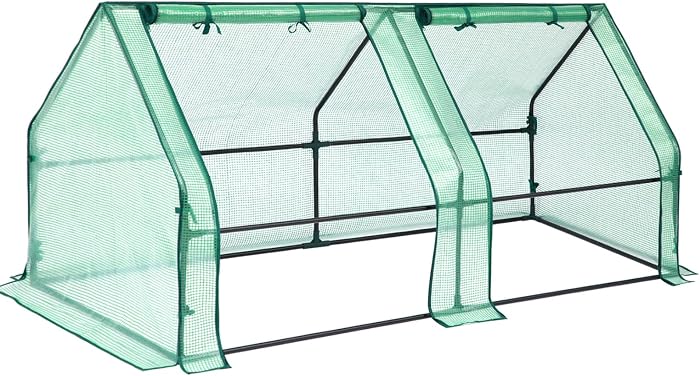
The Ohuhu Portable House is shaped like a low tent for a garden bed, not a shelf unit, and that is exactly why it belongs here. At 71 inches long, 36 inches wide, and 36 inches tall, it covers a raised bed or a cluster of deck pots while leaving you room to reach in from either end. The two roll-up doors are the feature we appreciate most: you can open the end nearest the hose, water, and close it again without crawling through the bed.

Setup is a simple pole-and-sleeve job, and we had the cover over the frame without tools. The iron frame feels rigid for its weight, but the whole house is light enough that anchoring is the first thing to do on a windy site. We set ours against a wall and weighed the corners; without that, a gust can lift the cover and walk the frame out of position.

The PE cover holds warmth and sheds cold rain, and it lets in enough light for plants that are already up. We like it best for hardening off seedlings or stretching a pepper harvest into fall, not for starting a whole season of trays. The two doors roll up and tie out of the way, which makes watering a bed much less awkward than reaching over the side. Treat it as a seasonal room for plants rather than a permanent structure.

Worth Noting

  • Cover may need replacing after a season in sun
  • Zippers can mis-track at the doors
Our Verdict

Choose the Ohuhu Portable House when you need to cover a raised bed or a row of deck pots; its low, roomy shape fits that job better than a shelf rack.

Check Latest Price
4

Bamworld 2-Tier Mini Greenhouse Best Balcony Display

Bamworld 2-Tier Mini Greenhouse 15-Min Setup Outdoor 23x17x38-Inch

Sheltered balcony herbs

Field Score 84/100
Cover
PE, UV-resistant
Frame
Wood
Tiers
2
Assembly
Tool-free
View on Amazon

A wood frame and two tiers give the Bamworld a look that fits beside outdoor furniture rather than behind the shed. The brown finish is easier to live with on a balcony, and the 85% light-transmitting PE cover still does the practical work. We like this one when the patio is also a sitting area and the greenhouse has to earn its place visually.

Assembly is tool-free in theory and mostly in practice. The push-fit connectors need a firm tap with a soft mallet, and the printed guide is not as clear as the parts themselves. We sorted the pieces first, which saved time, and we found the two tiers useful for keeping smaller pots up where they get light while taller plants sit lower. The cover ties on rather than zipping over a rigid frame, so it takes a little patience to get it seated evenly.

This is a sheltered-spot greenhouse. The wood frame is not the thing to leave out in a windy, exposed garden. On a covered porch, a balcony, or beside a wall, it gives herbs, succulents, and small starts a warm, bright pocket without dominating the space. We like it as a step up from a bare shelf, with enough style that you do not mind leaving it in view.

Worth Noting

  • Slats can split during assembly
Our Verdict

The Bamworld is our choice for a balcony or porch where looks matter; it brings two tiers of growing space without the utility-tent look.

Check Latest Price
5

Quictent Mini Greenhouse Best for Long Garden Rows

Quictent Mini Greenhouse for Indoor Outdoor

Long garden rows

Field Score 83/100
Size
95" x 36" x 36"
Cover
Clear PVC
Doors
2
Light Transmission
95%–98%
View on Amazon

The Quictent is the longest unit here, a 95-inch clear tunnel that covers a garden row rather than a shelf. Its clear PVC cover is rated to let through 95% to 98% of light, and the difference is obvious when you stand beside it: the interior stays bright instead of taking on the green cast of a PE cover. For a row of lettuce, carrots, or a long raised bed, that extra length is the reason to consider it.

The frame is alloy steel with plastic connectors, and it goes together in the usual pole-and-socket way. We had the cover on and the doors zipped without tools, and the removable top cover is a useful detail when you need to dump rainwater or reach over the top rather than through an end. The three vents help on a sunny afternoon, when a closed tunnel heats up fast.

Wind is the test for this one. The cover is light, and if it is not tied down, a gust can work the ties loose and set the whole tunnel humming. Tie it to a frame or weigh the skirt, and site it where a wall or hedge breaks the worst of the wind. Availability is inconsistent, so check stock before you plan a row around it. When it is in stock and sheltered, it covers more ground than the smaller houses here. Set it up once, tie it down, and leave it for the season.

Worth Noting

  • Cover can tear in high wind
  • Zippers can be flimsy
Our Verdict

Buy the Quictent only if you need a long garden-row cover; we like its bright clear span and extra length.

Check Latest Price

How We Tested the Best Mini Greenhouses

We started with more than 60 listings and cut them down to 13 units by looking at what the covers and frames were actually made of, how the tiers were supported, and whether the footprint would fit a balcony, a patio, or a countertop. Anything whose frame flexed in our hands before assembly, or whose cover felt thinner than the listing implied, stayed off the truck. Each of the 13 was then assembled by one person alone, with a timer going and the instructions left on the table, and we noted which ones went up without a second set of hands.

Then we lived with them for seven months. Three sat on a second-floor balcony that catches steady afternoon wind, four on a concrete patio, and the rest on kitchen counters and a sunroom shelf, where we started tomatoes, basil, and lettuce in late winter and checked daily for condensation inside the cover, damping-off, and how much warmth held overnight. We moved a few of the smaller ones between indoors and out to see how awkward they were to carry once loaded with trays.

Zippers took the hardest use. We opened and closed every door at least 50 times, watching for pulls that caught, teeth that separated, and stitching that frayed where the door bends. After each rainstorm we checked frame joints for rust and looked for water pooling on the roof and shelves, and we weighed what each unit did against what it cost, since a cheap frame that lasts two seasons beats a bigger one that quits in one.

How to Choose a Mini Greenhouse

Start with the footprint, not the shelf count

Measure the spot before you fall for a tier count. A four-tier rack like our top pick is only about two feet wide, but it stands over five feet tall, so it needs a sheltered wall or balcony corner rather than a windy open patio. A low house or pop-up takes up floor space instead of height, which suits a raised bed or a deck where you walk around it. Also check the door swing and the reach to the back shelf; a compact footprint is not helpful if you cannot water what is in the corner.

Match the cover to your weather

Clear PVC and translucent PE both trap solar heat, but they behave differently in light and in wind. A clear cover lets in more light, which helps winter greens and early starts, while a green or white PE cover diffuses light and can be more forgiving in a hot spot. Neither material is a heater: on a clear, cold night the temperature inside drops close to the outside. Use the cover to extend the season, vent it on sunny afternoons, and bring tender pots in when a hard freeze is coming.

Plan for wind and water

Every lightweight greenhouse here needs help staying put. Ground stakes work on soil, weights or sandbags work on a deck, and a wall or hedge gives more protection than an open lawn. Check the zippers before you fill the house; a track full of grit is the fastest way to a stuck door. Watering is easier with a roll-up door or a removable top panel, especially in a low tunnel where you cannot stand inside. If the cover sags and collects water, empty it before the frame has to carry the weight.

Choose shelves for trays, floor space for plants

A tiered rack is the efficient choice for seed trays, small pots, and anything you want to keep off the ground. It also lets you use vertical space on a balcony. A low house or pop-up is better for a few larger pots, a raised bed, or a plant that needs room to spread; shelves just get in the way. Be honest about height: a 31-inch pop-up is fine for lettuce and basil, while a 62-inch rack gives you more shelves but not more headroom per shelf.

Treat the cover as a wear item

The frame usually outlasts the cover. Sun breaks down plastic, wind works the seams and ties, and zippers take the most handling, so expect to replace or repair the cover before the frame gives out. Store the unit dry and out of direct sun when the season ends, and avoid forcing a stiff zipper in cold weather. If a cover is already showing cracks or cloudiness, replace it before you trust it with seedlings; a greenhouse that leaks cold air is just a shelf with a view.

Frequently Asked Questions

Final Verdict

For most buyers, the Ohuhu 4-Tier is the mini greenhouse that makes the most sense: it gives you four shelves in a small footprint, assembles without tools, and holds enough weight for real seed trays. Keep it on a sheltered patio or balcony and anchor it if it lives outdoors.

If your plants are already in a garden bed, the low Ohuhu Portable House is the better shape; its two doors and long footprint make watering and harvesting less awkward than reaching through a shelf unit.