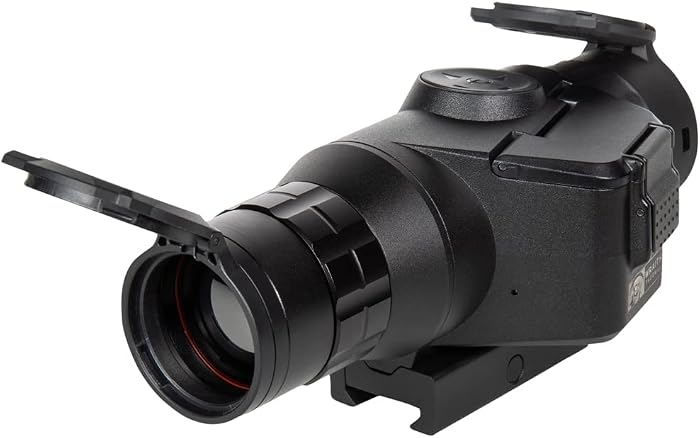
The 7 Best Thermal Scopes of 2026

A thermal scope doesn't gather light — it reads heat and paints the temperature difference on a small screen. That's why a body glows against cold ground at 200 yards with no moon, and why the spec sheet only gets you halfway to the truth. Sensor resolution, lens size, refresh rate, and how a unit handles a humid night decide whether you see an animal or a gray smudge.

My team and I have spent nine months behind eight of these, from handheld spotters to full riflescopes with built-in rangefinders. We carried them out on cold mornings and muggy evenings, bounced around in truck beds, and ran the batteries flat on purpose. What we kept coming back to: a clear, honest image, controls you can work with gloves on, accuracy that holds after an hour of bouncing down a two-track, and a price that earns its place.

Battery life is the spec people ignore and the one that ends a hunt early — a scope that dies at 11 p.m. is worth nothing at 2 a.m. Below is where each landed.

Our Top Picks

The 7 Best Thermal Scopes of 2026

1

oneleaf.ai Mars MT1000LRF Best Overall

oneleaf.ai Mars MT1000LRF 12um 640 x 512 Thermal Imaging Riflescope for Hunting

Long-range hunting

Field Score 89/100
Sensor
640 x 512
Weight
1.2 lb
Detection Range
1969 yards
Base Magnification
2x
View on Amazon

A 640 by 512 sensor and a laser rangefinder in the same aluminum housing is the combination that puts this scope first for us. Resolution is what turns a thermal image from a glowing blob into a hog with its head down, and this is the only 640 in the group. The rangefinder feeds a ballistic calculator that stores seven sets of data, so the scope hands you a holdover instead of leaving you to work it out.

The 35mm lens and 2x base magnification are the quieter reasons we like it. Two power keeps enough of the field in view to find a moving animal before you touch the zoom, which is not true of the 3.5x scopes in this group, and those give you reach but a keyhole to hunt through. There are 11 palettes, a sensitivity rating under 20mK for thin temperature contrast, and interchangeable lenses if you later want to trade field of view for more reach.

What settles it for us is the arithmetic the scope does for you. Ranging a treeline at night with a handheld, then holding the math in your head while an animal moves, is where shots get missed; here the laser and the calculator finish the job in the same view. The one wrinkle is brush, where the rangefinder can catch a branch instead of the animal and return a short distance, so range across a clear opening and let the calculator work from there.

Worth Noting

  • Costs more than any other scope here
  • At 1.2 pounds, heavy on a light rifle
Our Verdict

We point hunters here when they want to identify game, range it, and get a firing solution without carrying a second device; the 640 sensor is the sharpest in this group.

Check Latest Price
2

AGM Rattler V2 19-256 Best Budget

AGM Global Vision Rattler V2 Thermal Imaging Scope High-Sensitivity Sensor

First-time buyers

Field Score 88/100
Sensor
256 x 192
Weight
6.34 oz
Battery Life
Up to 11.5 hours
Base Magnification
2.5x
View on Amazon

Of every scope here, this is the one we hand to a hunter buying a first thermal. At 6.34 ounces it is the lightest of the group by a wide margin, so it won't throw off the balance of a light rifle, and AGM includes two rechargeable batteries rated for up to 11.5 hours, which is a longer night than most people hunt.

What you give up is reach. A 19mm objective and a 9.3-degree field of view make the Rattler forgiving to find things with, since a sounder breaking cover at 40 yards fills the frame fast, but detail thins past about 100 yards, which is the honest ceiling of a 256 sensor behind a short lens. Inside that envelope it does the work: sharp enough to tell a raccoon from a barn cat, with a stadiametric rangefinder and 10 reticle styles covering the holds you'll actually use.

The rest of the package suits a working rifle: IP67 sealing, an operating range from -22 to 131 degrees Fahrenheit, and shot-activated recording with audio so you aren't trying to describe the shot to a buddy afterward. The five-year warranty is matched only by the RIX STORM S3 in this group, and it takes most of the risk out of buying at the bottom of the range.

Worth Noting

  • Menu system takes practice to learn
Our Verdict

We recommend it as the cheapest way into thermal: the lightest scope here, with a five-year warranty, for hunters whose shots come inside 100 yards.

Check Latest Price
3

RIX STORM S3 384 Best for Long-Range Detection

RIX STORM-S3 384 Thermal Scope

Open-country stands

Field Score 87/100
Sensor
384 x 288
Weight
0.97 lb
Detection Range
1969 yards
Base Magnification
3.5x
View on Amazon

Where the oneleaf buys resolution, the STORM S3 buys reach. A 35mm objective behind a 384x288 detector is rated to pick up a heat source at 1,969 yards, and RIX's RET processing is designed to sharpen that image toward what a 640 sensor produces, which matters most when the animal is small in the frame.

The 3.5x base magnification is the part that decides whether this scope suits you. On open ground we prefer it: a treeline several hundred yards out fills the view, and the tighter base puts more pixels on the animal than a 2x scope manages. Clarity is the strength of the 384 scopes here, and this one is the pick of them.

Everything else is built for a long night: a 50Hz refresh rate, a one-pound aluminum body, and a battery cover and button set shaped to work with gloves on in the dark. The five-year warranty matches AGM's as the longest coverage in this group.

Worth Noting

  • Narrow 7.5-degree view in thick cover
Our Verdict

We like it for open country: a 35mm lens and 384 sensor spot heat a long way out while the scope itself stays under a pound.

Check Latest Price
4

RIX STORM S2 256 Best for Multi-Rifle Setups

RIX Storm S2 256x192 Thermal Scope

Multi-rifle hunters

Field Score 86/100
Sensor
256 x 192
Weight
0.9 lb
Detection Range
1422 yards
Base Magnification
3.5x
View on Amazon

Two rifles, one scope, and a season that doesn't leave time to re-zero twice a week is the hunter the STORM S2 is built for. It ships with a quick-detach mount, and the scope stores separate profiles so each rifle comes back to its own zero when you swap the scope over.

The 25mm lens is what separates it from the AGM at the same resolution: a 1,422-yard detection rating, a 7-degree field of view, and enough clarity that critters inside 100 yards are easy to name. The 3.5x base magnification is higher than the Rattler's 2.5x, so distant animals get more pixels on them.

In the field the mount is the part we appreciate most: pop the lever, move the scope, and the profile you saved is waiting. The trade against the AGM is weight and field of view, 0.9 pounds and 7 degrees here against 6.34 ounces and 9.3 degrees there, which is what you accept for the longer lens and the tool-free mount.

Worth Noting

  • Included batteries can arrive unable to hold a charge
Our Verdict

We like it for hunters who move one scope between rifles: a quick-detach mount and saved profiles, plus a 25mm lens that stretches a 256 sensor further.

Check Latest Price
5

DNT ThermNight TNC225R Best Multispectral

DNT Optics ThermNight Thermal & Night Vision Multispectral Scope with Laser

Positive identification

Field Score 84/100
Sensor
256 x 192
Weight
1.4 lb
IR Illuminator
850nm, detachable
Base Magnification
3x
View on Amazon

Thermal is unbeatable at telling you something warm is standing in a field, and it is only fair at telling you exactly what that thing is. The ThermNight answers that by putting a digital night vision channel behind the same eyepiece, with a detachable 850nm IR illuminator, so you spot with heat and then switch to a lit, recognizable image to identify. That is why it earns a place here: it is the only scope in the group giving you two ways to look at the same animal.

The hardware is sensible. A 3x base with 12x on top, a 25mm objective, one-shot zero available on both channels so you aren't zeroing the same rifle twice, a laser rangefinder feeding a ballistic calculator, and two batteries in the box. There is 6.5 centimeters of eye relief, generous for a scope with this much hanging off it, and the Picatinny mount is short enough to sit forward on an AR rail.

One caution before you commit: the unit can shut down after a shot, so put a full magazine through it at the bench before you take it hunting. If it quits, that is a warranty call rather than a quirk to work around. Do that and you're carrying one scope that covers what normally takes a thermal and a night vision device, on one mount, with one zero to manage.

Worth Noting

  • Dual mode drains the batteries faster
  • Menu system has a real learning curve
Our Verdict

We pick it when telling a shape from a shadow matters: thermal finds the animal, digital night vision identifies it, and the rangefinder is already there.

Check Latest Price
6

DNT Hydra HS225 Best Clip-On Option

DNT Optics HYDRA Thermal Scope

One-device setups

Field Score 80/100
Modes
Riflescope, clip-on, monocular
Mount
QDM150
Sensor
256 x 192
Weight
13.1 oz
View on Amazon

Most hunters end up wanting two things at once: a thermal to scan with and a way to shoot at night without giving up the day scope they already trust. The Hydra collapses that into one 13-ounce body, working as a standalone thermal riflescope, a clip-on module that goes in front of an existing scope, and a handheld monocular once you pull it off the rail.

Underneath it is a 256x192 sensor with a 25mm lens, five magnification steps from 3x to 12x, 6061 aluminum, IP67 sealing, and a recoil rating to .50 BMG. The QDM150 mount is the practical part: it comes off and goes back on without tools, which is the entire premise of a device that changes jobs between the truck and the stand.

Field of view is the compromise. At a 3x base behind a 25mm objective the view is narrow enough that finding a moving animal takes longer than it does through the AGM's 19mm lens, and if you are used to scanning with a wide handheld monocular, the scope modes will feel tight for the first few nights.

What we like is the trade it makes: one device replaces three in the truck, and the DNT app streams the view so a buddy can watch over your shoulder instead of asking what you see. Buy it if flexibility genuinely matters, not because three modes sound like a bargain. A hunter who shoots the same rifle every night gets a simpler, tougher scope for the same kind of money.

Worth Noting

  • Only two years of warranty coverage
Our Verdict

We reach for it when one device has to do three jobs: clip-on in front of a day scope, standalone thermal, and a handheld monocular for the walk in.

Check Latest Price
7

Sightmark Wraith Mini 2-16x35

Sightmark Wraith Mini 2-16x35 Thermal Riflescope

Close cover

Field Score 79/100
Sensor
384 x 288
Field Of View
13 degrees
Detection Range
1400 yards
Base Magnification
2x
View on Amazon

Thirteen degrees is the widest field of view of any scope here, and for pigs in thick timber that number does more for you than resolution does. The 2x optical base is the lowest in this group, which sounds like a step down until you are trying to catch a moving sounder in the eyepiece at 30 yards and need room to find it.

Behind the wide view sits a 384x288 sensor with a 1,400-yard detection rating, five thermal palettes, nine reticle colors, and five configurable profiles so several rifles can share the optic. Built-in camera and audio recording saves the shot without a phone in your hand. We take it as a close-cover scope: identify inside 100 yards, record the shot, and don't ask it to do more.

The image is where it shows its age. Detail at distance doesn't match what the RIX STORM S3 pulls from the same 384 resolution, and the picture can freeze for a beat when you pan quickly or change palettes. Inside 100 yards neither costs you much, because the wide view is doing the work, but this is not the scope for a bean field at 300.

Worth Noting

  • A power fault can leave the screen blinking and unusable
Our Verdict

We keep it on the list for close cover, where its 13-degree field of view is the widest here, but we rank it below the rest for image and reliability.

Check Latest Price

How We Tested Eight Thermal Scopes

We started with research: sensor resolution, lens diameter, refresh rate, and reviews from hunters who had already put a season on each unit. From that pile we pulled eight scopes covering the three ways people actually use them — dedicated riflescope, clip-on, and lightweight handheld — and ran them side by side for nine months on the same treelines.

Each one got zeroed at 100 yards, then carried into the field on pre-dawn coyote stands, after-dark hog hunts, and the humid summer nights that punish a thermal sensor. We set them on the same fence post at dusk and compared the image, asking whether we could tell a calf from a hog from a person at 150 yards and whether the picture held up zoomed in. A few got left outside overnight to see how a cold-soaked sensor behaved at startup.

Battery life was measured the unglamorous way: full charge, screen at normal brightness, rangefinder and recording running, stopwatch going until the unit quit. We worked every control with gloves on, walked each menu in the dark, and checked the rangefinder against known distances at 100, 300, and 500 yards. After a week of hard use in a truck bed, every scope went back on paper to see if it still hit its zero. Value came down to one question: did the extra money buy a noticeably better image and a longer night, or just a bigger number on the box?

How to Choose a Thermal Scope

Resolution Comes First

A 256x192 sensor gives you a coarse heat map: enough to spot a pig at the edge of a field and identify it inside about 100 yards, but not enough to judge an animal at 300. A 384x288 detector is the middle ground we recommend for most hunters who split their time between cover and open ground, and a 640x512 sensor is what you buy when you want to look at something far off and know what you are seeing.

Palettes, reticles, and recording are all nice extras, but a step up in resolution improves every one of them and none of them rescue a small sensor. Spend the money there first, then on features.

Lens, Base Magnification, and Field of View

A longer lens and a higher base magnification put more pixels on a distant animal, which is why the 35mm scopes here reach further than the 19mm and 25mm ones. The cost is field of view: 13 degrees at 2x lets you find a moving animal fast, while 7.5 degrees at 3.5x asks you to hunt through a narrower window.

Read detection claims with that in mind. A figure like 1,969 yards describes the moment a heat signature appears as a speck, not the distance at which you can tell a hog from a calf. Match base magnification to your ground: 2x to 3x for timber, feeders, and calling; 3.5x and up when your stands look across open country.

Rangefinders, Ballistic Calculators, and Reticles

Two scopes here build a laser rangefinder and a drop calculator into the housing, which changes the shot sequence. Instead of ranging with a handheld, doing the math, and then hunting for the animal again, you press a button and read a holdover in the same view.

That is worth paying for if you shoot past 200 yards or hunt alone. Inside 100 yards, put the money into resolution instead. And remember a laser can catch a branch rather than the animal, so range across a clear opening.

Batteries, Mounts, and Holding Zero

Night hunting eats power, and these scopes feed differently: swappable cells, sealed internal packs, and CR123A. Swappable is the friendlier design because a spare in a pocket ends the problem in the dark, and dual-channel modes drain faster than thermal alone, so carry both batteries on a long sit.

For mounting, a quick-detach mount plus saved profiles lets one scope serve several rifles. Confirm zero after every swap anyway. A mount that returns close is not a mount that returns to zero, and that difference shows up at 200 yards.

Weight, Balance, and the Clip-On Alternative

A 6-ounce scope disappears on a rifle; a 1.4-pound one changes how the gun swings and where it balances, especially on a light barrel. Handle your rifle with the scope mounted before you commit to a season with it.

If you already own a day scope you trust, a clip-on module gets you night capability without a second zero to manage, which is the case for the DNT Hydra. A dedicated thermal riflescope is the simpler tool if you shoot the same rifle every night.

Frequently Asked Questions

Final Verdict

The oneleaf.ai Mars MT1000LRF is the thermal scope we recommend, and the reason is simple: a 640 sensor lets you identify an animal rather than guess at it, and the rangefinder and ballistic calculator mean you aren't juggling a second device in the dark.

If the budget runs tighter, the AGM Rattler V2 covers a first season inside 100 yards for the least money here, with a five-year warranty behind it. Hunt open country and the RIX STORM S3's 35mm lens is the better tool.