The 8 Best Work Boots for Concrete

Concrete doesn't forgive much. Spend a shift on a poured slab and you'll feel it in your heels before you feel it anywhere else, which is why the boot matters more than the socks, the insoles, or the pain reliever in your lunchbox. The trouble is that the two things you want most — cushioning underfoot and a sole stiff enough to last — usually pull against each other, and the pair that solves both is the one worth paying for.

We've spent eight months with 12 pairs on job sites, in shop bays, and on warehouse floors, and one pattern held: comfort gets a boot through the first month, construction gets it through the second year. We also learned that a boot can be honestly waterproof and still soak your socks if the tongue gusset is cut short, and that toe type changes more than safety — steel toes run wider and heavier than soft toes, which shifts how the whole boot fits.

The pairs that earned a second shift are below, along with who each one actually suits.

Our Top Picks

The 8 Best Work Boots for Concrete

1

Timberland PRO Direct Attach MaxTRAX Best Overall

Timberland PRO Mens Direct Attach MaxTRAX Steel Toe WP SRO

Concrete job sites

Field Score 93/100
Outsole
MaxTRAX SRO
Safety Toe
Steel
Construction
Direct attach
Waterproofing
Waterproof
View on Amazon

A steel toe and an SRO-rated outsole are the two features we check first for concrete, and the Direct Attach MaxTRAX brings both without turning the boot into a brick. The MaxTRAX tread is the reason it earns our top spot: it has the kind of grip that matters on smooth, dusty slabs and at wet doorways. Direct-attach construction also keeps the sole close to the upper, so the boot feels planted rather than tall and tippy.

The leather takes a little time to soften, but the footbed has a supportive, cradled feel that we appreciate on long standing days. The waterproof build is a bonus for wash-down areas and weather. It also makes the boot warmer than an unlined pick, so a dry indoor slab in summer is not where it feels best.

We like the direct-attach sole for another reason: it gives the boot a sturdy, simple feel that suits concrete better than a soft trainer-like midsole. Compared with the lighter Keele Ridge, it gives up some comfort off the slab but feels more secure underfoot. For a crew that wants one boot to handle indoor slabs and wet thresholds, this is the most complete package here.

Worth Noting

  • Steel toe box runs narrow
Our Verdict

We recommend the Direct Attach as the default for concrete work: SRO grip, a steel toe, and waterproof leather in a sturdy package.

Check Latest Price
2

Wolverine DuraShocks SR Best Budget Steel Toe

Wolverine DuraShocks SR – CAT Men's Second Shift Steel Toe

All-day comfort

Field Score 92/100
Sole
DuraShocks
Construction
Direct attach
Slip Resistance
SR
View on Amazon

The Second Shift is the budget steel-toe boot in this group. It gives you a leather upper, a steel toe, and a cushioned feel for a price that leaves room for good socks and insoles. That is a useful combination for a first work boot or a backup pair.

The leather looks better than the price suggests, and the boot has a solid, broken-in feel after a short break-in. It is not a featherweight, but the weight is not the problem; the fit is. The boot runs large, and the toe box is narrow for a steel toe, so your normal size may swim while your toes still feel pinched.

We keep the Second Shift on the value list because it covers the basics without asking much. It is not the boot for daily commercial pours, but for a starter boot, a backup pair, or light concrete work, it does the job. The leather takes a scuff without looking destroyed, which helps when the boot is also your everyday pair.

Worth Noting

  • Sole can separate under hard use
Our Verdict

We point budget-minded concrete crews to the Second Shift for its steel toe, comfortable leather, and low entry cost.

Check Latest Price
3

Irish Setter Ashby 6" Best Soft-Toe for Concrete

Irish Setter Ashby 6" Mens Soft Toe Work Boot

Soft-toe walking

Field Score 91/100
Height
6 inch
Insulation
Uninsulated
Safety Toe
Soft toe
Water Resistance
Water resistant
View on Amazon

The Ashby is a 6-inch soft-toe boot with water-resistant, uninsulated leather. That combination is why it feels more like a comfortable walking boot than a stiff work boot. The leather is soft from the start, and the sole flexes without fighting your foot.

We like it for concrete because the boot is light and the footbed has a cushioned feel without a mushy heel. The break-in is short enough that a new pair does not dominate your first week. This is the soft-toe pick here, and it is happiest on dry indoor slabs and mixed pavement.

The stitching is the long-term question. The upper looks well made, but the stitching can come apart with hard use, which is why we see the Ashby as a daily comfort boot rather than a heavy-duty concrete grinder. For dry indoor slabs and mixed pavement, the soft leather and light feel make it an easy boot to keep on.

Worth Noting

  • No safety-toe protection
  • Narrow fit in some widths
Our Verdict

We like the Ashby for soft-toe concrete walking: the leather starts comfortable and stays light through a long shift.

Check Latest Price
4

Wolverine DuraShocks SR Best Budget Steel Toe

Wolverine DuraShocks SR – CAT Men's Second Shift Steel Toe

All-day comfort

Field Score 90/100
Sole
DuraShocks
Construction
Direct attach
Slip Resistance
SR
View on Amazon

The Second Shift is the budget steel-toe boot in this group. It gives you a leather upper, a steel toe, and a cushioned feel for a price that leaves room for good socks and insoles. That is a useful combination for a first work boot or a backup pair.

The leather looks better than the price suggests, and the boot has a solid, broken-in feel after a short break-in. It is not a featherweight, but the weight is not the problem; the fit is. The boot runs large, and the toe box is narrow for a steel toe, so your normal size may swim while your toes still feel pinched.

We keep the Second Shift on the value list because it covers the basics without asking much. It is not the boot for daily commercial pours, but for a starter boot, a backup pair, or light concrete work, it does the job. The leather takes a scuff without looking destroyed, which helps when the boot is also your everyday pair.

Worth Noting

  • Sole can separate under hard use
Our Verdict

We point budget-minded concrete crews to the Second Shift for its steel toe, comfortable leather, and low entry cost.

Check Latest Price
5

Timberland PRO Keele Ridge Best Lightweight Safety Toe

Timberland PRO Men's Keele Ridge Steel Safety Toe Waterproof Industrial Hiker

Lightweight safety toe

Field Score 89/100
Style
Hiker
Safety Toe
Steel
Waterproofing
Waterproof
View on Amazon

The Keele Ridge is the safety-toe boot that feels least like a traditional work boot. It has a hiker profile, a steel safety toe, and waterproof leather, and the lighter build is the reason we like it for concrete shifts that involve a lot of walking.

The soft leather and roomy toe box make the fit easy, and the boot feels stable without the clunk of a heavy logger. The waterproofing is useful for wet grass, puddles, and wash-down areas. It is not an insulated winter boot, so do not expect warmth from it.

We treat it as a light-duty safety-toe boot, not a heavy concrete grinder. The hiker sole is flexible and quiet on concrete, and the boot does not feel like a brick at the end of the day. For a site that allows a hiker-style boot, it is an easy one to wear all day.

Worth Noting

  • Toe-cover stitching can fail
  • Waterproofing can fade
Our Verdict

We reach for the Keele Ridge when a safety toe has to feel light, waterproof, and comfortable all day.

Check Latest Price
6

CAT Threshold Waterproof Steel Toe

CAT Men’s Threshold Waterproof Steel Toe Work Boot

Waterproof steel toe

Field Score 88/100
Style
Hiking boot
Safety Toe
Steel
Waterproofing
Waterproof
Package Weight
2.06 lb
View on Amazon

The Threshold's pitch is a waterproof steel toe with a hiking-boot shape. It is aimed at the concrete hand who steps in puddles, washes down equipment, or works outside in wet weather and still wants a boot that feels easy to walk in.

Comfort is the strongest part. The boot feels soft out of the box, the toe box is roomy, and the hiker shape rolls through a stride instead of clomping. The leather looks neat enough to wear off the site, too.

We see it as a solid wet-weather option, but not the most predictable one in this group. The Direct Attach feels more securely built for daily concrete, and the Threshold is better as a second pair or a wet-weather boot.

If you need a steel toe and waterproofing on a midrange budget, the Threshold is worth a look, especially for wet outdoor concrete. The hiker shape and soft leather make it easy to keep on.

Worth Noting

  • Heel separation can occur
  • Water resistance can fail
Our Verdict

We see the Threshold as a solid waterproof steel-toe option for wet concrete, with comfort that starts immediately.

Check Latest Price
7

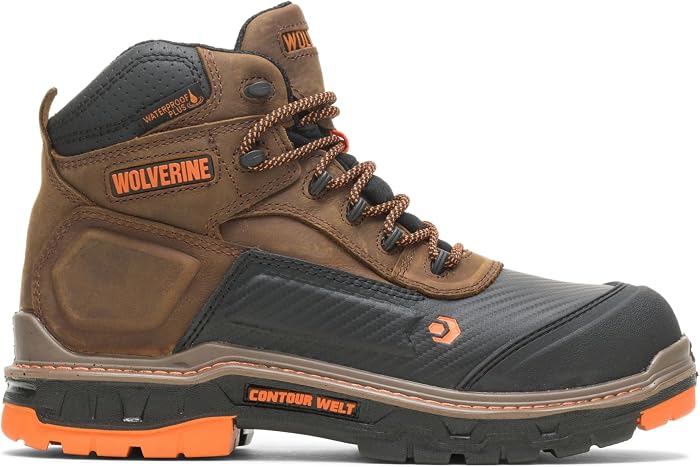
Wolverine Overpass Composite Toe Best for Composite-Toe Work

Wolverine Men's Overpass Composite Toe Waterproof Work Boots

Composite-toe work

Field Score 87/100
Weight
1.75 lb
Safety Toe
Composite
Waterproofing
Waterproof
View on Amazon

The Overpass is the composite-toe pick. Composite toes are lighter than steel and do not get as cold, which is why this boot feels less like a block on your foot than the steel-toe options here.

The waterproof leather and composite toe make it a good match for wet, outdoor concrete, and the boot has a comfortable, broken-in feel from the first wear. It is not as plush as the DuraShocks, but it is close.

The Overpass is better suited to a maintenance crew, a mixed indoor-outdoor site, or a second pair than to daily commercial concrete. It gives up some hard-use durability to get that lighter feel.

We recommend it when a composite toe and lighter weight matter more than maximum sole life. It is a reasonable choice for a maintenance crew, a mixed indoor-outdoor site, or a second pair that does not get the hardest hours. If you need the most predictable daily boot here, the Direct Attach is the safer call.

Worth Noting

  • Soles can crack under heavy use
  • Waterproofing can fail
Our Verdict

We recommend the Overpass when a composite toe and lighter weight matter more than maximum sole life.

Check Latest Price
8

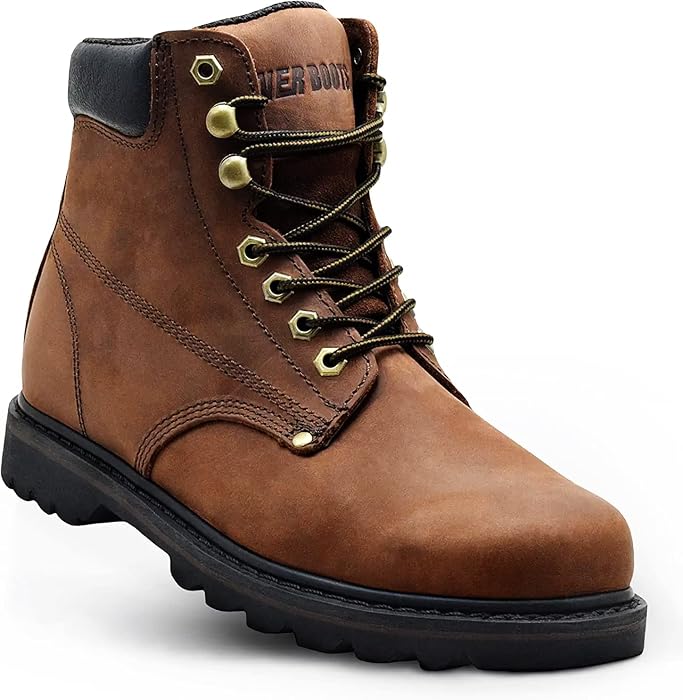
Ever Boots Tank Soft Toe

Ever Boots Tank Soft Toe – Work Boots for Men Soft Toe

Light-duty concrete

Field Score 86/100
Upper
Leather
Height
6 inch
Outsole
Rubber
Safety Toe
Soft toe
View on Amazon

The Tank is the low-cost leather boot in the group. It has a 6-inch soft-toe upper, a rubber sole, and a look that reads more expensive than it is. That is the appeal: a work boot shape without a work boot price.

Comfort is the surprise. The leather is soft, the insole has a cushioned feel, and the boot fits well for many feet right out of the box. The sizing is the catch: it can run about a half size large, and some feet find it small, so the fit is less predictable than the CAT or Timberland picks.

The upper is neatly stitched and looks sturdy, but the Tank is still a light-duty boot. It is a good choice for a homeowner, a shop worker, or concrete in short bursts, not a daily commercial pour.

We keep it as a low-cost soft-toe choice for light concrete duty. It gives you leather, comfort, and a decent look for very little money. If you need a safety toe or a sole that survives abrasive concrete day after day, spend more on the Direct Attach or the Second Shift. It is also the easiest boot here to justify as a second pair for messy jobs.

Worth Noting

  • Sole can separate with hard use
Our Verdict

We keep the Tank as a low-cost soft-toe choice for light concrete duty, not for daily commercial pours.

Check Latest Price

How We Tested Work Boots for Concrete

We built the shortlist from store listings and hundreds of pages of reviews, then narrowed to boots sold in both wide and regular widths, in steel-toe and soft-toe versions, with either a stated water-resistance claim or an honest admission that there wasn't one. That left us with 12 pairs to put through eight months of real work.

Every pair went to someone with a reason to wear it — a poured-slab job site, a shop bay, a warehouse floor — all concrete, all day. Each tester logged full shifts in their assigned boots, starting with a two-week break-in window and continuing for the full eight months wherever the boot held up.

We weighed each pair on a kitchen scale straight out of the box and again after a month, noted hot spots at the end of the first shift, the third day, and the second week, and wrote down whether they faded or turned into blisters. Waterproof pairs got five minutes under a running hose with a paper towel stuffed inside, followed by a check for dampness at the toe and along the stitching. We measured fit against a Brannock device, then walked a half size up and down in the socks each tester actually wears.

Once a month we looked at the outsole at the heel and the toe drag, the stitching where the boot flexes, and the leather at the creases — the three places a work boot usually quits first. We wore each pair off the clock too, since scuffs and creasing show up faster in daylight than under shop lighting, and we kept a running tab on which boots needed an aftermarket insole inside a month and which laces gave out, because both turn a cheap boot into an expensive one.

How to Choose Work Boots for Concrete

Grip Is the First Safety Feature

On smooth concrete, a soft rubber compound can feel secure when dry and skate when dusty or wet, while a harder compound lasts longer but gives up some bite. We look for a slip-resistant outsole and a tread with shallow, wide channels that shed grit instead of packing it. Deep mud lugs are not automatically better; on a flat slab they can leave less rubber in contact with the floor. The Direct Attach's SRO outsole and the DuraShocks SR are the clearest grip-first picks here.

Choose the Toe for Your Site

Steel and composite toes both protect the toe box, but they feel different. Steel is compact and familiar; composite cuts weight and does not get as cold. A soft-toe boot is lighter and more flexible, but it offers no toe-cap protection. Confirm your employer's requirement before you order, because a comfortable soft-toe boot is the wrong purchase on a site that mandates a safety toe. The Direct Attach and Keele Ridge are steel-toe picks; the Overpass is the composite option; the Ashby and Tank are soft-toe boots.

Fit for Eight Hours, Not the First Step

Concrete exposes every fit problem. A boot that feels snug in the store can pinch the toes by lunch, especially when the toe box is reinforced. Try boots with the socks you wear at work, late in the day, and check that your toes have room to move behind the cap. Length alone is not enough: the CAT Second Shift runs large but still has a narrow toe box, and the Direct Attach is not generous through the toe. If you have a wide forefoot, start with a wide size or a different last.

Durability Lives at the Sole and Stitching

Most work boots fail at the sole seam, the toe cover, or the stitching before the leather wears out. Direct-attach soles are common and sturdy, but they can separate at the flex point; welted or stitched soles are more repairable but heavier. Check the seam at the ball of the foot and the stitching around the toe. Rotate pairs if you can, keep them dry, and retire any boot with a cracked sole or exposed toe cap. The Keele Ridge's toe cover and the Threshold's heel are the areas we watch.

Match Weight and Waterproofing to the Job

A heavier boot can feel supportive, but on concrete you pay for that weight with every step. A lighter safety-toe hiker like the Keele Ridge or Overpass is easier on long walks; a heavier direct-attach boot feels more planted under loads. Waterproofing matters on wet sites, but it reduces breathability and can make an indoor slab feel hot. For dry indoor concrete, an uninsulated, water-resistant boot like the Ashby is often more comfortable. Buy waterproofing for the weather you actually work in, not as a default.

Frequently Asked Questions

Final Verdict

For most concrete crews, we recommend the Timberland PRO Direct Attach MaxTRAX. It has the combination that matters most: SRO grip, a steel toe, and waterproof leather in a sturdy direct-attach build. The fit is the catch, so try it with your work socks before a full shift.

If you do not need a safety toe, the Wolverine DuraShocks SR is the softer, lighter alternative. If you need a composite toe, the Overpass is the one to check.