The 6 Best Soil Test Kits of 2026

A soil test is only worth the trouble if you trust the number it hands back. Most of us come to this the same way: something in the garden sulks through July, and a cheap strip suddenly seems like a reasonable investigator. The catch is the tradeoff — quick kits ask you to match a wet capsule against a color chart under kitchen light, and the kits with lab-grade readings cost more than the plants did. What a good one actually buys you is the end of guessing.

I've been running tests against my own beds for a few seasons, and over the past seven months my team and I put 12 kits through the same samples. Here's what nobody tells a first-time tester: pH matters more than the nitrogen number most boxes lead with, because pH decides whether your plants can reach the nutrients already sitting in the ground.

The kits below earned their shed space for different reasons — some for speed, some for depth, one for being simple enough to use with gloves on.

Our Top Picks

The 6 Best Soil Test Kits of 2026

1

MySoil 4-Pack Best Overall
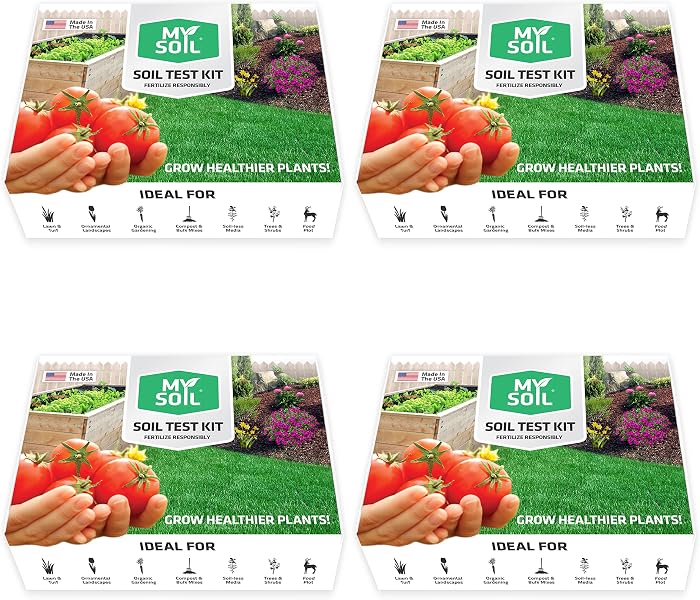
MySoil Soil Test Kit 4 Pack

Complete soil analysis

Field Score 91/100
Results
Online report in about 7 days
Measures
13 plant-available nutrients, pH included
Tests Included
4 lab analyses
Recommendations
Organic and conventional
View on Amazon

The wait takes some getting used to. You scoop soil into the kit's bag, drop it in the mail, and read the report online about a week later, while every other kit on this list answers within the hour. What that week buys is the reason it's our top pick: a lab measurement of 13 plant-available nutrient levels, pH among them, instead of a color you squint at or a needle that may not have moved.

The report is the part that changed our mind about mail-in testing. It doesn't hand you a nitrogen figure and walk away — it tells you what to apply, how much, and when, and it lays out both organic and conventional routes. That reads like advice from someone who looked at your soil rather than a spec sheet, and it's the difference between a number and a plan.

Four analyses in the box go further than they sound. Split them between the lawn, the vegetable bed, and the compost pile, or run the same ground two seasons apart to see whether the lime you spread moved the pH. The kit handles any growing situation, houseplants and raised beds included, so the four samples don't have to come from the same kind of ground. That's how one purchase becomes a record instead of a one-off.

Worth Noting

  • Premium price for four tests
Our Verdict

MySoil is the kit we recommend to anyone starting a new bed: 13 nutrient levels, pH among them, and a plan for what to spread rather than a number alone.

Check Latest Price
2

Rapitest 1601 Best Budget

Rapitest Soil Test Kit for Gardens

Budget nutrient testing

Field Score 88/100
Extras
pH preference list for 450+ plants
Format
Capsules with color comparator
Measures
pH, nitrogen, phosphorus, potash
Tests Included
40 (10 each for pH, N, P, K)
View on Amazon

Forty tests is the number that makes this kit worth owning. Ten each for pH, nitrogen, phosphorus, and potash, run with a capsule you empty into a vial of soil and water and then match against a printed chart. No other kit here covers all four of those measurements for anything close to the outlay.

We reach for it when the goal is a rough read across a lot of ground rather than one precise answer. The capsule system is tidy, the instructions are clear, and a first-timer can work through several tests in an afternoon without feeling like a chemist. That ease is most of what you're buying, and it's why this one keeps landing in the runner-up slot rather than the top.

The booklet earns its place too. A pH preference list covering more than 450 plants turns your reading into a decision about what to grow where, and most budget kits don't bother. It's the kind of extra that keeps a cheap soil tester in the shed instead of the return pile.

Worth Noting

  • Color matching takes a careful eye
  • Capsules are single-use, so refills are ongoing
Our Verdict

This is the kit we reach for when we want all four core numbers cheaply: forty capsule tests covering pH, nitrogen, phosphorus, and potash.

Check Latest Price
3

LaMotte 5679-01 Best for Repeat Testing Without Mailing

Lamotte Model El

Seasonal repeat testing

Field Score 87/100
Weight
2.9 lb
Includes
Garden Guide and Soil Handbook
Measures
pH, nitrogen, phosphorus, potassium
View on Amazon

This is a real kit, and it feels like one: a 2.9-pound box holding reagents, an inventory sheet, directions, a Garden Guide manual, and the LaMotte Soil Handbook. Nothing about the process is instant, which is exactly what separates it from a capsule kit you finish in ten minutes.

We point gardeners here when they test the same beds year after year. The handbooks are the reason: they turn a result into lime and fertilizer amounts, so the kit ends with something you can act on rather than a color you have to go research. And unlike a mail-in kit, there's no bag, no postage, and no fee every time you want another sample.

What it asks in return is consistency. Reagents have to be measured and read the same way on every run, and a rushed test gives you a figure you can't compare to last fall's. Do it carefully and you have a baseline for the same ground for years, which is the entire point of testing on a schedule.

Worth Noting

  • Premium price for a home kit
Our Verdict

We point anyone who tests every season at LaMotte's kit — it stays on the shelf, needs no postage, and comes with the books to interpret it.

Check Latest Price
4

Garden Tutor pH Strips Best for pH Only

Garden Tutor Soil pH Test Kit

pH-only checks

Field Score 85/100
Range
pH 3.5 to 9
Extras
Lime and sulfur estimator
Readout
Web-based strip reader
Tests Included
100 strips
View on Amazon

pH is the only thing these strips measure, and for a lot of gardeners that's the only thing that matters. A hundred of them cost little enough that you can test a bed before planting, again after liming, and again a month later without rationing — which is how you actually watch pH move instead of guessing at it once a season.

The web reader is what makes them better than the strips you remember. Instead of holding a wet strip beside a printed gradient, you photograph it and let the browser compare the colors, with no app and no sign-up. We still read the color ourselves first and treat the reader as a second opinion, because a phone photo brings its own lighting problems.

A strip takes about a minute, and the booklet covers what to do about a reading that's off, with a lime and sulfur estimator on the site to size the fix. The range covers pH 3.5 to 9, which handles anything you're likely to grow, including the acid-loving shrubs that started you down this road.

Worth Noting

  • pH only; no nutrient readings
Our Verdict

We keep a pack of these strips for quick pH checks; a hundred tests make retesting a bed an afterthought rather than an errand.

Check Latest Price
5

HSLGOVE 7-in-1 Best Digital Meter

HSLGOVE Soil Test Kit

Digital multi-readings

Field Score 84/100
Power
3 batteries
Probe
Three-metal design
Display
Dual dial and LCD
Measures
Moisture, pH, fertility, light, temperature, humidity
View on Amazon

Analog soil meters ask you to kneel in a bed and squint at a needle. This one splits the job: a dial for moisture, pH, and fertility, and a small LCD that reads soil temperature, air temperature, humidity, and light. Two screens, one probe, and no crouching to see either of them.

Setup is simple — three batteries, a button to cycle modes, and a probe you push more than 3 inches into the soil. Readings settle over a few minutes rather than instantly, so we push it in, tidy the bed, and come back to a number.

What won us over is that the numbers arrive as digits. After a few uses we stopped second-guessing whether we read a needle correctly, and the soil-temperature reading is the one we didn't know we wanted until we were deciding whether the ground was warm enough to sow. The fertility figure is a general indicator rather than a breakdown, so treat it as a nudge to feed, not a prescription.

Worth Noting

  • Requires three batteries
Our Verdict

For a digital read on moisture, pH, and temperature at once, this is the meter we trust most in this group.

Check Latest Price
6

Gain Express ZD-06 Best for Deep-Root Testing

Gain Express ZD-06 – Soil PH Meter

Deep-root testing

Field Score 83/100
Power
None required
Measures
pH and moisture
Probe Length
295 mm
Operating Range
5 to 50 °C (41 to 122 °F)
View on Amazon

Nearly a foot of metal probe is the entire argument. Short meters bottom out a few inches into a raised bed; this one pushes 295 mm down into the root zone of an established shrub or a vine row, which is where summer moisture actually runs out while the surface still feels damp.

The dial sits at the top of the shaft, so you read it standing up, and the meter generates its own current — no battery to die in a drawer between seasons. It measures pH and moisture and nothing else.

We treat its pH reading as a trend rather than a measurement: it's good for spotting a bed that's drifting the wrong way, not for deciding exactly how much lime to spread. The depth is what earns it a place here. If your beds are shallow or your plants are annuals, the extra shaft buys you nothing and a shorter meter will do the same job.

Worth Noting

  • pH and moisture only, no nutrients
  • Head can separate from the probe
Our Verdict

Our pick when roots run deep: this long probe reads pH and moisture nearly a foot down without digging a hole first.

Check Latest Price

How We Tested the Soil Test Kits

We started by gathering every kit sold for home gardens, then cut the list to 12 based on what each one actually measured, how many tests came in a box, and whether refills were easy to find. The group covered the three formats shoppers choose between: liquid capsules matched to a color chart, pH strips dipped in a soil slurry, and probes pushed straight into the ground. Each kit ran the full seven months in the same four spots — two raised beds, a front lawn, a compost pile, and a row of houseplants — and I retested the same soil three times per kit to see whether the readings held steady.

I opened each box cold and used only the instructions inside, timing how long it took to get a usable number and noting every point where I had to guess. Readability got its own pass: I held the color charts in open shade, direct afternoon sun, and under kitchen lighting, since the same capsule can look like two different results depending on where you stand.

For accuracy, I split each sample and mailed half to a lab, then set the kit's pH reading beside the lab's. Probes went into dry soil, then again two hours after watering, to see how much moisture moved the number. Durability started as an accident — a couple of kits spent a week on the porch in the rain — so I made it deliberate, rinsing probes, checking reagent bottles for clogged tips, and dropping each case once onto concrete.

The last question was usefulness: some kits hand you a number and stop, others tell you what to add and how much. We scored value by cost per test, not sticker price, since a kit that runs dry after four samples isn't the bargain it looks like.

How to Choose a Soil Test Kit

Decide What You Need to Know

pH is the gatekeeper. When soil swings too acidic or too alkaline, nutrients can be sitting right there and still not reach the roots, which is why a plant can look starved in freshly fertilized ground. If you're adjusting acidity for blueberries, hydrangeas, or a lawn, a pH-only test answers the whole question.

If you're deciding what to feed, you need nitrogen, phosphorus, and potash as well. And if you want the minor nutrients too, only a lab panel gets you there — no capsule or probe on this list will.

Pick a Format You Will Actually Use

Three formats cover this market. A mail-in lab kit gives the fullest picture, around 13 nutrients plus pH, and comes back in about a week with recommended application rates; it also costs the most per sample. Capsule and strip kits run at the kitchen table in minutes for the core measurements, with a color match you judge yourself. Probe meters are instant, and they are at their best on moisture, light, and temperature.

The trap is trusting a probe's pH number. That reading comes from an uncalibrated metal electrode, so we treat it as a hint that a bed is drifting, never as the basis for a lime rate.

Count Tests Against the Cost per Sample

A four-analysis lab kit and a forty-test capsule kit look far apart until you divide. Work out how many distinct areas you'd test — front lawn, back lawn, vegetable bed, compost — and how often, then buy for that number.

Someone testing six beds twice a season will run through a four-pack fast, and someone testing a single bed once will never open all forty capsules. Count the ground first, then the tests.

Read for the Recommendation, Not the Number

A result only helps if it ends in an amount. The better kits and reports convert your figures into what to spread and when — MySoil does it in both organic and conventional versions, and LaMotte's handbooks do the same on paper.

Failing that, keep a pH preference list nearby. Knowing your soil is acidic only matters once you know what the crop wanted in the first place.

Frequently Asked Questions

Final Verdict

Most gardeners should start with MySoil. The money buys a real measurement of 13 nutrients plus pH and a written plan for what to spread, which is the difference between testing your soil and guessing at it with more confidence.

If mailing a sample and waiting a week doesn't fit how you garden, the Rapitest capsule kit covers pH and the big three nutrients for far less. And if you test several beds every season and want to skip postage for good, LaMotte's kit is the soil tester that stays on the shelf.