The 8 Best Work Boots of 2026

A work boot has one job it can't fail at: getting you to the end of a shift without your feet filing a complaint. The trouble is that the pair that feels broken-in in the store aisle is often the pair that's separating at the welt by spring, while the pair that will outlast your truck can feel like two cinder blocks for the first two weeks.

I've worn through my share of both kinds. Over the past nine months, my team and I have put 12 pairs through real shifts — steel, composite, and soft toe — and the differences show up fast. Waterproofing built into the boot rather than sprayed on, and an outsole that actually grips wet concrete, matter more than most of what's printed on the box. Sizing is the other trap: plenty of these run a half size long, and a boot that's too long fits worse at hour eight than it did at the door.

Below are the 12 pairs that earned their place, sorted by what they're genuinely good at — weather, concrete, or a little of both.

Our Top Picks

The 8 Best Work Boots of 2026

1

Timberland PRO Direct Attach MaxTRAX Best Overall

Timberland PRO Mens Direct Attach MaxTRAX Soft Toe SRO Boot

All-around job-site work

Field Score 94/100
Model
TB0A262R214
Outsole
MaxTRAX, SRO rated
Toe Type
Soft toe
View on Amazon

Traction is the first thing we check on a work boot, and the MaxTRAX outsole is what puts this Timberland PRO at the top of our list. The sole carries an SRO slip-resistance rating, which matters most on surfaces that are already slick before you arrive: oil on a shop floor, coolant around a lift, wet concrete near a wash bay. The lugs are deep and open enough to shed grit instead of packing it, and that is the difference between grip that works on day one and grip that still works in week ten.

It is a soft toe, and that is a deliberate part of the recommendation rather than an oversight. Without a cap there is more room in front of your toes and less to carry at the end of your leg, and roomy is how these wear. The leather is thick enough to shrug off scuffs without looking beaten, and the stitching and sole attach read as heavy-duty work rather than a work-styled fashion boot.

Sizing is the one thing to sort out early. Pairs run large for some feet and land tight across the instep for others, so try them on with the socks you actually work in rather than the thin ones in the box, and keep the packaging long enough to swap them.

Worth Noting

  • Soft toe won't satisfy sites that require protection
Our Verdict

The pair we recommend first to most tradespeople: a slip-resistant sole that keeps its grip on wet and oily floors, with a soft toe that stays roomy all shift.

Check Latest Price
2

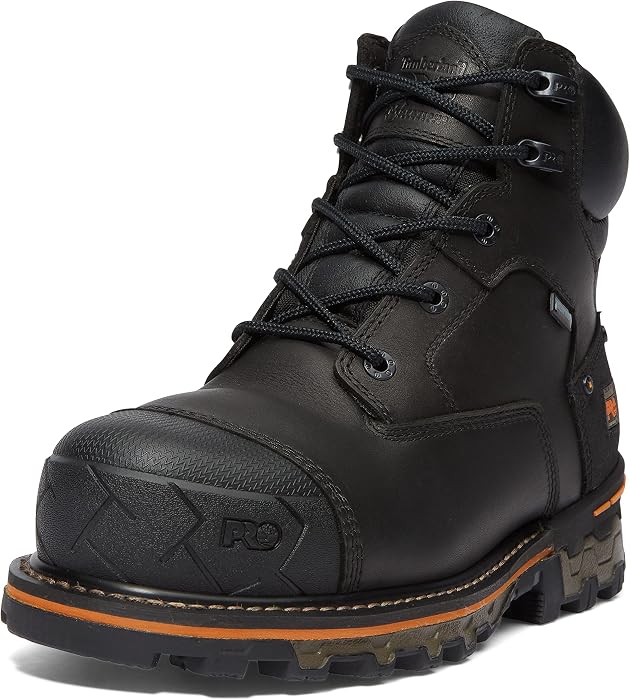
Timberland PRO Boondock Composite Toe Best Safety Toe for Cold Sites

Timberland PRO Men's Boondock 6 Inch Composite Safety Toe Waterproof Industrial

Cold, wet sites

Field Score 93/100
Height
6 inch
Toe Type
Composite safety toe
Waterproof
Yes
Listed Weight
4.5 lb
View on Amazon

The Boondock has a narrow brief and fills it well: composite safety toe, waterproof build, and enough insulation to make a February shift outdoors tolerable. Composite rather than steel means the cap does not turn into a heat sink when the temperature drops, and it keeps the boot clear of the metal-detector question at a plant gate. The 6-inch height clears puddles without becoming a boot you have to lace past your calf.

What keeps us coming back is how it behaves at hour eight rather than hour one. The cushioning underfoot is generous and the leather gives without collapsing. The listed weight is 4.5 pounds and it feels like it on a ladder, but on a plant floor or in a yard that heft is buying warmth and protection rather than costing you anything.

Worth Noting

  • Insoles compress long before the leather wears out
Our Verdict

Our safety-toe pick for winter work: a composite cap that does not turn cold, in a waterproof boot built for slush, mud, and long outdoor shifts.

Check Latest Price
3

Carhartt 6-Inch Moc Toe Waterproof Best for Standing on Concrete

Carhartt Men's 6” Moc Toe Waterproof Work Boots

Standing on concrete

Field Score 92/100
Height
6 inch
Waterproof
Yes
Listed Weight
4.5 lb
Safety Rating
EH rated
View on Amazon

Wedge soles are the most underrated thing in work boots. There is no heel to catch on a rung and no narrow waist under the arch, so the whole foot sits on rubber and the load spreads across the ball instead of concentrating at the heel, which is exactly what you want if your shift happens on a concrete slab. Carhartt pairs it with oil-tanned leather and a FastDry lining, and the result looks as much like a Saturday boot as a work one.

What we did not expect was how little break-in it needs. The oil-tanned leather is supple enough that the first week feels like the fourth, and the moc toe stitching does not leave a ridge across the top of your toes the way a stiffer boot can. The 6-inch collar covers the ankle without demanding a break-in of its own.

Fit is the thing to check. This last runs large for plenty of feet, and the difference between the right size and one up is a heel that lifts with every step. Order your normal size first and only go up if you are committed to a heavy sock.

It is EH rated too, which matters if your day includes panels and equipment rather than only concrete. Where the boot earns its keep is comfort on hard, flat ground; where it asks for patience is the outsole, which wears faster than the leather above it. On a slab that is a fair trade. On gravel and rock, less so.

Worth Noting

  • Outsole wears faster than the upper does
Our Verdict

For a shift spent standing on concrete, this is the boot: a flat wedge sole that spreads the load, with no break-in worth planning around.

Check Latest Price
4

CAT Threshold Steel Toe Best Steel Toe for Warm Shops

CAT Men’s Threshold Waterproof Steel Toe Work Boot

Warm indoor work

Field Score 91/100
Model
P90936
Toe Type
Steel toe
Waterproof
Yes
View on Amazon

Steel toe protection usually shows up in a tall, stiff, heavy boot, and the Threshold is the one here that does not. It sits low on the ankle and wears closer to a hiking shoe than a logger, which is why it suits warehouses, plants, and shops where the temperature climbs by noon. The cap leaves real room in front of your toes instead of pressing on them, and the fit runs roomy enough that most feet will not need a wide.

Two things to know before you order. The sole and heel are what fail first under hard daily use, so on abrasive ground like crushed rock or gritty concrete, plan on a shorter service life than the price suggests; on smooth indoor floors that weakness barely comes up. And the last runs large, so check the size chart instead of carrying your sneaker size straight over.

For anyone moving between a warm shop and a wet loading dock, this is the pair we hand over first, because it covers both without the bulk. What it will not do is survive years of rock and gravel under a heavy foot.

Worth Noting

  • Water resistance can fade with wear
Our Verdict

Warm shops and long indoor shifts are where this steel toe makes sense: lower and lighter than a traditional work boot, with room in the toe box.

Check Latest Price
5

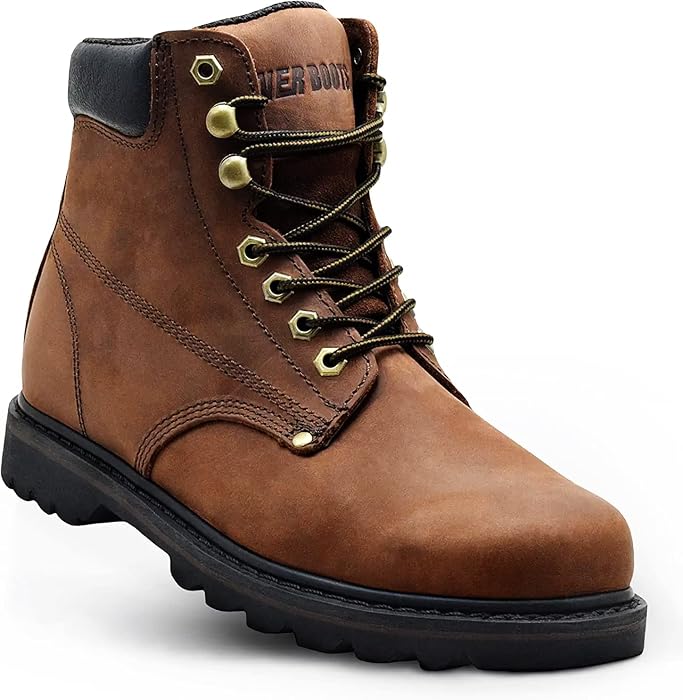
EVER BOOTS Tank Best Budget

EVER BOOTS Tank – Work Boots for Men Soft Toe

Budget job sites

Field Score 90/100
Height
6 inch
Toe Type
Soft toe
Listed Weight
4 lb
View on Amazon

What the Tank gets right at its price is everything you can see. The leather is leather, the stitching is straight and dense, and the outsole sits squarely on the upper instead of hanging over an edge. It ships with a real insole rather than a foam sheet, and the shape reads closer to a name-brand work boot than the money would suggest.

Comfort out of the box is the other surprise. There is no break-in worth planning around, the leather gives quickly across the instep, and the toe box is roomy without being sloppy. At four pounds listed it sits in the middle of what we expect from a 6-inch leather boot, which is to say you notice it on a ladder and forget it on a floor.

Sizing is where the savings show up as risk. The fit runs about a half size large for some feet and true for others, so try them on with your work socks and keep the packaging until you have done a full day. Be realistic about the job, too: this is the boot for a homeowner, a weekend remodel, or a second pair kept in the truck, and it rewards that kind of use.

Worth Noting

  • Soles can separate under daily site use
Our Verdict

The budget pick we recommend without flinching: real leather, clean stitching, and an easy first week for the least money here, as long as you are not expecting years of service.

Check Latest Price
6

MUCK Chore Classic Steel Toe Best for Mud and Water

MUCK Chore Classic Men's Steel Toe Boot

Mud and water

Field Score 89/100
Style
Pull-on chore boot
Toe Type
Steel toe
Water Resistance
Waterproof shell
View on Amazon

There is a kind of work where laces are the wrong answer, and this is the boot for it. Standing water in a ditch, knee-high mud in a barnyard, a hose running across the floor: a leather boot absorbs that day and never fully comes back, while a pull-on shell sheds it. Getting them on takes a second and one hand on a doorframe, which is why they end up by the door and stay there. The shell is also the part that decides how long the pair lasts, and a seam that starts taking on water is the usual end of one.

The inside is what sold us. The upper is soft enough that the boot feels broken in on day one, and the insulation keeps toes warm through a winter of wet work without the bulk of a heavy pac boot. The steel toe is not an afterthought either. It is the reason these get worn around animals and equipment rather than only in the yard.

The trade-off is that this is wet-ground footwear, not construction footwear. On a ladder or a scaffold the flexible shell gives you less support under the arch than a lace-up, and the collar is snug enough that a thick pant leg has to go over the top rather than into it. If your wet work involves climbing, keep a lace-up for those days.

Worth Noting

  • Runs hot once the weather warms up
Our Verdict

Barns, ditches, and standing water are where this boot earns its place: a steel toe inside a pull-on shell that keeps feet dry and warm.

Check Latest Price
7

Ariat Groundbreaker Square Toe Best Western-Style Work Boot

Ariat Men's Groundbreaker Wide Square Toe Work Boots

Western-style crews

Field Score 88/100
Style
Western work boot
Toe Shape
Wide square
Listed Weight
5.5 lb
View on Amazon

Most work boots ask you to look like a tradesperson. The Groundbreaker does not. It is a western boot with a wide square toe and a pull-on shaft, and for anyone working around horses, cattle, or a ranch, that shape is not a costume. It is what fits the job and the rest of the wardrobe.

The square toe does real work. It lets your toes spread flat instead of tapering to a point, and we found the wider platform under the ball of the foot steadier on a hard floor and on uneven ground. The leather is finished well enough to wear into town, which is a small thing that happens to matter.

Pull-on boots live or die on the last, and this one runs narrow and snug. If you are between widths, go wider rather than longer. The length is closer to true, but the instep is where feet get pinched, and a snug shaft is also what makes the first few wears a two-handed job. Expect a few days of stiffness across the top of the foot before the leather relaxes.

Comfort is the surprise. A western boot with this profile has no business feeling this cushioned at hour nine, and the footbed does not pack out the way cheaper western boots do. It is the one boot here that gets worn to the feed store and to dinner on the same day.

Worth Noting

  • Side seams can open under long, hard use
Our Verdict

For readers who want to look like themselves on the job: a square-toe western boot with the toe room and cushioning to carry a full shift on foot.

Check Latest Price
8

NORTIV 8 Paladin Steel Toe Best for Dry Indoor Work

NORTIV 8 Men's Waterproof Steel Toe Work Boots

Dry indoor work

Field Score 87/100
Toe Type
Steel toe
Waterproof
Yes
Listed Weight
3.7 lb
Safety Certification
ASTM certified
View on Amazon

If the requirement is a certified steel toe and the budget is the tightest on this page, this is the pair that clears it. The toe box is genuinely wide, wide enough that broad feet stop noticing the cap, and at 3.7 pounds listed it stays light for a steel-toe boot. That matters when you are walking a warehouse floor rather than standing at a bench.

Comfort out of the box beats the price. The collar is padded, the laces are decent, and there is enough underfoot that a first day does not end in a limp. Sizing tracks close to standard for most feet, with the wide toe doing the work for anyone who usually buys a wide.

What you give up sits at the bottom of the boot. On wet or dirty concrete the outsole does not bite the way the Timberland PRO's MaxTRAX sole or the CAT's does, so this is a dry-floor boot first. The price is real, and so is the reason for it.

Worth Noting

  • Outsole grip is the weak point on wet or oily floors
Our Verdict

The steel toe we point to when the budget is the tightest: light, roomy, and fine for dry indoor work.

Check Latest Price

How We Tested 12 Pairs of Work Boots Over Nine Months

We started by pulling every pair sold as a genuine work boot and filtering hard: current safety toe certification, whether the waterproofing is a built-in membrane or a surface treatment, outsole material, available widths and half sizes, and price. That cut the field to 12 pairs, which we bought ourselves like any other customer.

Each pair went into rotation for nine months, mostly on concrete warehouse floors and a residential framing site, plus weekend yard work and a few wet morning commutes. I wore every boot for a full 10-hour shift before writing anything down, with two sock weights, up and down stairs, and a tape measure to check heel slip and toe room. Sizing got tested the honest way: I ordered my usual size and a half size down where it was offered and kept whichever fit. We also weighed each boot on a kitchen scale before the first lace-up, then noted how it felt at hour nine, since a pound at 6 a.m. feels like three by 4 p.m.

Water resistance got a real test — 20 minutes walking through soaked grass and a 10-minute stand in an inch of water, followed by a sock check. Every 40 hours we inspected welt stitching, toe scuffing, sole wear at the outside heel, and how the leather creased, which is also how we judged whether a pair still looked presentable enough to wear off the clock. Ease of use came down to timing: laces, speed hooks, pull-on shafts, and how long each took to get on in a dark room at 5 a.m. Final rankings weighed price against what actually held up.

How to Choose Work Boots

Start With the Toe, Not the Brand

Your employer or the site safety officer sets this decision, so get it in writing before you spend anything. A soft toe gives you room and less weight to carry; a steel cap takes crush and puncture hits; a composite cap does the same job without the cold sink or the metal-detector problem. Where the requirement is genuinely optional, we lean soft toe for comfort and go steel or composite the moment equipment, loads, or policy make it non-negotiable. Buying protection you do not need costs you comfort on every shift you wear it.

Traction Is the Feature You Use Every Shift

Slip resistance is the quietest line on the box and the one that decides whether you stay upright. Wet concrete, oil on a shop floor, and a dusting of sawdust are the three surfaces that put people down, and an outsole with deep, open lugs sheds all three better than a shallow tread. Look for an SRO marking where slip resistance is a stated need, and favor a softer rubber compound on smooth indoor floors. On gravel and crushed rock that same soft compound wears quickly, so traction and sole life pull against each other.

Waterproofing Costs You Breathability

A waterproof membrane is worth paying for only if your feet are actually getting wet. It keeps water out and holds heat in, so a waterproof boot worn in a dry, warm shop is simply a hotter boot with no upside. Where the wet comes from puddles, slush, and rain, a waterproof leather boot makes sense. Where it comes from standing water, mud, and a hose on the floor, a rubber pull-on shell is the better tool. Either way, treat the barrier as a wear item rather than a lifetime guarantee.

Pay for the Sole, Not the Logo

The outsole and the bond holding it on fail first on a work boot; the leather almost always outlives them. That is why price buys service life more reliably than appearance does. A cemented sole on a cheaper boot can separate under daily site use, while a stitched or welted sole can be replaced by a cobbler for a fraction of a new pair. If you are spending real money, ask whether the sole can be renewed. That single question separates a multi-year boot from a seasonal one.

Fit Is Where Cheap Boots Hurt You

Work boot lasts run large, small, and narrow in ways that have nothing to do with your sneaker size, and the models on this page disagree with each other about what a 10 means. Try boots on with the socks you work in, at the end of the day when feet are at their largest, and check the heel first: a heel that lifts will raise a blister before the toe ever complains. Between widths, go up a width rather than a length. A pinched instep does not break in.

Frequently Asked Questions

Final Verdict

The Timberland PRO Direct Attach is the pair we put in most people's hands: the MaxTRAX sole holds on wet and oily floors, the soft toe stays roomy through a long shift, and the leather looks much the same in month six as it did in week one. If your site mandates a protective toe, the Boondock is the same idea with a composite cap and winter insulation built in.

On the tightest budget, the Tank gets you into real leather for the least money, and the Muck Chore Classic is the pair to own alongside a lace-up if your wet work happens in mud and standing water rather than on a slab.